Uno is one of the world’s most recognisable card games, but the version in the classic red box is only the starting point. Over the years Mattel has released official spin-off decks, and players everywhere have invented their own twists at the kitchen table. This guide walks through the most popular Uno gameplay variations — from official editions such as Uno Flip and Uno Show ’em No Mercy to homemade house rules and digital play — with clear, verified rules so you can pick the right one for your group.
Key Points
- Uno has both official Mattel editions (Uno Flip, Uno Attack, Uno All Wild, Uno Show ’em No Mercy) and countless player-made house rules.
- Official editions change the deck or components; house rules keep the standard deck but change how you play it.
- Uno Flip uses 112 double-sided cards; Uno All Wild uses 112 cards that are all wild.
- Uno Show ’em No Mercy is official (2023), with +6/+10 stacking and a 25-card knockout limit.
- Digital versions — the official app, consoles and browser games — let you play the same mechanics online.
Why Uno Inspires So Many Variations
Uno’s appeal lies in its simplicity: match a card by colour or number, race to empty your hand, and call “Uno” when you have one card left. Underneath that simple loop is a flexible framework that invites tinkering. Change one penalty, add one card type, or swap the deck entirely, and the whole rhythm of the game shifts.
That flexibility is why Uno has spawned so many spin-offs and why house rules vary from one family to the next. It is worth separating two kinds of change, because they behave differently. Official editions alter the deck itself — new cards, new components, new win conditions. House rules keep the standard deck but change how you play it. Knowing the difference makes it easier to explain a variation before you deal.
Uno Flip: A Two-Sided Twist
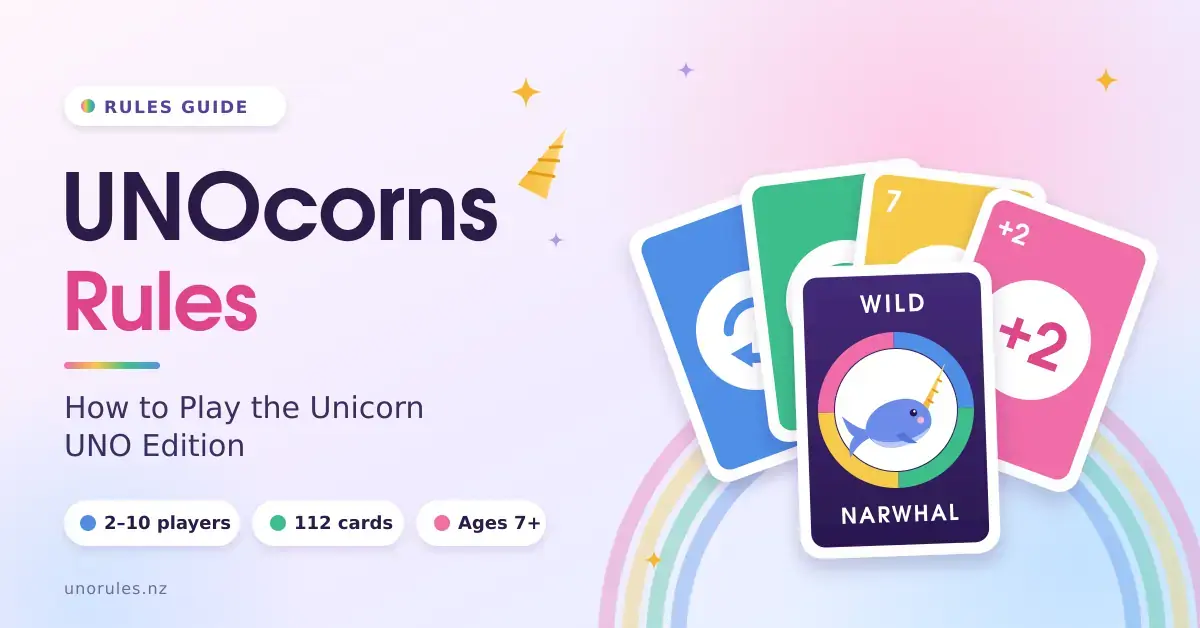
Uno Flip uses a deck of 112 double-sided cards. Every card has a “Light” side and a “Dark” side, and the game begins on the Light side, which plays much like classic Uno — except its harshest number penalty is a mild Draw One and its wild is a Wild Draw Two.
The twist is the Flip card. When a player uses it, everything turns over at once — the discard pile, the draw pile and every hand — revealing the Dark side. There the cards bite harder: a Draw Five, a Skip Everyone and a Wild Draw Colour that forces the next player to draw until they turn up the chosen colour. Timing your flip so that an opponent takes the punishment is the heart of the strategy. You can read the full breakdown in our guide to Uno Flip.
Best for: players who want a familiar game with a sudden shift in difficulty.
Uno Attack: Card-Launcher Chaos
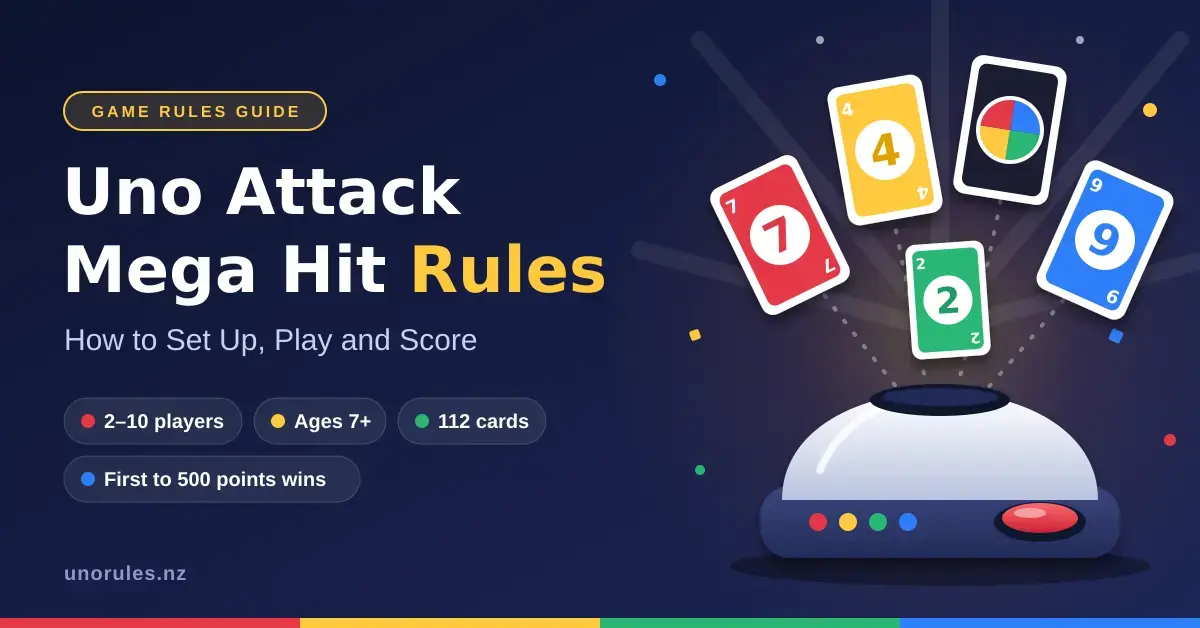
Uno Attack (sold in some markets as Uno Extreme) replaces the draw pile with a battery-powered card launcher. When the rules tell you to press the button, the machine either does nothing or fires a random burst of cards — anywhere from zero to about seven — straight into your hand. The set includes 112 cards and the launcher unit.
Because you never know how many cards a press will cost you, the game leans on luck and nerve rather than careful card counting. For the special cards and setup, see the Uno Attack rules.
Best for: parties and family game nights where unpredictability is the point.
Uno All Wild: Strategy Without Colours
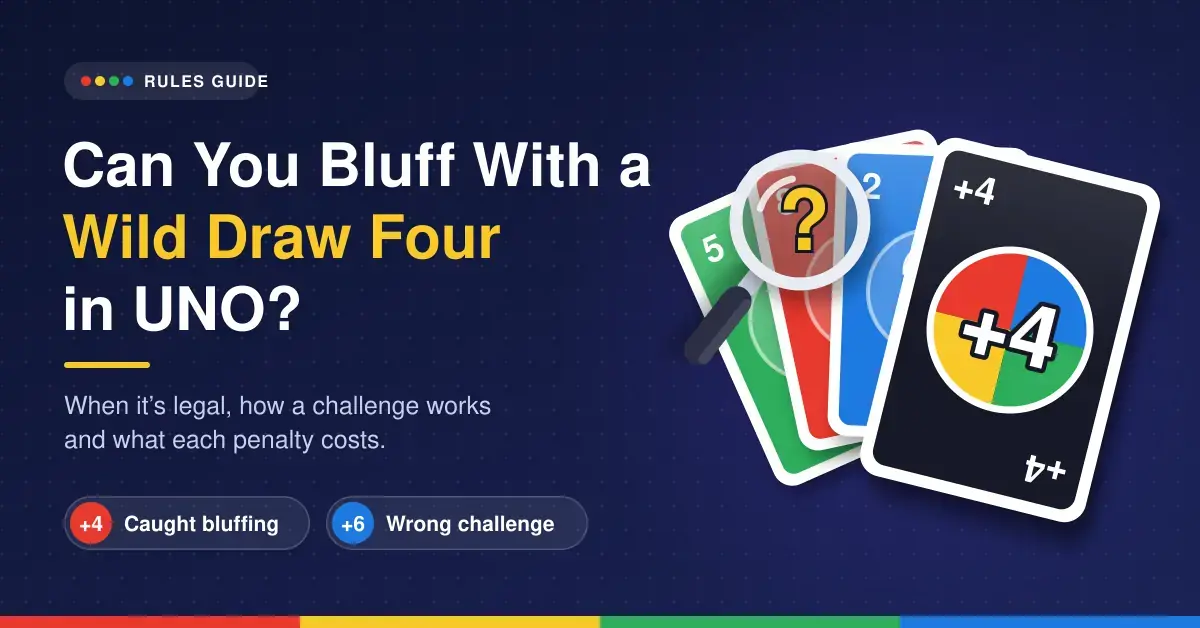
Uno All Wild removes numbers and colours completely. All 112 cards are wild, so you can always play something on your turn — but every card carries an action. The deck includes Wild Skip, Wild Skip Two, Wild Reverse, Wild Draw Two, Wild Draw Four, Wild Targeted Draw Two and Wild Forced Swap, which trades your entire hand with another player.
With no colour or number to match, the decision each turn is purely tactical: which effect helps you and hurts the right opponent. Our Uno All Wild page details the card types and flow.
Best for: quick, decision-heavy games that still challenge experienced players.
Uno Show ’em No Mercy: Stacking, +10s and Knockouts
Often shortened to “Uno No Mercy,” this is an official Mattel edition (released in 2023) rather than a house rule. It supersizes the standard game with a larger deck and brutal new cards, including Draw Six and Draw Ten, plus a Discard All Cards of a Colour card and a Color Roulette card that makes a player draw until they hit a named colour.
Two mechanics define it. Stacking lets you pass a draw penalty to the next player using a card of equal or higher value — a +10 can be placed on a +6, but a +4 cannot be placed on a +10. And a 25-card knockout limit means any player whose hand reaches 25 cards is eliminated from the round. You win either by emptying your hand or by knocking everyone else out. See our full Uno Show ’em No Mercy guide for the complete card list.
Best for: older players and competitive groups who enjoy high-risk, high-swing rounds.
Variation Comparison
| Variation | Deck / setup | Signature mechanic | Best for |
|---|---|---|---|
| Classic Uno | 108-card standard deck | Match by colour or number | All ages, first-timers |
| Uno Flip | 112 double-sided cards | Flip between a mild Light side and harsh Dark side | A familiar game with a difficulty shift |
| Uno Attack | 112 cards + card launcher | Launcher fires 0–7 random cards | Chaotic party nights |
| Uno All Wild | 112 all-wild cards | Every card is an action; no colour matching | Fast, tactical rounds |
| Uno Show ’em No Mercy | Enlarged deck | +6/+10 stacking and 25-card knockout | Long, competitive battles |
| House rules | Standard deck | Custom tweaks (stacking, Jump-In, Seven-O) | Regular groups wanting variety |
Classic House Rules to Customise Your Game
Some of the most memorable Uno nights come from house rules layered onto a standard deck. It is worth remembering that these are not part of the official rulebook — the published rules do not allow stacking Draw cards, for example — so agree on them before the first hand to avoid arguments. Popular options include:
- Stacking Draw cards: respond to a Draw Two with your own Draw Two to pass the penalty along until someone cannot.
- Jump-In: play an identical card out of turn to leap ahead of the queue.
- Seven-O: playing a 7 lets you swap hands with a chosen player, and a 0 passes every hand around the table.
- Progressive penalties: combine skips or reverses so their effects add up around the table.
For more ideas and how to keep them fair, see our list of the most popular Uno house rules and how the official rules and common house rules differ.
Best for: regular groups who like to tune the game to their own taste.
Digital and Online Uno
You do not need the physical cards to play. Mattel offers an official Uno mobile app, and licensed versions run on games consoles, both letting you play the core rules against friends or online opponents with timed turns. Browser games built on the same colour-and-number idea are popular too — a good example is Four Colours, a free online game that plays like Uno against other people. If you would rather stick with the real thing digitally, our guide on how to play Uno online covers the legitimate options.
Best for: remote play and quick games on a phone or laptop.
Games That Feel Like Uno
Uno’s core — simple rules, fast rounds and a bit of friendly sabotage — shows up in several other shedding-style card games. If you enjoy Uno, these are worth a look:
- Crazy Eights — the public-domain ancestor of Uno, where eights act as wild cards and you match by suit or rank with a standard deck.
- Phase 10 — a rummy-style game with ten set objectives to complete in order, rewarding planning over speed.
- Skip-Bo — a sequence-building game focused on clearing a personal stockpile in numerical order.
Each delivers a similar social feel with its own mechanics.
Adapting Uno to Different Group Sizes
Uno scales from two players to a crowd, and the experience changes with the numbers. A few small adjustments keep it enjoyable at either extreme.
Two-Player Uno
Uno works well head-to-head, though the standard rules behave a little differently: a Reverse acts like a Skip, and a Skip gives you another turn. Some pairs add small tweaks, such as a fixed draw penalty, to keep games tense. For more ideas, see our guide to card games for two players.
Team Play
With six to ten players, try playing in teams seated across from one another. Partners share a common goal without revealing their exact hands, which adds a layer of cooperation to the usual free-for-all. Variants such as Uno Flip or All Wild suit team play because their effects can be steered toward a single opponent.
Uno as a Social Connector
Beyond the rules, Uno’s real strength is bringing people together. The barrier to entry is tiny, so grandparents, children and first-time players can all join the same round within a minute. That accessibility is why it stays popular for family gatherings and remote catch-ups alike, as we explore in our piece on how Uno helps at virtual game nights. For current editions and product news, you can also check the official Uno site.
Which Variation Should You Choose?
There is no single best version — the right choice depends on your group and mood. As a quick guide: pick Uno Flip for a familiar game with a sting in its tail, Uno Attack for chaotic party energy, Uno All Wild for fast tactical rounds, and Uno Show ’em No Mercy for long, cut-throat battles with older players. If you already own a classic deck, a few agreed house rules are the cheapest way to keep game night feeling fresh.
Sources
Frequently Asked Questions (FAQ)
What are the main official Uno variations?
The best-known official Mattel editions are Uno Flip, Uno Attack, Uno All Wild and Uno Show ’em No Mercy. Each changes the deck or components rather than just the way you play a standard deck, which is what sets them apart from house rules.
Is Uno No Mercy an official game?
Yes. Its full name is Uno Show ’em No Mercy, an official Mattel release from 2023. It adds larger Draw Six and Draw Ten penalties, a stacking rule and a 25-card limit that knocks players out of the round.
What is the difference between Uno Flip’s Light and Dark sides?
The Light side plays gently, with a Draw One as its toughest number penalty. Playing a Flip card turns the whole game over to the Dark side, where penalties are much harsher, including Draw Five, Skip Everyone and a Wild Draw Colour card.
Can you play Uno with only two players?
Yes. In a two-player game a Reverse works like a Skip and a Skip gives you an extra turn. The core matching rules stay the same, so head-to-head Uno remains quick and competitive.
Are house rules like stacking part of official Uno?
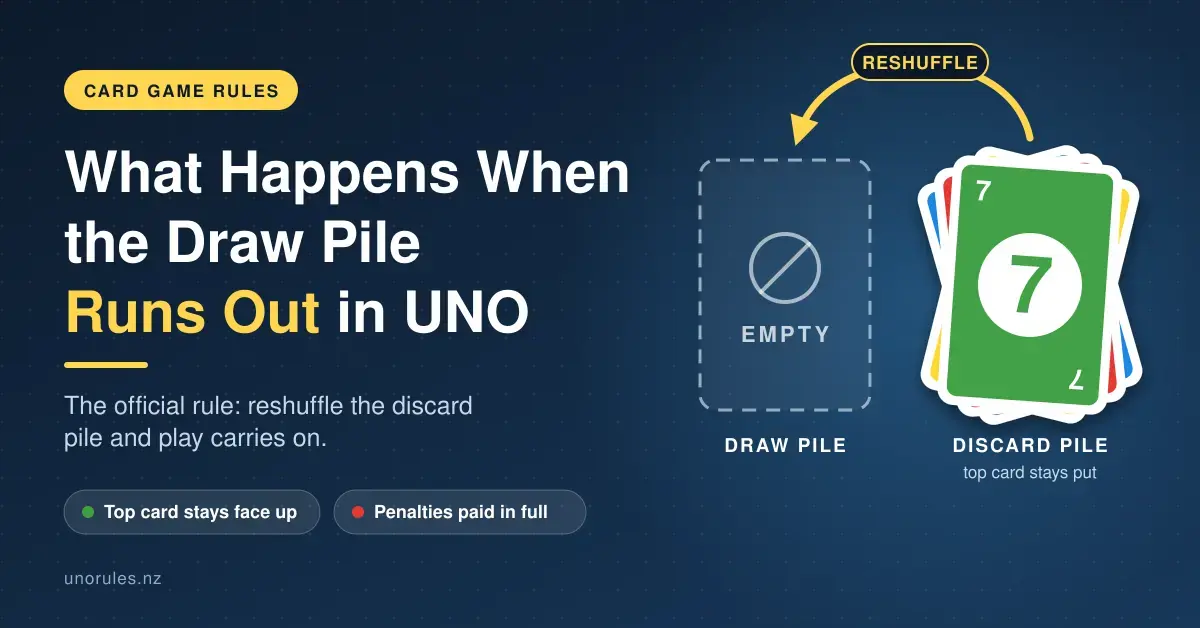
No. The official rulebook for classic Uno does not allow stacking Draw Two or Draw Four cards; each must be drawn and the turn passed on. Stacking is a popular house rule, so agree on it before you start. Note that the separate Uno Show ’em No Mercy edition does include an official stacking rule of its own.