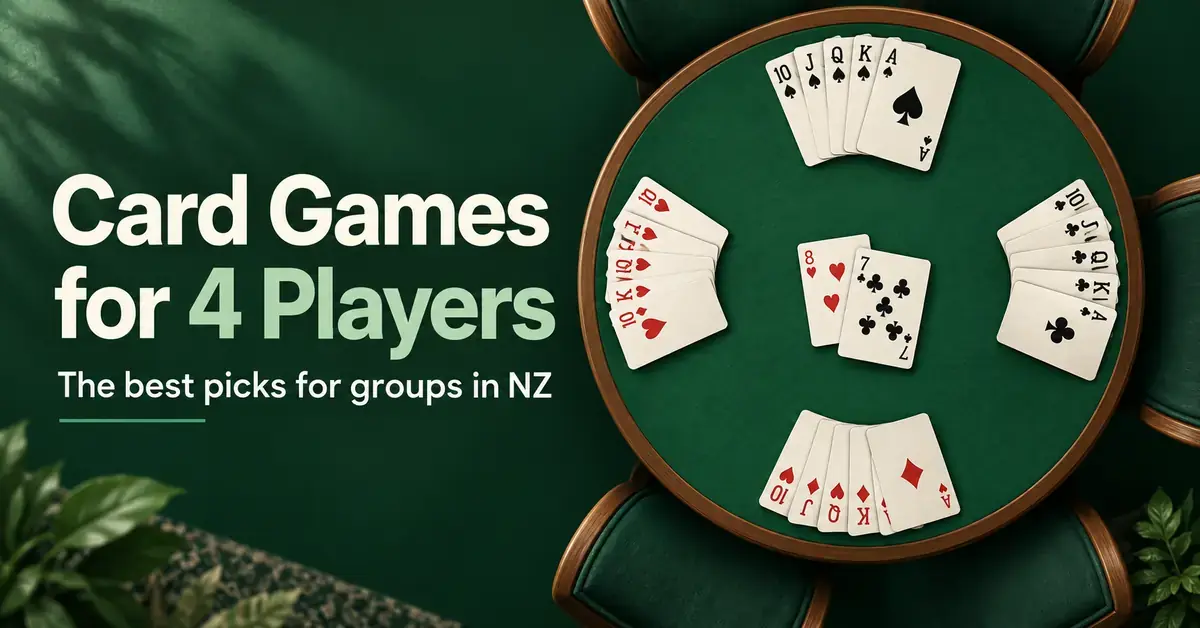
Four is arguably the sweet spot for card games. You have enough players for teams, banter and shifting alliances, but the game still moves quickly and everyone stays involved. Some of the most enduring games in the world — including New Zealand’s beloved 500 — were designed with exactly four players in mind. This guide walks through the best card games for 4 players, from classic trick-taking and rummy games to fast, casual favourites and modern party hits, with clear explanations of how each one works and who it suits.
What makes a card game great for four players?
Not every game feels the same at four as it does at two or six. The games that stand out with a foursome usually share a few traits:
- Even partnerships. Four players split cleanly into two teams of two, which unlocks a whole category of partnership games (500, Euchre, Spades, partnership Canasta) that simply don’t work with odd numbers.
- Enough cards to go around. A standard 52-card deck deals comfortably to four, giving each player a meaty hand without running short.
- Short waits between turns. With only four people, you’re never sitting idle for long, so engagement stays high.
- Room for strategy and luck. The best four-player games reward smart play while keeping enough chance that beginners can still win.
Key Points
- Four is the sweet spot for card games — enough players for teams and banter, but turns stay quick.
- Best for teams: 500, Euchre, Spades and partnership Canasta split cleanly into two pairs.
- Best for quick, casual fun: Uno, Last Card and Exploding Kittens.
- Best for a New Zealand table: 500 is the national card game and is built for exactly four players.
- Only one deck needed: Spades, Hearts, President and Rummy 500 run on a standard 52-card pack.
Trick-taking games that shine with four players
Trick-taking games — where players each play one card per “trick” and the highest card wins it — are the natural home of the four-player table. Partners sit opposite each other and try to out-manoeuvre the other team.
500 — New Zealand’s national card game
500 is widely regarded as the national card game of New Zealand and Australia, and it is built for four players in two fixed partnerships. It uses a special 43-card deck (Ace down to Five in spades and clubs, Ace down to Six in hearts and diamonds, plus a single joker — nicknamed the “bird” in Australia). Each player is dealt 10 cards, with three cards set aside as a “kitty”. Teams then bid to name the trump suit (or no trumps) and the number of tricks they think they can win. The first partnership to reach 500 points wins the game. It rewards communication and card-counting, making it a rite of passage at many Kiwi family gatherings.
Euchre
Euchre is a fast, punchy trick-taking game for four players in two teams. It uses a trimmed 24-card deck — just the 9, 10, Jack, Queen, King and Ace of each suit — and each player receives five cards. The quirk that gives Euchre its character is the “bowers”: the Jack of the trump suit becomes the highest card (the right bower), and the other Jack of the same colour becomes the second-highest (the left bower). One team names trump and must win at least three of the five tricks. Rounds are quick, so a full game flies by — perfect when you want something snappy.
Spades
Spades is a partnership bidding game played with a full 52-card deck, 13 cards to each player. Spades are always the trump suit. Before each hand, players bid the number of tricks they expect to win, and the two partners’ bids are added together. Confident players can bid “nil” (promising to win no tricks) for a bonus — or a big penalty if they slip up. The first partnership to 500 points takes the game. It’s a brilliant blend of prediction and teamwork that’s easy to learn but tough to master.
Hearts
Hearts flips the usual goal on its head: you want to avoid taking points. Each of the four players gets 13 cards, and every heart is worth one point while the Queen of Spades stings for 13. The player with the fewest points when someone crosses 100 wins. There’s a delicious twist called “shooting the moon” — collect every heart and the Queen of Spades and you score zero while everyone else takes 26. Hearts is a great gateway into trick-taking because it needs no partnerships and no bidding.
Rummy and melding games for four
Rummy-style games ask you to collect sets and runs of cards. They scale beautifully to four players and reward patience and observation.
Rummy 500
Rummy 500 (also called 500 Rum) is a classic that works well for two to four players. Using a standard 52-card deck plus two jokers, each player is dealt seven cards and races to form melds — sets of three or four of a kind, or runs of three or more cards in the same suit. Unlike basic rummy, you score points for the cards you meld and lose points for cards left in your hand, and you can lay off cards onto melds already on the table. The first player to 500 points wins. It’s a friendly, chatty game that suits mixed-age groups.
Canasta
Canasta is the deeper, more strategic cousin in the rummy family, and it is at its very best with four players in two partnerships. It uses two full decks plus jokers (108–110 cards), and each player is dealt 11 cards. The aim is to build “canastas” — melds of seven cards of the same rank — while managing wild cards (jokers and twos) and the ever-growing discard pile. Games often run to 5,000 points across several hands, so Canasta is one to settle in for on a rainy afternoon. If you and a friend enjoy plotting together, it’s hard to beat.
Fast, casual and shedding games
“Shedding” games are all about being the first to empty your hand. They’re quick to teach, forgiving for beginners and endlessly re-playable — ideal when four people just want to relax and laugh.
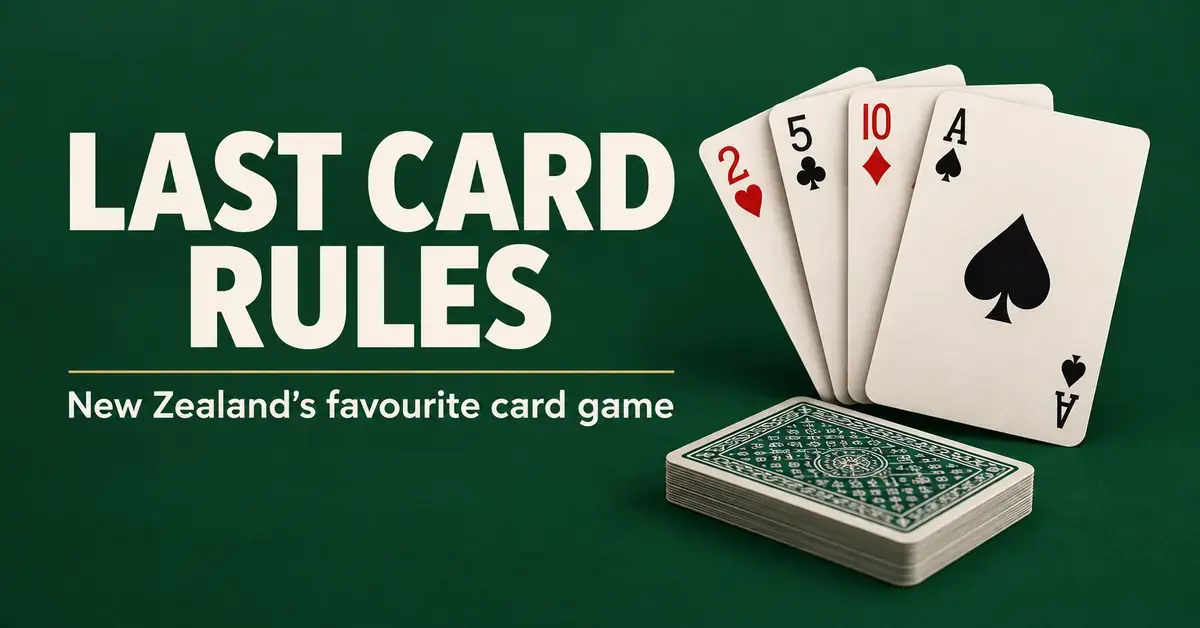
Last Card
Last Card is a shedding game hugely popular in New Zealand and Australia, closely related to Crazy Eights and Uno. Using a standard 52-card deck, each player is dealt seven cards and tries to be first to shed them all by matching the suit or rank of the top discard. Special cards do the heavy lifting: a Two forces the next player to pick up two (and can be stacked), an Eight skips a turn, an Ace changes the suit, and a Jack reverses direction. A common Kiwi house rule is that you can’t win on a special card — your final card must be an ordinary one. It’s a household staple for good reason.
Uno
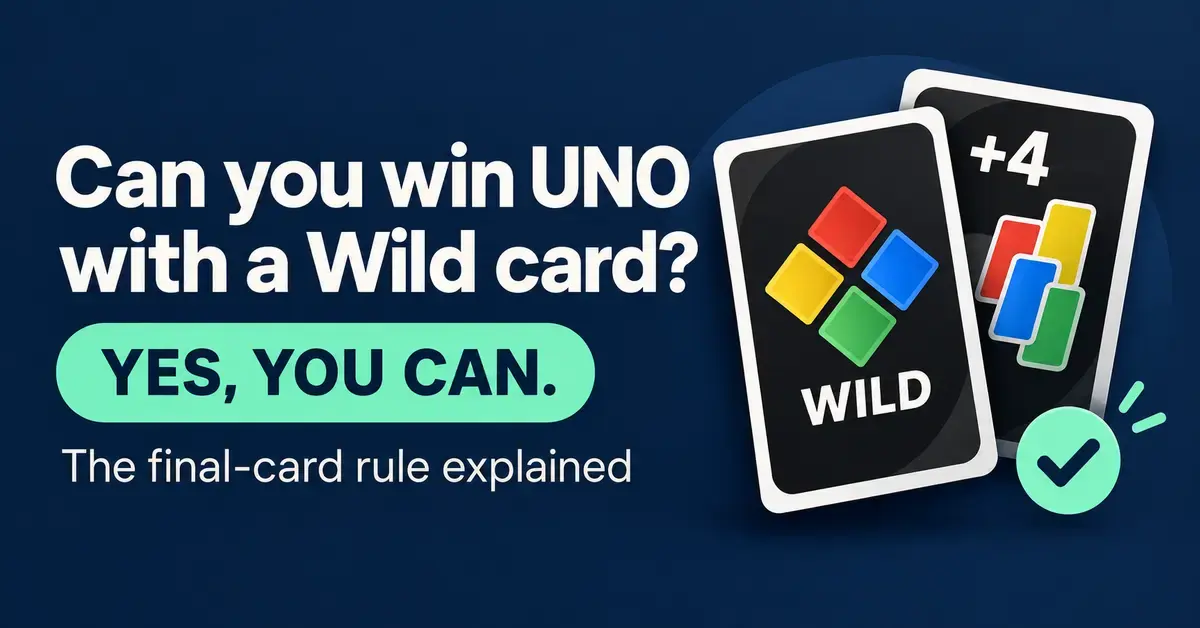
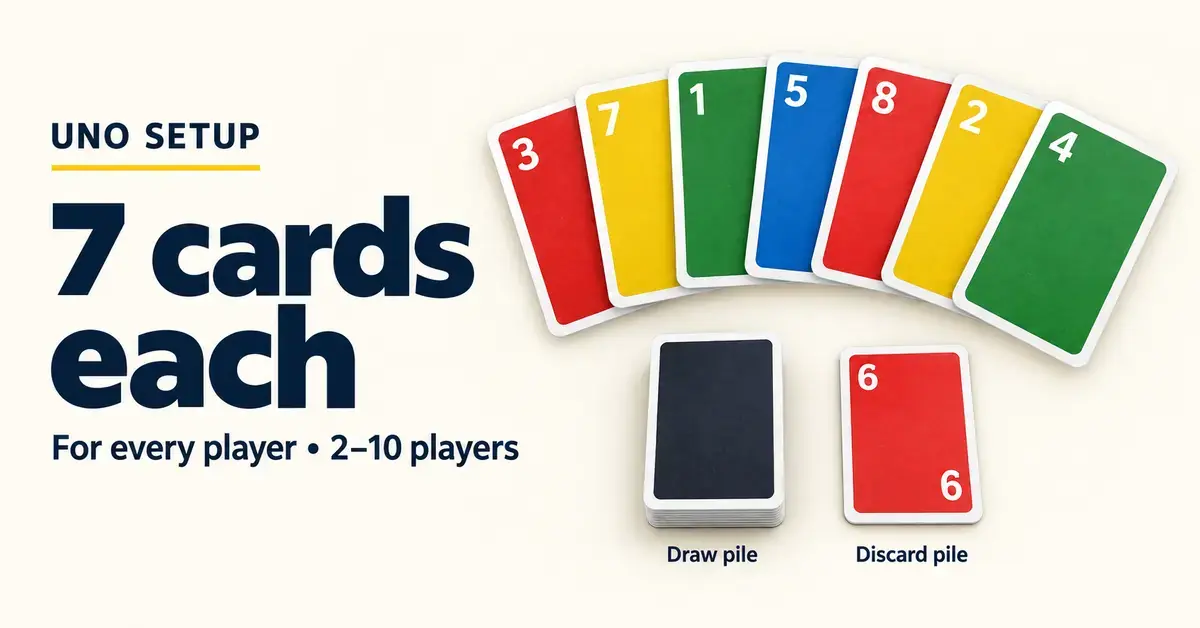
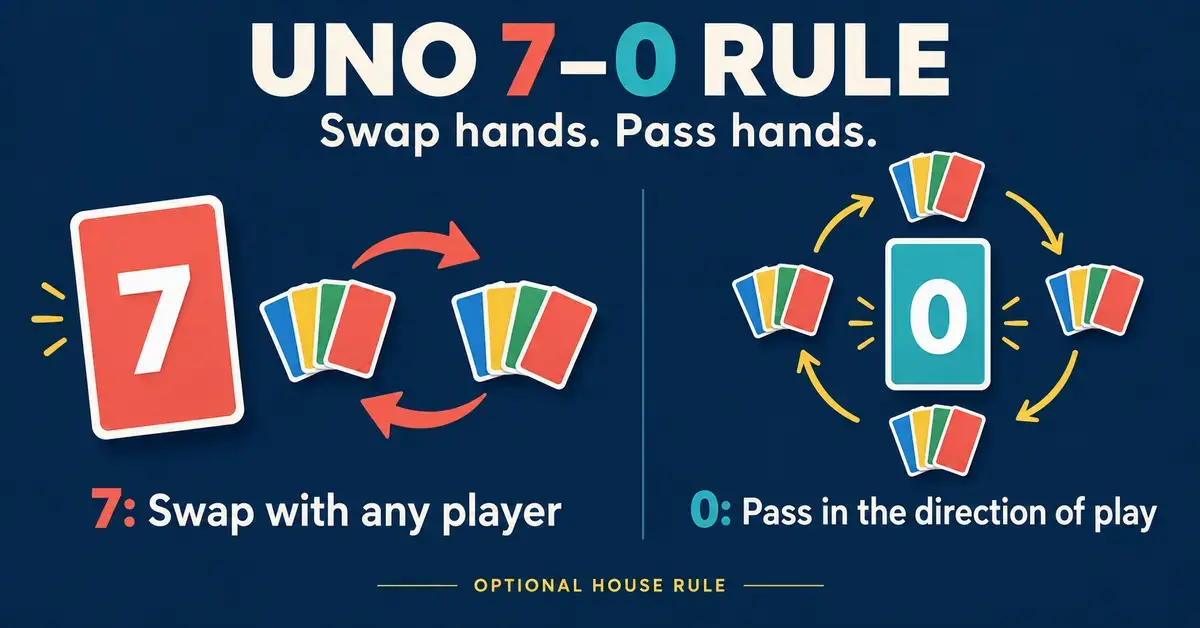
Uno needs little introduction. Officially playable by 2–10 players, it hits a real sweet spot at four, where Skip, Reverse and Draw Two cards create just enough chaos without dragging. Each player starts with seven cards and races to shed them, calling “Uno!” when down to one. Because it uses its own dedicated deck of 108 cards rather than a standard pack, it’s a great grab-and-go option for families. If you’re new to it, our beginner’s guide to the Uno rules covers everything step by step.
President (Scum)
President — also known as Scum — is a shedding game with a social sting, and four is a comfortable minimum. Using a standard deck dealt out evenly, players shed single cards or matching sets, with the ranking running 2 (high) down to 3 (low). The first to empty their hand becomes President; the last becomes the Scum. Between rounds the loser hands their best cards to the President and receives rubbish in return, so fortunes swing round after round. It’s loud, funny and best with a group that enjoys a bit of ribbing.
Modern party card games for a foursome
Beyond the traditional deck, a wave of self-contained boxed card games plays superbly at four.
Exploding Kittens
Exploding Kittens is a quick, illustrated “push-your-luck” game for 2–5 players, so four sits right in its comfort zone. Each turn you draw a card, hoping not to hit an Exploding Kitten — if you do and can’t play a Defuse card, you’re out. Action cards let you skip, attack, peek at the deck or steal from opponents, and the last player standing wins. Rounds take just 10–20 minutes, making it a great filler between longer games or a light option for a casual night. For a full rundown, see our Exploding Kittens guide for NZ players.
Four-player card games compared
Here’s how the ten games above stack up on the details that matter when you’re choosing what to play.
Comparison
| Game | Players (works at 4) | Deck | Type | Best for |
|---|---|---|---|---|
| 500 | 4 (2 partnerships) | Special 43-card deck | Trick-taking / bidding | Kiwi group nights, strategy |
| Euchre | 4 (2 teams) | 24-card deck | Trick-taking | Fast partnership play |
| Spades | 4 (2 partnerships) | Standard 52 | Trick-taking / bidding | Teamwork & prediction |
| Hearts | 4 (ideal) | Standard 52 | Trick-avoidance | Beginners, no teams |
| Rummy 500 | 2–4 | 52 + 2 jokers | Rummy / melding | Relaxed mixed-age play |
| Canasta | 4 (2 partnerships) | Two decks + jokers | Rummy / melding | Deeper, longer sessions |
| Last Card | 2–6 | Standard 52 | Shedding | Casual family favourite (NZ) |
| Uno | 2–10 | Own 108-card deck | Shedding | Grab-and-go fun |
| President (Scum) | 4+ | Standard 52 | Shedding / climbing | Loud, social groups |
| Exploding Kittens | 2–5 | Own deck | Push-your-luck party | Quick 10–20 min games |
How to choose the right game for your group
With so many strong options, the best pick depends on your group and your mood:
- Want teams? Choose a partnership game — 500, Euchre, Spades or partnership Canasta all pair players two-and-two.
- Short on time? Euchre, Uno, Last Card and Exploding Kittens all deliver quick rounds.
- Playing with beginners or kids? Uno, Last Card and Hearts are gentle to learn. For younger tables you might also browse our roundup of the best card games in NZ.
- After something meatier? Canasta and 500 reward repeat play and deeper strategy.
- Just one deck to hand? Spades, Hearts, President and Rummy 500 all run on a standard 52-card pack.
If your group size changes often, it’s worth knowing which games flex. Many titles here also work at other counts — see our companion guides to 3-player card games and card games for two players.
Common mistakes to avoid at a four-player table
- Skipping the rules refresher. Games like 500 and Canasta have scoring quirks; a two-minute recap prevents mid-game arguments.
- Ignoring house rules. Last Card and Uno vary from household to household — agree on stacking, suit changes and “can you win on a special card?” before you deal.
- Forgetting partnership etiquette. In 500 and Spades, table-talk and signalling to your partner are usually against the rules; keep bids and plays honest.
- Choosing a game that’s too long for the occasion. Match the game to your time — a full game of Canasta is a commitment, while Euchre or Exploding Kittens fits a spare 20 minutes.
Sources
- Pagat — Five Hundred (500) rules
- Britannica — Euchre
- Pagat — Spades rules
- Pagat — Hearts rules
- Pagat — 500 Rum (Rummy 500) rules
- Pagat — Canasta rules
- Card-Games.nz — Last Card NZ rules and variations
- GameRules — Uno rules and player count
- Pagat — President (Scum) rules
- Official Game Rules — Exploding Kittens
Frequently Asked Questions (FAQ)
What is the best card game for 4 players?
There’s no single winner — it depends on your group. For teams and strategy, 500 and Spades are hard to beat; for quick, casual fun, Uno, Last Card and Exploding Kittens are excellent. In New Zealand, 500 is a natural first choice because it’s designed for exactly four players in partnerships.
Which 4-player card games only need a standard deck?
Plenty. Spades, Hearts, President and Rummy 500 all use a standard 52-card pack (Rummy 500 adds two jokers). Canasta needs two decks, while 500 uses a special 43-card deck and Uno and Exploding Kittens come with their own cards.
What are good 4-player card games for beginners?
Uno, Last Card and Hearts are the easiest to pick up. They have simple goals — shed your cards or avoid points — and forgiving rules, so new players can enjoy them straight away without much explanation.
Are there good team card games for exactly four people?
Yes. Four players split neatly into two pairs, which is ideal for partnership games such as 500, Euchre, Spades and partnership Canasta. Partners sit opposite each other and work together to win tricks or build melds.
How long does a typical 4-player card game take?
It varies widely. Exploding Kittens and a round of Euchre or Uno can wrap up in 10–20 minutes, while games played to a target score — like 500, Spades, Rummy 500 or Canasta — can run anywhere from 30 minutes to well over an hour.