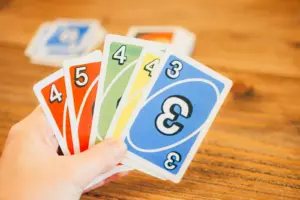
This comprehensive guide clarifies the exact penalties and procedural requirements for when a player fails to announce "UNO" during a match in New Zealand. We examine the mandatory two-card penalty, the specific window of time an opponent has to catch the offender, and the official rules regarding "false accusations." Furthermore, the article explores the strategic implications of the UNO call in high-level competitive play, detailing how seasoned players use observation to force penalties on their rivals. By understanding the official Mattel standards versus common house-rule misconceptions, players can ensure their games remain fair, consistent, and strategically deep, whether playing for fun or for a 500-point tournament victory. Read more

The requirement to shout "UNO" is perhaps the most iconic and tension-filled mechanic in the game, serving as a formal warning to all other participants that a player is one move away from victory. In the New Zealand gaming context, this rule is strictly enforced to maintain the competitive integrity of the round. Forgetting to make the announcement is not a minor oversight; it is a mechanical failure that carries a specific penalty designed to pull the leader back into the pack. When a player has only one card left in their hand, they must alert the table immediately to allow others to adjust their defensive strategies.
- Mandatory Call: Must be said the moment you have only one card remaining.
- The Penalty: Drawing two cards from the draw pile.
- Catching the Player: Only applies if an opponent notices and calls it out.
- Timing: The catch must occur before the next player begins their turn.
- Goal: To prevent "ninja" wins where a player goes out without warning.
Mandatory Call: Must be said the moment you have only one card remaining.
The Penalty: Drawing two cards from the draw pile.
Catching the Player: Only applies if an opponent notices and calls it out.
Timing: The catch must occur before the next player begins their turn.
Goal: To prevent "ninja" wins where a player goes out without warning.
The Official Penalty for a Missed UNO Call
If you forget to say "UNO" and an opponent catches you, the official penalty is that you must immediately draw two cards from the draw pile. These cards are added to your hand, and you continue play as normal (you do not lose your turn). This penalty is mathematically significant because it effectively triples your remaining hand size, moving you from a state of imminent victory back into a vulnerable position. In New Zealand tournaments, this penalty is a primary tool for "king-making," where the rest of the table works together to ensure the person in the lead is constantly monitored for this specific mistake.
| Rule Aspect | Official Standard |
| Penalty Amount | 2 Cards |
| Effect on Turn | No turn loss |
| Timing of Draw | Immediate upon being caught |
Why Two Cards?
The two-card penalty is specifically balanced to be punishing without being completely exclusionary. It provides enough of a setback that the player is unlikely to win on their very next turn, but it doesn't inflate their hand so much that the game becomes a stalemate.
The Crucial Window for Catching an Opponent
A common point of contention in NZ household games is when a player can be caught. According to official rules, you cannot be penalized for forgetting to say "UNO" if the next player has already started their turn. "Starting a turn" is defined as either drawing a card from the deck or playing a card onto the discard pile. If you forget to say "UNO," and the person to your left plays their card before anyone shouts "Caught you!", you are officially "safe" and can continue with your single card. This creates a high-pressure environment for opponents to be vigilant and act quickly.
- Start of Window: The moment the player's second-to-last card touches the discard pile.
- End of Window: The moment the next player begins their action.
- Actionable Window: Typically lasts only a few seconds.
Start of Window: The moment the player's second-to-last card touches the discard pile.
End of Window: The moment the next player begins their action.
Actionable Window: Typically lasts only a few seconds.
Vigilance as a Defensive Strategy
In competitive settings, players will often hover their hand over the draw pile if they suspect the current player is about to reach "UNO." This split-second readiness is what distinguishes a top-tier player from a casual observer.
Procedural Requirements for a Valid "Catch"
To successfully penalize a player for forgetting to say "UNO," the "catch" must be vocal and directed at the offender. In New Zealand, common phrases include "Caught you!", "UNO!", or "You didn't say it!". While the specific wording isn't strictly mandated by Mattel, the intent must be clear. It is also important to note that the player who is being caught must actually have only one card in their hand at the time of the accusation. If they have already played their last card and it is no longer their turn, it is often too late to enforce the penalty unless the catch happened during the transitional window.

| Accusation Step | Requirement |
| 1. Identification | See that the player has 1 card left. |
| 2. Vocalisation | Clearly shout the accusation. |
| 3. Verification | Ensure the next player hasn’t acted yet. |
Handling False Accusations
If you shout "UNO!" at a player who still has two cards, there is officially no penalty for you. However, doing so repeatedly is considered poor sportsmanship and can lead to table tension.
When the Last Card Played is a Draw Two
A unique scenario arises when a player’s second-to-last card is a "Draw Two" or "Wild Draw Four." Even if they successfully say "UNO," the next player must still draw their cards. If the player forgets to say "UNO" while making someone else draw, they can still be caught. In this instance, the player who was supposed to draw cards should be the one most motivated to catch the offender, as forcing them to draw two cards back can neutralize the advantage gained by the initial penalty card.
- Sequence 1: Player A plays Draw Two and says "UNO."
- Sequence 2: Player B draws 2 cards and misses their turn.
- Sequence 3: If Player A forgot "UNO," they draw 2 cards before Player B's turn is skipped.
Sequence 1: Player A plays Draw Two and says "UNO."
Sequence 2: Player B draws 2 cards and misses their turn.
Sequence 3: If Player A forgot "UNO," they draw 2 cards before Player B's turn is skipped.
The Double Penalty Dynamic
In some high-stakes games, a player might be so focused on the excitement of forcing a "Draw Four" on an opponent that they neglect their own "UNO" call. This results in both players drawing cards, essentially resetting the power balance of the round.
Strategic "Stealth" and Avoiding the Penalty
The best way to avoid the penalty is to incorporate the "UNO" call into the physical action of playing the card. Many New Zealand experts recommend saying the word exactly as the card leaves your fingertips. This ensures there is zero gap between the play and the announcement. Some players attempt to "stealth" their cards—playing very quickly and quietly—to hope no one notices they are down to one. However, this is risky, as the official rules require the call to be audible to the rest of the table.
| Strategy | Execution | Effectiveness |
| Simultaneous Call | Say “UNO” as you play the card | 100% Safe |
| The Whisper | Saying it quietly | High Risk (Invalid) |
| The Distraction | Playing during a conversation | Medium Risk |
Audible Clarity Standards
If a player claims they said "UNO" but no one else heard it, the table usually votes. To avoid this, players are encouraged to speak clearly. In formal NZ tournament play, a muffled or whispered "UNO" can be ruled as a missed call.
The Rule for Multiple Cards Left
It is a common "house rule" myth that you must say "UNO" every time you have one card, even if you just drew it. According to the official rules, the penalty only applies if you play a card that leaves you with one. If you are forced to draw cards and end up with one (for example, you had two, played one, was caught, drew two, then played two and are back to one), you must say "UNO" again. The call is required every single time your hand size transitions from two to one via a play.
- Scenario A: You have 2 cards, play 1. Must say "UNO."
- Scenario B: You have 1 card, are forced to draw 2. Now you have 3.
- Scenario C: You play 2 cards (in some variations) or play 1 then 1. Must say "UNO" on the transition to 1.
Scenario A: You have 2 cards, play 1. Must say "UNO."
Scenario B: You have 1 card, are forced to draw 2. Now you have 3.
Scenario C: You play 2 cards (in some variations) or play 1 then 1. Must say "UNO" on the transition to 1.
Drawing Into UNO
If you draw a card from the deck and it leaves you with one card (because you previously had zero playable cards), you do NOT need to say "UNO" until you actually play a card that leaves you with one.
Misconceptions About "Outing" Your Hand
Some players believe that if you forget to say "UNO," you must show your final card to the table as part of the penalty. This is incorrect. The only penalty is the two-card draw. Your original final card remains secret, and you now have two additional secret cards. Maintaining the "hidden" nature of your hand is vital for your chances of winning the round after the penalty has been served.

| Hand Detail | Official Status |
| Card Count | Must be visible to all |
| Card Faces | Must remain hidden |
| Penalty Cards | Picked from top of deck, kept hidden |
Maintaining Card Count Transparency
While you don't have to show the faces, you cannot hide your cards under the table or stack them so tightly that others can't see you only have one left. Transparency of count is a prerequisite for the "UNO" rule to function fairly.
House Rules vs. Official NZ Tournament Rules
In many Kiwi living rooms, people play "progressive" penalties where forgetting to say "UNO" results in drawing four or even five cards. While fun for family nights, this is not the official standard. Official rules are designed to keep the game moving. Similarly, some house rules suggest that you can't be caught if your hand is empty. However, if you play your final card and didn't say "UNO" on the previous turn (when you went from 2 to 1), you can still be caught if the next player hasn't started their turn.
- House Rule: "You draw 5 cards for forgetting." (Incorrect)
- House Rule: "You can't be caught once the card touches the pile." (Incorrect)
- Tournament Rule: 2-card draw, strict timing window.
House Rule: "You draw 5 cards for forgetting." (Incorrect)
House Rule: "You can't be caught once the card touches the pile." (Incorrect)
Tournament Rule: 2-card draw, strict timing window.
Standardizing Your Local Group
To prevent arguments, it is highly recommended to state "We are playing official Mattel rules" before the first deal. This clarifies that the penalty is exactly two cards and the timing window is strictly observed.
Psychological Warfare and the UNO Call
In high-level play, the "UNO" call is a tool for psychological pressure. Players will often stare intently at someone with two cards to make them nervous, increasing the likelihood that they will forget the call. Conversely, some players will loudly announce "UNO" even when they have three or four cards just to confuse the table's tracking—though this is technically legal, it is a "trash talk" tactic that can backfire if you actually lose track of your own count.
| Tactic | Goal | Risk |
| The Stare-Down | Force a mistake | You miss your own turn strategy |
| The Fake Call | Confuse opponents | No mechanical benefit |
| The Fast Play | Prevent a “catch” | You might misplay a color |
Counting Opponents' Cards
The most successful players in the New Zealand circuit are those who constantly count. Knowing that the person to your right has two cards means you are ready to shout the moment their hand moves toward the discard pile.
The Final Card and Winning the Round
What happens if you play your very last card and you forgot to say "UNO" on the previous turn? If an opponent catches you before the next player (in this case, the next round's start or the resolution of the final card) acts, you must draw two cards and the game continues. You have not won yet. You only win when you play your last card AND you have successfully navigated the "UNO" call requirements of the preceding turn.
- Winning Condition: Zero cards in hand.
- Prerequisite: Successful "UNO" call (or not getting caught).
- Final Action: If your last card is a Draw Two, the penalty is resolved first.
Winning Condition: Zero cards in hand.
Prerequisite: Successful "UNO" call (or not getting caught).
Final Action: If your last card is a Draw Two, the penalty is resolved first.
Resuming Play After a Final Turn Catch
If you are caught on your final card, you take your two penalty cards and the turn passes to the next player. The round continues as if you had never been at zero cards. This is the most devastating time to be caught, as you were moments away from scoring.
Final Thoughts
The "UNO" call is the heart of the game's social and competitive tension. Forgetting to say it is a rite of passage for every player, but understanding the official 2-card penalty and the specific "next player" timing window ensures that the game remains a test of skill rather than a shouting match. By sticking to the official NZ standards, players can enjoy the high-stakes drama of the "catch" while maintaining a fair environment for everyone at the table. For a look at the global evolution of these rules, the UNO Wikipedia page provides excellent historical context.
Ngā Pātai Auau (FAQ)
What is the penalty for forgetting to say UNO? The penalty is drawing two cards from the draw pile.
When is it too late to catch someone who forgot to say UNO? It is too late once the next player has started their turn by either drawing or playing a card.
Do I have to say UNO if I draw my second-to-last card? No, you only have to say it when you play a card that leaves you with only one.
Can anyone catch a player who forgets to say UNO? Yes, any player at the table can call out the offender and force the penalty.
What happens if I am caught on my very last card? You must draw two cards and the game continues; you have not won the round yet.
Is there a penalty for a false UNO accusation? No, there is no official penalty for wrongly accusing someone of forgetting to say UNO.
Does saying UNO late count? If you say it after the card touches the pile but before someone else catches you, it is generally considered valid.
What if the next player is skipped—does that change the window? The window extends until the player after the skipped player begins their turn.
How many cards do I draw in a two-player game for this mistake? The penalty remains exactly two cards, regardless of the number of players.
Do I have to say UNO if I swap hands and end up with one card? According to official rules, yes, any action that leaves you with one card requires the announcement.