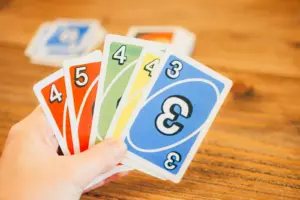
This comprehensive guide compares and contrasts official UNO rules for kids vs adults, detailing how to simplify mechanics for younger New Zealanders while maintaining the strategic depth preferred by seasoned players. We explore the balance between "House Rules" and official Mattel standards, the psychological benefits of tiered complexity, and practical modifications for family game nights from Auckland to Invercargill. Whether you are teaching a preschooler basic color matching or engaging in a high-stakes tournament with adults, understanding how to scale difficulty ensures the game remains inclusive, educational, and competitive. We cover everything from card hand management to advanced scoring systems, providing a professional framework for every generation at the table.

Defining the Core Differences in Gameplay
When examining UNO rules for kids vs adults, the primary distinction lies in the level of strictness regarding penalties and sequence. For children, UNO serves as a foundational tool for developing cognitive skills such as pattern recognition and turn-taking; therefore, rules are often softened to encourage participation and prevent frustration. In contrast, adult gameplay typically adheres to the rigorous Mattel rulebook, where "bluffing" with a Wild Draw Four or catching someone failing to say "UNO" is the cornerstone of the experience. In New Zealand, family games often act as a bridge, starting with simplified rules and gradually introducing "pro" mechanics as the children age.
- Skill Level: Kids focus on color and number matching; adults focus on hand management and probability.
- Penalty Strictness: Forgetting to say "UNO" might be forgiven for a child but is strictly penalised for adults.
- Speed of Play: Adult games are fast-paced; kid-friendly games allow for more deliberation and assistance.
- Tactical Depth: Adults use action cards strategically to block leaders; kids often play them as soon as they are drawn.
Skill Level: Kids focus on color and number matching; adults focus on hand management and probability.
Penalty Strictness: Forgetting to say "UNO" might be forgiven for a child but is strictly penalised for adults.
Speed of Play: Adult games are fast-paced; kid-friendly games allow for more deliberation and assistance.
Tactical Depth: Adults use action cards strategically to block leaders; kids often play them as soon as they are drawn.
| Feature | Kids’ Simplified Version | Adult Standard Version |
| Primary Goal | Educational & Social Fun | Strategic Victory & Points |
| Draw Pile Exhaustion | Reshuffle immediately with help | Reshuffle via dealer |
| Action Cards | Explained every time they are played | Played instantly with known effects |
| Winning Condition | First to zero cards | First to 500 points across rounds |
Scaffolding the Learning Process
In a professional NZ educational context, "scaffolding" is the process of providing temporary support until a child masters a skill. Applying this to UNO means starting with "Open Hand" games where adults can see the child's cards and offer advice. As the child gains confidence, the hands move to "Closed," but the adult might still prompt them with questions like, "Do you have a Blue card to match that Blue 7?" This transition is vital for moving from the "Kids" version of the rules to the "Adult" standard without losing the fun.
The Role of Action Cards in Youth Play
Action cards like Skip, Reverse, and Draw Two are the "chaos engines" of UNO, and their impact varies greatly depending on the age of the players. For young Kiwi kids, being "skipped" can feel like an unfair exclusion, which is why many families modify these rules early on. In adult games, these cards are weapons used to systematically dismantle an opponent's lead. Understanding the emotional weight of these cards is essential when deciding which version of the rules to implement during a mixed-age session.
- Skip Cards: For kids, may be used as "Play Again" cards; for adults, they are used to block opponents.
- Reverse Cards: Often confusing for young kids; for adults, they are vital for controlling turn order.
- Draw Two: Frequently "stacked" in house rules (though not official) to add excitement.
- Wild Cards: Used by kids to pick their favourite color; used by adults to set up a winning sequence.
Skip Cards: For kids, may be used as "Play Again" cards; for adults, they are used to block opponents.
Reverse Cards: Often confusing for young kids; for adults, they are vital for controlling turn order.
Draw Two: Frequently "stacked" in house rules (though not official) to add excitement.
Wild Cards: Used by kids to pick their favourite color; used by adults to set up a winning sequence.
| Card Type | Interpretation for Kids | Interpretation for Adults |
| Reverse | “Change the way we go around” | “Redirect play to avoid a leader” |
| Skip | “Wait one turn, buddy” | “Tactical denial of a turn” |
| Draw Two | “Get some more pretty cards” | “Direct penalty to force hand growth” |
Case Study: The "Gentle Skip"
Consider a family game in Hamilton. If a parent plays a Skip card on a 5-year-old, the child might feel discouraged. A common modification in "Kids vs Adults" play is the "Soft Skip," where the child still gets to draw a card even if they can't play, keeping them engaged with the deck even when their turn is technically bypassed. This keeps the game moving while respecting the child's developmental need for constant interaction.
Penalty Management and the "UNO" Call
The requirement to shout "UNO" when down to one card is the most iconic rule of the game, but it is also the most frequent source of disputes. In adult matches, the window to catch a player is narrow—once the next player begins their turn, the opportunity is lost. For kids, this rule is often handled with a "grace period." If a child forgets, the adults might give a gentle reminder rather than forcing a two-card penalty. This allows the child to learn the habit of announcing their status without the immediate sting of a setback.
- Adult Rule: Must say "UNO" before the next player starts; failure results in a 2-card draw.
- Kids Rule: Reminder given by the table; penalty only applied if they repeatedly forget.
- Challenge Mechanic: Adults may "challenge" a Wild Draw Four; kids usually play it without scrutiny.
- Fair Go: NZ cultural value that emphasizes fairness over strict technicalities in casual play.
Adult Rule: Must say "UNO" before the next player starts; failure results in a 2-card draw.
Kids Rule: Reminder given by the table; penalty only applied if they repeatedly forget.
Challenge Mechanic: Adults may "challenge" a Wild Draw Four; kids usually play it without scrutiny.
Fair Go: NZ cultural value that emphasizes fairness over strict technicalities in casual play.
| Violation | Adult Consequence | Kids Modification |
| Forgot “UNO” | Draw 2 cards immediately | Verbal warning / “Gentle Reminder” |
| Playing out of turn | Card returned to hand | Allowed if they didn’t see the turn |
| Drawing incorrectly | Penalty draw | Directed to the correct pile |
Encouraging Vocal Communication
Teaching kids to say "UNO" is actually a great way to improve their situational awareness. In a social setting, it teaches them to monitor not just their own progress but the progress of everyone at the table. To make this fun for younger children, some NZ families replace the word "UNO" with a fun family nickname or a silly sound, which makes the requirement feel like a game rather than a strict legal obligation.
Strategy and Hand Management for Adults
Adult UNO is significantly more complex than the version played by children because it involves "hand management"—the art of holding onto powerful cards until the perfect moment. While a child might play a Wild Draw Four on their first turn because it's a "cool card," an adult will save it to counter a leader or change a color they cannot match. This difference in foresight is the primary barrier when kids and adults play together, often requiring the adults to "play down" to keep the game competitive for the younger participants.
- Saving Power Cards: Adults hold Draw Fours for the final turns; kids use them for instant gratification.
- Color Tracking: Adults track which colors opponents are drawing, indicating a lack of that color.
- Dumping Points: Adults get rid of high-value cards (8s, 9s, Action cards) first to minimize score risk.
- The "End Game": Adults plan their final three moves; kids focus on the immediate turn.
Saving Power Cards: Adults hold Draw Fours for the final turns; kids use them for instant gratification.
Color Tracking: Adults track which colors opponents are drawing, indicating a lack of that color.
Dumping Points: Adults get rid of high-value cards (8s, 9s, Action cards) first to minimize score risk.
The "End Game": Adults plan their final three moves; kids focus on the immediate turn.
| Strategic Element | Adult Execution | Kids Execution |
| Wild Draw Four | Defensive “Hail Mary” | Offensive “Fun Move” |
| Color Choice | Mathematical (based on hand) | Preference (based on favourite color) |
| Point Management | High focus on low-score hand | Zero focus on card point values |
Understanding Probability in Adult Play
Adults naturally (or consciously) calculate the odds of an opponent having a certain color. In a deck of 108 cards, if no Yellow has been played for ten turns, an adult knows the draw pile is "heavy" with Yellow. Teaching this to older children (10+) is a fantastic way to introduce them to basic probability and game theory, transitioning them from the "Kids" style of play into the more calculated "Adult" style.

Modification for Toddlers: UNO Junior
For the youngest New Zealanders, even the simplified standard UNO can be a challenge. This has led to the popularity of "UNO Junior," which features animals and simpler numbers. However, you can adapt a standard deck for toddlers by removing the Action cards entirely. This "Level 1" version of UNO focuses purely on matching—if the card on the pile is a Red 5, the toddler just needs to find another Red card or another 5. This removes the "mean" elements of the game and focuses on the win.
- Level 1: Match colors and numbers only; no Action cards.
- Level 2: Introduce Wild cards (no draw penalty).
- Level 3: Introduce Skips and Reverses.
- Level 4: Full game including Draw Twos and Wild Draw Fours.
Level 1: Match colors and numbers only; no Action cards.
Level 2: Introduce Wild cards (no draw penalty).
Level 3: Introduce Skips and Reverses.
Level 4: Full game including Draw Twos and Wild Draw Fours.
| Developmental Stage | Recommended Rules | Focus |
| Ages 3-4 | Color/Number Match Only | Basic Recognition |
| Ages 5-7 | Standard Rules, No Penalties | Pattern & Sequence |
| Ages 8-12 | Standard Rules with Penalties | Strategy & Ethics |
| Adults | Official Rules & Scoring | Competition & Mastery |
The Power of Visual Aids
When playing with toddlers, using a "card holder" (often a slotted piece of wood or plastic) can be a game-changer. It allows small hands, which may struggle to fan out cards, to see their entire hand at once. This reduces the physical frustration of dropping cards and allows the child to focus on the cognitive task of matching. It is a simple professional adjustment that makes the "Kids vs Adults" divide much smaller.
Scoring: Points vs. First to Finish
One of the biggest differences in UNO rules for kids vs adults is how the winner is determined. Official rules state that the winner of a round receives points based on the cards remaining in their opponents' hands, with the ultimate goal being 500 points. Most kids' games ignore this entirely, ending as soon as the first person plays their last card. Introducing the scoring system to older children adds a layer of math and long-term planning that elevates the game from a simple pastime to a strategic match.
- Kids Scoring: Winner takes the round; start a fresh game immediately.
- Adult Scoring: Detailed tallying (Numbers = Face value, Actions = 20, Wilds = 50).
- The "Mercy" Rule: In family play, if a child reaches a certain hand size, the round might end.
- Tournament Style: Tracking scores across an entire evening to find an overall champion.
Kids Scoring: Winner takes the round; start a fresh game immediately.
Adult Scoring: Detailed tallying (Numbers = Face value, Actions = 20, Wilds = 50).
The "Mercy" Rule: In family play, if a child reaches a certain hand size, the round might end.
Tournament Style: Tracking scores across an entire evening to find an overall champion.
| Card | Point Value | Adult Strategy |
| 0-9 Numbers | Face Value (0-9) | Hold low numbers, dump high numbers |
| Action Cards | 20 Points | Use before someone goes out |
| Wild Cards | 50 Points | High risk to hold; play strategically |
Teaching Arithmetic Through Scoring
Using the official scoring system is a subtle way for NZ parents to practice addition with their school-aged children. After a round ends, having the child count up the points in the adults' hands gives them a sense of accomplishment and a practical application for their math skills. It also teaches them that even if they didn't win the round, having fewer high-value cards in their hand is a "moral victory" because it gives the winner fewer points.
Stacking Rules: The Great NZ Debate
While official Mattel rules prohibit "stacking" (playing a Draw Two on a Draw Two), it is one of the most common house rules in New Zealand. In "Kids vs Adults" scenarios, stacking can either be a source of great laughter or a cause of tears. For adults, it adds a layer of "revenge" and escalation. For kids, being the recipient of a stacked +8 draw can be overwhelming. Establishing the "Stacking Protocol" before the game starts is essential to avoid mid-game friction.
- Official: Stacking is illegal.
- House Rule: Stacking +2 on +2 or +4 on +4 is allowed.
- Kids Impact: Can lead to very large hands and long games.
- Adult Impact: Increases volatility and the "comeback" potential.
Official: Stacking is illegal.
House Rule: Stacking +2 on +2 or +4 on +4 is allowed.
Kids Impact: Can lead to very large hands and long games.
Adult Impact: Increases volatility and the "comeback" potential.
| Stacking Status | Game Length | Emotional Intensity |
| No Stacking (Official) | Shorter, predictable | Moderate |
| Stacking Allowed | Longer, unpredictable | High |
Setting Expectations in Dunedin and Beyond
Whether you are in a flat in Dunedin or a family home in Napier, the rule on stacking should be the first thing mentioned after the deal. For games involving younger kids, it is generally recommended to stick to the official "No Stacking" rule to keep the game balanced. For teenagers and adults, allowing stacking can turn a standard round into an epic battle that will be talked about for weeks.
Social Etiquette and "Fair Go"
The concept of a "Fair Go" is central to New Zealand's identity, and it applies perfectly to UNO rules for kids vs adults. Adults have a responsibility to foster a fun environment, which sometimes means not playing that Wild Draw Four on a child who is finally about to win. Conversely, children should be taught the sportsmanship of losing gracefully. These social lessons are often more valuable than the game itself, teaching resilience and ethical competition in a controlled, safe setting.
- Honesty: Not hiding cards or "peeking" at the draw pile.
- Patience: Waiting for the youngest player to find their match.
- Encouragement: Celebrating a child's successful use of a Skip or Reverse.
- Grace: Not gloating when winning against someone with significantly less experience.
Honesty: Not hiding cards or "peeking" at the draw pile.
Patience: Waiting for the youngest player to find their match.
Encouragement: Celebrating a child's successful use of a Skip or Reverse.
Grace: Not gloating when winning against someone with significantly less experience.
| Social Goal | Adult Responsibility | Kids’ Learning Objective |
| Sportsmanship | Model calm winning/losing | Learn to say “Good Game” |
| Turn Taking | Ensure everyone has their space | Develop patience |
| Instruction | Explain rules clearly | Listen and apply feedback |
The "Coaching" Role
In mixed-age games, the most experienced adult often takes on the role of "Referee/Coach." This involves not just playing their own hand but watching the flow of the game to ensure no one is being unfairly targeted and that the rules are being applied consistently. This professional oversight ensures that the "Kids vs Adults" dynamic remains a positive family bonding experience rather than a source of tension.

Psychological Benefits of Generational Play
Playing UNO across different age groups offers unique psychological benefits. For adults, it provides a mental break and a chance to engage in lighthearted social interaction. For kids, it builds "executive function"—the ability to plan, focus, and remember rules. By tailoring the rules to the audience, you maximize these benefits. An adult who is challenged by a child's clever use of a Reverse card feels a sense of pride in the child's development, while the child feels a boost in confidence by competing on a (somewhat) level playing field.
- Cognitive Load: Adjusting rules manages the mental effort required by participants.
- Inclusion: Simplified rules ensure no one is left out of the family tradition.
- Memory: Remembering the active color and who is "next" improves short-term memory.
- Bonding: Shared laughter over a well-timed "UNO" call strengthens family ties.
Cognitive Load: Adjusting rules manages the mental effort required by participants.
Inclusion: Simplified rules ensure no one is left out of the family tradition.
Memory: Remembering the active color and who is "next" improves short-term memory.
Bonding: Shared laughter over a well-timed "UNO" call strengthens family ties.
| Participant | Primary Benefit | Secondary Benefit |
| Child (3-6) | Color/Number Logic | Fine Motor Skills |
| Child (7-12) | Strategic Planning | Social Resilience |
| Adult | Stress Relief | Multi-generational Connection |
Building a Family Legacy
Many New Zealanders have fond memories of playing UNO with their grandparents. These sessions were often the first time a child felt they were participating in an "adult" activity. By understanding how to flex the rules between "Kids" and "Adults," you are participating in a global tradition of mentorship and play that transcends the simple cards in the deck.
Transitioning Kids to Adult Rules
The "graduation" from simplified kid rules to official adult rules is a milestone in any young player's life. This transition usually happens around age 10-12, when the child begins to understand the nuances of the game and seeks a greater challenge. At this stage, the "grace periods" for forgetting "UNO" are removed, and the full scoring system is introduced. This teaches the child that as they grow, the expectations for their performance and adherence to standards also increase.
- Milestone 1: Moving from open hands to closed hands.
- Milestone 2: Introducing the 2-card penalty for forgetting "UNO."
- Milestone 3: Playing with the full challenge mechanic for Wild Draw Fours.
- Milestone 4: Keeping a permanent scorebook for multiple rounds.
Milestone 1: Moving from open hands to closed hands.
Milestone 2: Introducing the 2-card penalty for forgetting "UNO."
Milestone 3: Playing with the full challenge mechanic for Wild Draw Fours.
Milestone 4: Keeping a permanent scorebook for multiple rounds.
| Rule Transition | Complexity Shift | Maturity Required |
| Closed Hand | High (Internal visualization) | Focus |
| Strict Penalties | High (External consequences) | Responsibility |
| Full Scoring | High (Long-term tracking) | Arithmetic/Persistence |
The Official "Pro" Handover
When a child is ready, making a "big deal" out of playing by the official Mattel rules for the first time can be a great confidence builder. Perhaps you even buy a new, "fancy" deck of cards to mark the occasion. This signals that they are now considered a "peer" at the card table, a significant psychological shift that reinforces their growth and belonging within the adult social circle. Read similar articles.
Final Thoughts
The beauty of UNO lies in its flexibility. Whether you are using simplified UNO rules for kids or the strict, point-heavy standards for adults, the game remains fundamentally about connection. By understanding the developmental needs of children and the competitive desires of adults, you can create a family game night that satisfies everyone. Remember, the rules are a framework for fun—don't be afraid to adjust them to ensure every player, from the youngest toddler in Christchurch to the most competitive grandparent in Auckland, has a fair go and a great time.
He Pātai Auau (Frequently Asked Questions)
What is the best age to start kids on UNO?
Most children can start with simplified rules (no action cards) as early as age 3 or 4, focusing on color and number matching.
Do I have to use the scoring system with kids?
No, it is common to skip the scoring system for younger children and simply declare the first person to empty their hand the winner.
Is stacking allowed in kids' games?
While not official, many families allow stacking to make the game more exciting, but it can lead to longer games and frustrated younger players.
How do I handle a child who forgets to say "UNO"?
For younger kids, a verbal reminder is usually better than a penalty. For older kids (8+), you can start introducing the official 2-card penalty.
Can adults "lose on purpose" to help kids?
While occasional "tactical errors" can help a child's confidence, it's better to use simplified rules so the child can win based on their own skill.
What is "UNO Junior"?
It is a specific version of the game with simplified levels and animal illustrations designed for toddlers aged 3 and up.
How do I stop an adult from being too competitive with a child?
Establish the "House Rules" and the "Kids vs Adults" modifications clearly before the game begins to set the tone for the session.
Are there any Kiwi-specific UNO rules?
While there are no official NZ rules, the "Fair Go" principle and the common use of "stacking" are staples of New Zealand family play.
Should we play with our hands open or closed?
Start with open hands for beginners so you can coach them, and move to closed hands once they understand the matching mechanics.
What happens if a child gets upset by a Draw Four?
Acknowledge their feelings, explain that it's just part of the game's mechanics, and perhaps suggest a "Gentle" version where they only draw two cards instead.
External Resource
For more on the history and global variations of the game, visit the UNO Wikipedia page.