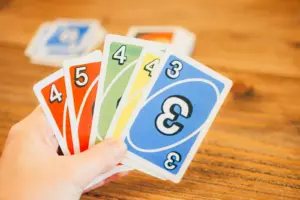
This comprehensive guide explores the foundational elements of the game by providing a deep-dive into the UNO number cards explained, covering their distribution, scoring impact, and tactical utility within the New Zealand competitive circuit. We examine the 76 numerical cards that constitute the bulk of the 108-card deck, detailing the specific rarity of the '0' card compared to digits 1 through 9. Furthermore, this article clarifies how these cards interact with action and wild mechanics, provides a breakdown of point values for the official 500-point tournament scoring system, and offers actionable strategies for hand management. By understanding the mathematical probability of drawing specific numbers and the strategic importance of "dumping" high-value digits, players can transition from casual matching to professional-level gameplay.

The number cards in UNO are the engine of the game, facilitating the primary matching mechanic that allows players to reduce their hand size. While action cards like Skips and Draw Twos provide the drama, number cards provide the consistency required to reach "UNO." In the New Zealand context, where strategic efficiency is highly valued in local clubs, mastering the nuances of the numerical deck is essential. Each number card serves as a bridge between colors and a critical component of the final scoring tally. Unlike power cards, number cards carry a lower risk during the scoring phase, but their sheer volume means they often dictate the winner of a long-form match.
- Total Count: 76 number cards per standard 108-card deck.
- Color Suits: Evenly distributed across Red, Blue, Green, and Yellow.
- Numerical Range: Digits 0 through 9.
- Point Value: Each card is worth its face value (0–9 points).
- Core Rule: Matches must be made by color or by the specific number shown.
Total Count: 76 number cards per standard 108-card deck.
Color Suits: Evenly distributed across Red, Blue, Green, and Yellow.
Numerical Range: Digits 0 through 9.
Point Value: Each card is worth its face value (0–9 points).
Core Rule: Matches must be made by color or by the specific number shown.
The Distribution of Numbers 1 through 9
The majority of the UNO deck is comprised of two sets of numbers 1 through 9 for each of the four colors. This means there are exactly 18 numbered cards per color suit within this range, totaling 72 cards globally across the deck. This balanced distribution ensures that the probability of drawing a mid-range card like a '5' or a '6' remains constant throughout the game. For New Zealand players, this statistical regularity allows for advanced "deck tracking," where one can estimate the likelihood of an opponent possessing a specific digit based on the cards already visible in the discard pile.
| Card Digit | Quantity per Color | Total in Deck |
| Digit 1 | 2 | 8 |
| Digit 5 | 2 | 8 |
| Digit 9 | 2 | 8 |
Strategic Pairing of Duplicate Numbers
Because there are two of every number (1-9) in each color, players can often hold "numerical pairs." If you hold a Blue 4 and a Red 4, you possess a powerful tool for changing the active color of the game without relying on a Wild card, provided the current discard is either Blue or any other 4.
Understanding the Rarity of the Zero Card
The '0' card is a unique outlier in the UNO deck. Unlike all other numbers, there is only one '0' card for each of the four colors (Red, Blue, Green, and Yellow). This makes the '0' the rarest numerical card in the game, with only four total instances in a 108-card deck. From a scoring perspective, the '0' is the most valuable card to hold when an opponent wins a round, as it contributes zero points to their cumulative total. In New Zealand tournament play, the '0' is often held as a "safe harbor" card, kept until the very end of a player's hand to minimize the damage of a sudden loss.
- Quantity: Only 4 cards in the entire deck.
- Scoring: Contributes exactly 0 points.
- Tactical Use: Hardest card to match by number due to its rarity.
- Rarity Factor: 50% less common than any other digit.
Quantity: Only 4 cards in the entire deck.
Scoring: Contributes exactly 0 points.
Tactical Use: Hardest card to match by number due to its rarity.
Rarity Factor: 50% less common than any other digit.
The Impact of 7-0 House Rules
While official Mattel rules treat the '0' as a standard number, many Kiwi households play the "7-0" variant where playing a '0' forces all players to pass their hands in the direction of play. It is important to clarify these rules before starting a competitive session.
Scoring Mechanics of Numbered Cards
In the official 500-point scoring system, number cards are the easiest to calculate. Each card is worth the points indicated by the digit on its face. For example, a Yellow 9 is worth nine points, while a Green 2 is worth two points. While this seems negligible compared to the 50 points awarded for a Wild card, a hand full of high numbers like 7s, 8s, and 9s can quickly add up to a significant payout for the round winner. Understanding this "point density" is vital for New Zealanders who play for match victory rather than just single-round bragging rights.

| Card | Point Value | Match Percentage |
| Low Number (1-3) | 1, 2, or 3 | High |
| Mid Number (4-6) | 4, 5, or 6 | High |
| High Number (7-9) | 7, 8, or 9 | High |
Minimizing Point Liability
Professional strategy suggests "dumping" high-value number cards (8s and 9s) early in the round. If you are caught with three 9s at the end of a round, you have just handed 27 points to the winner, which is more than the liability of a Skip or Reverse card (20 points).
Matching Numbers vs Matching Colors
The core mechanic of UNO allows a player to match either the color of the discard pile or the number. Matching by number is the primary method for shifting the game's color to one more favorable for your hand. If the current color is Green and you do not have any Green cards, but you have a Green 5 and a Blue 5, you can use the Blue 5 to match the number, effectively changing the game state to Blue. This "numerical pivot" is a foundational skill taught in Auckland gaming clubs to ensure players don't get trapped by a single dominant color.
- Color Match: Maintains the current suit.
- Number Match: Changes the active suit to the color of the played card.
- Strategy: Use numbers to "bridge" into a color suit you have in abundance.
- Observation: Watch which numbers opponents play to deduce which colors they are lacking.
Color Match: Maintains the current suit.
Number Match: Changes the active suit to the color of the played card.
Strategy: Use numbers to "bridge" into a color suit you have in abundance.
Observation: Watch which numbers opponents play to deduce which colors they are lacking.
The Numerical Bridge Example
If Player A plays a Red 8 and you hold a Yellow 8 and three other Yellow cards, playing the Yellow 8 is your most strategic move. It allows you to utilize your "color run" and forces the rest of the table to adapt to your hand's strengths.
Strategic Hand Dumping of High Digits
"Hand dumping" refers to the deliberate prioritization of high-value cards early in the game. Since the goal is to have the lowest possible score if an opponent wins, or to go out first, holding a '9' is significantly riskier than holding a '1'. In a typical New Zealand match, you will see experienced players playing their 7s, 8s, and 9s as soon as a color match allows. This leaves them with "low-density" hands (0s, 1s, and 2s) toward the end of the round, minimizing the points they surrender if the round ends abruptly.
- Priority 1: Wild Cards (50 pts).
- Priority 2: Action Cards (20 pts).
- Priority 3: High Numbers (7–9 pts).
- Priority 4: Low Numbers (0–3 pts).
Priority 1: Wild Cards (50 pts).
Priority 2: Action Cards (20 pts).
Priority 3: High Numbers (7–9 pts).
Priority 4: Low Numbers (0–3 pts).
The "Nine-First" Approach
When presented with a choice between playing a Red 9 and a Red 2 on a Red discard, the 9 should almost always be played first. The only exception is if the '2' allows for a specific numerical pivot into a better color suit later in your planned turn sequence.
Mathematical Probability of Drawing Numbers
With 76 number cards in a 108-card deck, there is approximately a 70% chance that any given card drawn from the pile will be a number. This high probability means that the game’s "flow" is largely dictated by these cards. Advanced Kiwi players calculate "expected value" (EV) for their draws. Since the average value of a number card is roughly 4.5 points, you can estimate your hand's scoring risk by multiplying your card count by this average, adjusted for any power cards you might be holding.

| Deck Component | Quantity | Probability of Draw |
| Number Cards | 76 | ~70.4% |
| Action Cards | 24 | ~22.2% |
| Wild Cards | 8 | ~7.4% |
Tracking the Discard Pile
By keeping a mental count of the numbers played, you can identify "dead numbers." If both Blue 6s have been played, you know that the only way for the color to change via a '6' is if someone uses a different colored 6 on a 6 already on the pile.
Interaction with Action and Wild Cards
Number cards are the "receivers" of action effects. For example, if a player uses a Draw Two, the penalized player draws two cards (likely numbers) and then the next player must match the color of that Draw Two with a number card (or another action). Numbers cannot "defend" against actions in official rules. In New Zealand competitive play, the interaction between a Wild card and a number is critical: the player who uses the Wild chooses a color, and the next player must produce a number of that color.
- After a Skip: The next player plays a number card matching the color.
- After a Reverse: Play order changes, but matching still relies on color/number.
- After a Wild: The named color dictates which numbers can be played.
- After a Draw 2/4: The victim draws, and the next player matches the penalty card's color.
After a Skip: The next player plays a number card matching the color.
After a Reverse: Play order changes, but matching still relies on color/number.
After a Wild: The named color dictates which numbers can be played.
After a Draw 2/4: The victim draws, and the next player matches the penalty card's color.
Breaking a Color Chain
If an opponent is successfully "color-locking" the table with high numbers of one suit, your best numerical defense is to hold a matching number of a different suit to break the chain and pivot the game.
Starting the Game with a Number Card
According to official Mattel rules, the game begins when the dealer flips the top card of the draw pile to form the discard pile. If this card is a number card, the player to the dealer's left simply matches it by color or number. This is the "cleanest" way to start a game, as it involves no immediate penalties or direction changes. In New Zealand, this is the preferred start for tournament play as it allows for a natural strategic buildup without the randomness of a starting Skip or Draw Two.
- Dealer Action: Flips top card.
- First Player: Matches color or digit.
- Effect: None; standard play begins.
- Starting 0: Extremely rare; sets a low-score baseline for the first turn.
Dealer Action: Flips top card.
First Player: Matches color or digit.
Effect: None; standard play begins.
Starting 0: Extremely rare; sets a low-score baseline for the first turn.
The Value of a Starting 5
If a Red 5 is flipped, the first player has two ways to play: any Red card or any 5. This dual-entry point is why number cards are the most common and fair way to initiate a match.
Number Cards in Two-Player Games
In a head-to-head match, number cards lose some of their "utility" compared to Action cards, which grant extra turns. However, they remain the primary way to win. In a two-player New Zealand "Speed UNO" format, players often use numbers to bait their opponent into playing a specific color, only to pivot back to their own strongest suit using a numerical match. Because there is only one opponent to track, numerical deduction becomes much more precise.
| Feature | Multiplayer | Two-Player |
| Color Control | Shared across 4+ players | Tug-of-war between two |
| Scoring Risk | Distributed liability | High individual liability |
| Strategy | Broad matching | Precision baiting |
The "Numerical Trap" in 1v1
If you know your opponent is low on Green cards, playing a Green 4—and then matching it with a Blue 4 on your next turn—can force them to draw if they don't have the pivot card, giving you a hand-size advantage.
Managing Your Hand for the "UNO" Call
Reaching the "UNO" state (one card left) almost always involves a number card as the final play. Since numbers have no secondary effects, they are "silent" cards. Playing a number card as your second-to-last card requires you to shout "UNO" immediately. In New Zealand tournaments, the "catch" window for a missed UNO call is very tight. Using a number card is riskier than an action card in this phase because you aren't skipping anyone, meaning the person to your left has an immediate opportunity to catch you.

- The Call: Must be audible.
- The Card: Usually a low-value number to minimize risk if caught.
- The Penalty: 2 cards from the draw pile if caught before the next player acts.
- The Window: Between your card touching the pile and the next player's move.
The Call: Must be audible.
The Card: Usually a low-value number to minimize risk if caught.
The Penalty: 2 cards from the draw pile if caught before the next player acts.
The Window: Between your card touching the pile and the next player's move.
Numerical Deduction for the Final Card
If you see an opponent has one card left and the color is Yellow, and you have played three Yellow 7s throughout the game, you can deduce that their final card is unlikely to be a 7, helping you decide whether to change the color.
Final Thoughts
Mastering the role of number cards is the foundation of any successful UNO career. While they lack the aggressive power of action cards, their distribution and scoring values provide the mathematical framework for the 500-point journey. By focusing on numerical pivots, rarity tracking (especially the '0' card), and high-digit dumping, New Zealand players can significantly improve their win rates in both casual and competitive environments. Number cards are not just filler; they are the strategic bridges that lead to victory. For more on the global history of these cards, visit the Official UNO Wikipedia.
Ngā Pātai Auau (FAQ)
How many number cards are in a standard UNO deck? There are 76 number cards in total, ranging from 0 to 9 across four colors.
Why is the 0 card so rare? There is only one 0 card per color, making it the rarest number card with only four in the entire deck.
How many points is a 9 card worth? A 9 card is worth exactly nine points in the official scoring system.
Can I play a number card on a Skip card? Yes, as long as the number card matches the color of the Skip card.
What is the best number card to hold? The 0 card is best for scoring (0 points), but 1s and 2s are also low-risk to hold.
How many 7s are in the deck? There are eight 7s in total: two for each of the four colors.
Can I change the color using a number card? Yes, by matching the number of the current discard with a card of a different color.
What happens if the last card I play is a 0? You win the round, and the 0 contributes zero points to your winning total from that card.
Are number cards worth more than action cards? No, number cards are worth their face value (0-9), while actions are worth 20 points.
Do I have to say UNO if my last card is a number? Yes, you must say UNO when you have one card left, regardless of its type.