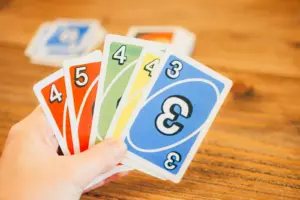
This comprehensive guide explores the official UNO draw two card rules, detailing the technical mechanics and strategic applications of one of the most common penalty cards in the deck. We cover the fundamental "Draw and Skip" sequence, the specific matching requirements for legal play, and the resolution of Draw Two cards when they appear at the start of a match or as a winning final card. Furthermore, we provide clarity on the "stacking" debate within New Zealand competitive circles, explain how the card functions in two-player formats, and offer actionable advice on managing hand density to minimize point loss. By mastering these official standards, players can navigate complex penalty scenarios with professional confidence and ensure their games remain balanced according to the Mattel-certified rulebook.

The Draw Two card is a cornerstone of the UNO experience, designed to disrupt an opponent's momentum while simultaneously inflating their hand with two additional cards. In New Zealand, where strategic point management is vital for the 500-point tournament goal, the Draw Two is treated as a high-utility asset for tempo control. When played, the card imposes a non-negotiable penalty on the subsequent player, requiring them to interact with the draw pile and forfeit their ability to participate in the current rotation. Understanding the precise timing and resolution of this card is essential for maintaining a fair and competitive environment, as it remains one of the most frequently "house-ruled" mechanics in social play.
- Primary Effect: Forces the next player in the rotation to draw two cards and miss their turn.
- Card Composition: There are two Draw Two cards of each color (Red, Blue, Green, Yellow), totaling eight in a standard 108-card deck.
- Legal Play: Can be played on a card of the same color or another Draw Two card.
- Point Value: Each Draw Two caught in a loser's hand is worth 20 points during the scoring phase.
- Tournament Standard: Official rules strictly prohibit stacking, ensuring penalties are resolved immediately by the target player.
Primary Effect: Forces the next player in the rotation to draw two cards and miss their turn.
Card Composition: There are two Draw Two cards of each color (Red, Blue, Green, Yellow), totaling eight in a standard 108-card deck.
Legal Play: Can be played on a card of the same color or another Draw Two card.
Point Value: Each Draw Two caught in a loser's hand is worth 20 points during the scoring phase.
Tournament Standard: Official rules strictly prohibit stacking, ensuring penalties are resolved immediately by the target player.
Mechanics of the Standard Draw Two Penalty
When a player places a Draw Two card on the discard pile, the penalty applies immediately to the next person in the current direction of play. The recipient must draw exactly two cards from the face-down draw pile and add them to their hand. Crucially, that player is then "skipped"—meaning they cannot play any cards during that turn, even if one of the cards they just drew matches the discard pile. In the New Zealand context, this "Draw and Skip" sequence is often misunderstood, with some players attempting to draw and then play. However, the official rules are clear: the penalty concludes the player's turn entirely.
| Action Phase | Responsibility | Outcome |
| Placement | Active Player | Plays card; names color if necessary |
| Reception | Next Player | Draws 2 cards from the deck |
| Forfeiture | Next Player | Turn ends immediately; no cards played |
| Resumption | Following Player | Continues play based on the Draw Two’s color |
Turn Rotation and Penalty Flow
In a four-player game moving clockwise (Player A to B to C to D), if Player A plays a Draw Two, Player B is the victim. Player B draws two cards and is skipped. Player C then takes their turn, needing to match the color of the Draw Two that Player A played or place another Draw Two.
Matching Requirements and Legal Placement
To play a Draw Two card legally, it must match either the color of the top card on the discard pile or the symbol (Draw Two). For example, a Green Draw Two can be played on any Green number card, any Green action card, or any other color's Draw Two card. This versatility makes the Draw Two a powerful "bridge" card, allowing a player to change the active color while simultaneously attacking an opponent. In advanced play, the decision to play a Draw Two is often dictated by the "dry colors" of the next player; if you know they lack Blue cards, playing a Blue Draw Two is a devastating double-hit to their progress.
- Color Match: Play on any card of the same suit.
- Symbol Match: Play on a Draw Two of a different color.
- Wild Interaction: Can be played on a Wild card if the previous player chose the matching color.
- Illegal Moves: Cannot be played on a Wild Draw Four or a card of a different color/symbol.
Color Match: Play on any card of the same suit.
Symbol Match: Play on a Draw Two of a different color.
Wild Interaction: Can be played on a Wild card if the previous player chose the matching color.
Illegal Moves: Cannot be played on a Wild Draw Four or a card of a different color/symbol.
Strategic Symbol Matching
Using a Draw Two to match another Draw Two is a common way to cycle colors. If the current color is Red and you hold a Yellow Draw Two, you can play it to shift the game to Yellow, provided there is a Red Draw Two currently on top.
Resolving the Stacking Misconception
The most significant "house rule" deviation in New Zealand involves the "stacking" of Draw Two cards. Many casual groups believe that if Player A plays a Draw Two, Player B can play their own Draw Two to pass the penalty to Player C, who would then have to draw four cards. According to the official Mattel rules, this is strictly prohibited. When a Draw Two is played, the very next player must draw the cards and must miss their turn. They cannot play any cards to defend themselves or deflect the penalty.

- Official Rule: No stacking permitted; penalties do not accumulate.
- Game Balance: Prevents a single player from drawing 10+ cards in one turn.
- Tournament Clarity: NZ competitive circuits strictly enforce "immediate resolution" of all action cards.
- House Rules: While common, stacking is not part of the core mathematical design of UNO.
Official Rule: No stacking permitted; penalties do not accumulate.
Game Balance: Prevents a single player from drawing 10+ cards in one turn.
Tournament Clarity: NZ competitive circuits strictly enforce "immediate resolution" of all action cards.
House Rules: While common, stacking is not part of the core mathematical design of UNO.
Why Stacking Breaks the Game
Stacking turns the Draw Two into a volatile "bomb" that can eliminate a player's chance of winning in a single turn. Official rules maintain a steady pace, ensuring that a 2-card penalty remains a manageable setback rather than a game-ending catastrophe.
Draw Two Rules in Two-Player Games
In a head-to-head match, the power of the Draw Two card increases exponentially. When there are only two players, playing a Draw Two forces your opponent to draw two cards and miss their turn. Because they are skipped, the turn immediately returns to you. This allows for powerful "combos" where you can play a Draw Two to penalize your opponent and then immediately play another card to further reduce your hand size. Understanding this momentum shift is essential for mastering the 1v1 formats often found in New Zealand gaming clubs.
| Card Action | 4-Player Result | 2-Player Result |
| Play Draw Two | Next player draws 2 + Skip | Opponent draws 2; You go again |
| Strategic Weight | Disruptive | Devastating / Turn-Gaining |
| Counter-Play | Other players can intervene | Opponent is defenseless for one turn |
Chaining in Two-Player Mode
Advanced players often save a Draw Two for their second-to-last move. By playing it, they force the opponent to draw and miss their turn, allowing the player to safely play their final card for the win before the opponent can respond.
Starting a Game with a Draw Two Card
If the very first card flipped from the draw pile to start the discard pile is a Draw Two, the rules apply to the person who was supposed to go first (the player to the left of the dealer). That player must immediately draw two cards and forfeit their turn. The game then resumes with the next player in the rotation. This "cold start" can significantly impact the opening strategy, as one player begins with nine cards instead of seven and loses their initial opportunity to dictate the color.
- Opening Flip: Dealer turns over the top card to the discard pile.
- Immediate Penalty: First player draws 2 cards and is skipped.
- Resumption: The player to the left of the skipped player takes the first legal turn.
- Dealer Advantage: This often places the dealer or the third player in a stronger starting position.
Opening Flip: Dealer turns over the top card to the discard pile.
Immediate Penalty: First player draws 2 cards and is skipped.
Resumption: The player to the left of the skipped player takes the first legal turn.
Dealer Advantage: This often places the dealer or the third player in a stronger starting position.
Fair Play Setup in NZ
In formal matches, the dealer must ensure the deck is shuffled thoroughly to prevent "clumped" action cards from appearing at the start, which can lead to an unbalanced beginning for the first player.
Resolving Final Card Draw Two Plays
A critical rule often ignored is what happens when a player's final card is a Draw Two. In official UNO, if you play a Draw Two to finish your hand and win the round, the next player must still draw those two cards before the scores are tallied. This is important because those two extra cards could be high-value Wilds or Action cards that significantly boost the winner's total points. The round does not "freeze" the moment the winner hits zero cards; the penalty must be fully resolved.

- Winning Moment: The hand is emptied by playing the Draw Two.
- Penalty Execution: The next player draws 2 cards from the deck.
- Scoring Phase: All cards in opponents' hands (including the 2 new ones) are totaled.
- Impact: Increases the likelihood of reaching the 500-point goal faster.
Winning Moment: The hand is emptied by playing the Draw Two.
Penalty Execution: The next player draws 2 cards from the deck.
Scoring Phase: All cards in opponents' hands (including the 2 new ones) are totaled.
Impact: Increases the likelihood of reaching the 500-point goal faster.
The "Draw Two Finish" Strategy
If you have a choice for your final card, playing a Draw Two is always superior to playing a number card. It guarantees that at least two more cards will be added to the losers' hands, maximizing your score for that round.
Point Valuation and Scoring Liability
Under the official scoring system, the Draw Two card is valued at 20 points. This makes it twice as "expensive" as a 9-point number card. In the race to 500 points, being caught with a handful of action cards is a major liability. Advanced New Zealand players prioritize "dumping" Draw Twos mid-round to avoid this penalty. If you hold onto a Draw Two hoping for the perfect moment but an opponent goes out first, you have just handed them 20 points—4% of the way to an overall match victory.
- Card Value: 20 Points.
- Comparison: Wilds (50), Actions (20), Numbers (0-9).
- Strategy: Use them or lose them. Holding action cards is a high-risk gamble.
- Winner's Reward: Points from Draw Twos are added to the winner's cumulative match total.
Card Value: 20 Points.
Comparison: Wilds (50), Actions (20), Numbers (0-9).
Strategy: Use them or lose them. Holding action cards is a high-risk gamble.
Winner's Reward: Points from Draw Twos are added to the winner's cumulative match total.
Calculating Hand Density
If you hold a Draw Two, a Skip, and a Red 8, your hand is worth 48 points. If the leader of the match only needs 50 points to win the tournament, you must play those action cards immediately to prevent them from hitting their target.
Strategic Timing for Draw Two Deployment
Using a Draw Two effectively requires more than just playing it whenever you have a match. You must observe the card counts of your opponents. If the player to your left has "UNO" or is down to two cards, playing a Draw Two is mandatory to stop them. However, if the player to your left has a large hand and the player across from you has "UNO," playing a Draw Two might actually hurt you by skipping the only person who could have changed the color to stop the leader.
| Opponent Hand Size | Action | Reason |
| Low (1-2 cards) | Play Draw Two | Direct attack to prevent victory |
| High (7+ cards) | Hold Draw Two | Save for a more critical threat |
| Balanced (3-5 cards) | Use for Color Change | Use to steer the game to your advantage |
Protecting the Lead
If you are the current leader in a match, you should use Draw Twos aggressively to keep your closest competitors drawing cards, thereby increasing their hand size and the points you will collect when you win the round.
Interaction with the "UNO" Call
Playing a Draw Two as your second-to-last card is a tactical masterpiece. Because the next player is skipped, they have a smaller window of time to catch you if you forget to say "UNO." In New Zealand competitive play, the "catch" must happen before the next active player (the one after the victim) begins their turn. By skipping one player, you effectively bypass one person's ability to act quickly and force you to draw two penalty cards.
- The Window: Between your card landing and the next active player acting.
- Advantage: One opponent is preoccupied with drawing, making them less likely to notice your call.
- Vigilance: Any player at the table can still call you out, but the immediate threat is minimized.
The Window: Between your card landing and the next active player acting.
Advantage: One opponent is preoccupied with drawing, making them less likely to notice your call.
Vigilance: Any player at the table can still call you out, but the immediate threat is minimized.
The "Double-Draw" Risk
If you forget to say "UNO" while playing a Draw Two, and you are caught, you draw two cards and the next player draws two cards. This results in a "neutralized" round where no one has gained a significant hand-size advantage.
Deck Composition and Card Counting
In a standard 108-card UNO deck, there are eight Draw Two cards (two per color). Professional players in New Zealand often track how many have been played. If you have seen both Red Draw Twos and both Yellow Draw Twos, you know that only Green and Blue remain as potential threats. This allows you to plan your end-game with much higher precision. If you are holding Green cards and know the Green Draw Twos are still "live" in the deck, you must be prepared for a sudden hand inflation.
- Total in Deck: 8 cards.
- Probability: Approximately 7.4% chance of drawing one.
- Tracking: Vital for high-stakes 500-point matches.
- Reshuffle: When the discard pile is reshuffled, the "count" resets, though the top card remains known.
Total in Deck: 8 cards.
Probability: Approximately 7.4% chance of drawing one.
Tracking: Vital for high-stakes 500-point matches.
Reshuffle: When the discard pile is reshuffled, the "count" resets, though the top card remains known.
Tracking the Discard Pile
By remembering which colors of Draw Twos have been played, you can deduce which colors are "safe" to switch to without fearing an immediate penalty from the next player.
Final Thoughts
Mastering the UNO draw two card rules is essential for anyone looking to transition from casual play to competitive New Zealand standards. By understanding the strict "no-stacking" policy, the 20-point scoring liability, and the devastating "skip" effect in two-player games, players can use this card as a precision tool for victory. Whether you are using a Draw Two to secure a 500-point match win or simply trying to stop a leader at a family gathering, these official rules provide the necessary framework for a balanced and strategic game. For more on the history and global regulations of these mechanics, the Official UNO Wikipedia page offers a wealth of additional context.
Ngā Pātai Auau (FAQ)
Can you play a Draw Two on a Draw Two of a different color? Yes, you can match the symbol (Draw Two) regardless of the card's color.
What happens if I play a Draw Two as my last card? The next player must still draw two cards before the points are totaled for the round.
Can you stack a Draw Two on another Draw Two to make someone draw four? No, official rules prohibit stacking. The next player must draw two and miss their turn.
How many points is a Draw Two card worth? A Draw Two card is worth 20 points in the final scoring phase.
Can I play a card after drawing two from a penalty? No, the Draw Two card forces you to draw and miss your turn entirely.
What happens if a Draw Two is the first card flipped? The player to the dealer's left must draw two cards and miss their turn.
Is there a Wild Draw Two card? In some modern editions like "UNO All Wild," there are Wild Draw Two cards, but they are not in the standard 108-card deck.
Does a Draw Two skip the next person even in a 2-player game? Yes, in a 2-player game, it forces the opponent to draw and allows the placer to take another turn.
Can you play a Draw Two on a Wild card? Yes, if the player who played the Wild card chose a color that matches your Draw Two.
How many Draw Two cards are in a standard deck? There are 8 Draw Two cards in total: two for each of the four colors.