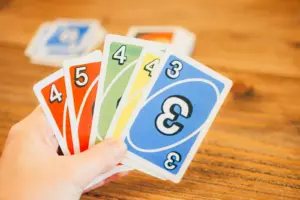
This comprehensive guide serves to provide clarity on the official UNO draw rules, addressing common misconceptions and house-rule deviations that often complicate standard play in New Zealand. We examine the specific mechanics of drawing from the deck when a player cannot make a legal move, the implications of drawing a playable card, and the strict protocols surrounding penalty cards like the Draw Two and Wild Draw Four. Furthermore, we clarify the "stacking" debate, the rules for when the draw pile is depleted, and how drawing affects the final scoring phase of the game. By establishing a clear, professional standard for these mechanics, players can ensure a fair and competitive environment whether playing at home or in organized local tournaments. Read more

The act of drawing a card is the primary balancing mechanic in UNO, designed to prevent a stalemate and increase the point density of a player's hand. In the New Zealand competitive scene, understanding the nuances of when and how to draw is what separates a novice from an expert. Official rules dictate that drawing is not merely a punishment but a strategic event that can alter the probability of future turns. When a player lacks a matching color, number, or symbol, they are compelled to engage with the draw pile, a move that carries both risk and potential reward.
- Mandatory Draw: Occurs when no playable card is held in the hand.
- Single Draw Policy: According to official rules, you draw only one card per turn when unable to play.
- Immediate Play: If the drawn card is playable, it may be placed down instantly.
- Strategic Draw: Players may choose to draw even if they have a playable card (to hide their hand).
- Penalty Draw: Results from action cards (Draw Two) or rule violations (failing to call UNO).
Mandatory Draw: Occurs when no playable card is held in the hand.
Single Draw Policy: According to official rules, you draw only one card per turn when unable to play.
Immediate Play: If the drawn card is playable, it may be placed down instantly.
Strategic Draw: Players may choose to draw even if they have a playable card (to hide their hand).
Penalty Draw: Results from action cards (Draw Two) or rule violations (failing to call UNO).
The Mechanics of the Standard Draw
When it is your turn and you find yourself without a matching card, the standard procedure is to draw one card from the top of the face-down draw pile. A common point of confusion in New Zealand households is whether you must continue drawing until a playable card is found. Per official Mattel guidelines, you only draw a single card. If that card cannot be played, the turn passes immediately to the next player. This prevents hands from ballooning too quickly and maintains a faster game tempo.
| Action | Result | Turn Status |
| Draw Playable Card | May play it immediately | Turn ends after play |
| Draw Unplayable Card | Must keep the card | Turn ends immediately |
| Voluntary Draw | Draw 1 card despite having a move | Turn ends after draw/play |
Identifying a Playable Draw
If you draw a card that matches the current color, number, or is a Wild card, you have the option to play it immediately. You are not required to play it, however. Some players choose to keep a drawn Wild card for a more critical moment, effectively ending their turn by simply adding the card to their hand.
Resolving the Draw Two Penalty
The Draw Two card is a specific "Action" card that forces the next player in the sequence to draw two cards from the pile and forfeit their turn. This is often where "house rules" cause the most friction. In the official rules, a Draw Two is a terminal action; the player who receives the penalty cannot play a card to "pass" the penalty to someone else. This ensures that the card's offensive value remains consistent and predictable throughout the match.
- Penalty Volume: Exactly two cards from the draw pile.
- Turn Forfeiture: The player who draws cannot play any cards that turn.
- Color Compatibility: Must match the color of the previous card or be another Draw Two.
- Start of Game: If flipped at the start, the first player draws two and is skipped.
Penalty Volume: Exactly two cards from the draw pile.
Turn Forfeiture: The player who draws cannot play any cards that turn.
Color Compatibility: Must match the color of the previous card or be another Draw Two.
Start of Game: If flipped at the start, the first player draws two and is skipped.
The Impact of Draw Two on Scoring
Because each Draw Two is worth 20 points, being forced to draw two cards late in the game can be a massive disadvantage if an opponent is about to go out. It essentially adds a minimum of 40 potential points to your hand in just one turn.
Wild Draw Four and the Challenge Protocol
The Wild Draw Four is the most complex drawing mechanic in UNO. It requires the next player to draw four cards and miss their turn, but it can only be legally played if the person holding it does not have a card matching the color of the discard pile. In New Zealand, the "Challenge" rule is essential for fair play. If you believe an opponent played a Wild Draw Four illegally, you can challenge them to show their hand.

| Challenge Result | Outcome for Player | Outcome for Challenger |
| Player is Guilty | Player draws 4 cards | No penalty |
| Player is Innocent | No penalty | Challenger draws 6 cards |
Strategic Use of the Wild Draw Four
Playing this card is a calculated risk. If you have a matching color but decide to play the Wild Draw Four anyway, you are banking on the fact that your opponents are too risk-averse to challenge you, as the 6-card penalty for a failed challenge is often game-ending.
The Stacking Myth Clarified
One of the most requested clarifications in New Zealand is the "stacking" rule. Stacking refers to playing a Draw Two on top of a Draw Two to make the next player draw four. According to official UNO rules, this is not permitted. When a Draw Two or Wild Draw Four is played, the very next person must draw the cards and must lose their turn. No cards can be played by the penalized player to deflect the draw onto someone else.
- Official Stance: No stacking allowed.
- Game Flow: Penalties are resolved immediately and the turn passes.
- Tournament Standard: Stacking is strictly prohibited in professional settings.
- House Rule Variance: While common in social play, it is not part of the core mechanics.
Official Stance: No stacking allowed.
Game Flow: Penalties are resolved immediately and the turn passes.
Tournament Standard: Stacking is strictly prohibited in professional settings.
House Rule Variance: While common in social play, it is not part of the core mechanics.
Why Stacking is Prohibited
Stacking can lead to a single player drawing 10 or 12 cards at once, which statistically ruins their chances of winning for the rest of the match. The official rules prevent this "dog-piling" effect to keep the game balanced for all participants.
Depleting the Draw Pile
In lengthy rounds, the draw pile may eventually run out of cards. When this happens, the official procedure is to take the current discard pile, set the top card aside (to keep as the new discard pile base), and shuffle the rest to create a fresh draw pile. This "recycling" of cards ensures the game can continue indefinitely until a player successfully empties their hand.
| Step | Action |
| 1 | Leave the top card of the discard pile in place. |
| 2 | Take all other cards from the discard pile. |
| 3 | Shuffle thoroughly and place face down as the new draw pile. |
Tracking Discarded Cards
In high-level play, experts will track which colors were most prevalent in the previous discard pile. When the pile is reshuffled, they use this knowledge to predict the likelihood of drawing certain colors in the next phase of the game.
Drawing for the UNO Penalty
The "UNO" call is a mandatory draw mechanic triggered by negligence. If you have one card left and fail to say "UNO" before the next player starts their turn, you must draw two penalty cards. This is a critical rule that keeps players focused. In the New Zealand context, the "catch" must be made vocally and immediately to be valid.
- Penalty Amount: 2 cards.
- Detection Window: Between the second-to-last card being played and the next player's action.
- Immunity: If the next player has already acted, the penalty can no longer be enforced.
Penalty Amount: 2 cards.
Detection Window: Between the second-to-last card being played and the next player's action.
Immunity: If the next player has already acted, the penalty can no longer be enforced.
The "Next Player" Definition
A player has "acted" if they have either played a card or begun the process of drawing from the deck. Once this motion begins, the player with one card is safe from the penalty for that turn.
Drawing at the Start of the Game
The setup phase of UNO involves a specific draw mechanic to determine the dealer and the initial hand. Each player draws a card; the person with the highest numerical value (Action cards and Wilds count as zero for this specific purpose) becomes the dealer. Each player then receives seven cards. Any remaining cards form the draw pile. If the very first card flipped from the draw pile to start the discard pile is an action card, its effects apply to the first player.
- Dealer Selection: Highest number drawn.
- Starting Hand: 7 cards per player.
- Starting Card: If it's a Draw Two, the first player draws 2.
- Wild Draw Four Start: If flipped first, return to the deck and flip a different card.
Dealer Selection: Highest number drawn.
Starting Hand: 7 cards per player.
Starting Card: If it's a Draw Two, the first player draws 2.
Wild Draw Four Start: If flipped first, return to the deck and flip a different card.
Setting the Tempo
The initial draw can define the first few rounds. If players draw high-point cards (Wilds and Actions) immediately, the round becomes a high-stakes race to dump those points before a winner is declared.
Strategic Voluntary Drawing
A little-known official rule is that a player may choose to draw a card even if they have a playable card in their hand. This is often used as a bluffing tactic. By drawing, you signal to the table that you might be "dry" on a specific color, potentially baiting an opponent into playing a card that you can then counter on your next turn.
| Strategy | Benefit | Risk |
| The Bluff | Hides your actual hand strength | You add an unnecessary card to your hand |
| Color Baiting | Forces opponents to play your preferred color | You might draw a high-point penalty card |
Managing Hand Visibility
When you draw a card voluntarily, you are not required to show it to other players unless you choose to play it immediately. Keeping a drawn card hidden maintains your tactical advantage.
Drawing During Two-Player Games
In a two-player UNO match, the draw rules for Skip and Reverse cards change significantly. Playing a Skip or a Reverse (which acts as a Skip) allows you to immediately take another turn. This can lead to a "draw loop" where one player is forced to draw repeatedly because the other player keeps skipping their turn.
- Reverse Card: Acts exactly like a Skip.
- Skip Card: Grants the player an immediate second turn.
- Draw Two: Forces the opponent to draw and gives the player another turn.
Reverse Card: Acts exactly like a Skip.
Skip Card: Grants the player an immediate second turn.
Draw Two: Forces the opponent to draw and gives the player another turn.
The Two-Player Stalemate
If both players are forced to draw multiple times, the draw pile can deplete very quickly. Understanding the reshuffle mechanic is paramount in these head-to-head scenarios.
Scoring and the Final Draw
The drawing of cards directly impacts the final score of the game. Since the winner of a round receives points based on the cards left in their opponents' hands, every card drawn is a potential point for the winner. If a player is forced to draw four cards on the final turn, those four cards could easily add 100+ points to the winner's total, significantly accelerating the end of the 500-point match.

| Card Category | Point Value |
| Numbers 0-9 | Face Value |
| Actions (Skip/Reverse/Draw 2) | 20 Points |
| Wilds (Standard/Draw 4) | 50 Points |
Point Density and Draw Luck
Drawing a Wild Draw Four is a great tactical move, but if you draw it right before someone else goes out, you have just handed them 50 points. This risk-reward calculation is the heart of UNO's drawing mechanics.
Final Thoughts
Clarifying the draw rules of UNO is essential for any player looking to move beyond casual "house rules" and into the realm of official, competitive play. By strictly following the one-card-per-draw policy, prohibiting stacking, and correctly managing the Wild Draw Four challenge, the game remains balanced and fair. Whether you are playing in Auckland, Christchurch, or at your kitchen table, these official standards ensure that every match is a true test of strategy and luck. For more details on the history of these rules, you can visit the Official UNO Wikipedia for further reading.
Ngā Pātai Auau (FAQ)
Can I play a card after drawing from the deck? Yes, if the card you drew is playable (matches color, number, or is a Wild), you may play it immediately.
Do I have to keep drawing until I can play? No, according to the official rules, you only draw one card. If it's not playable, your turn ends.
Can you stack a Draw Two on another Draw Two? No, official rules prohibit stacking. The next player must draw the cards and miss their turn.
What happens if I draw a Wild Draw Four? You can play it immediately if it's a legal move, or keep it in your hand for a later turn.
How many cards do I draw if I forget to say UNO? The penalty for being caught not saying UNO is drawing two cards.
If the last card played is a Draw Two, does the next player still draw? Yes, the next player must draw the two cards before the round is scored.
Can I draw a card even if I have one I can play? Yes, you may choose to draw a card voluntarily for strategic reasons.
What is the point value of a Draw Two card? A Draw Two card is worth 20 points in the final scoring phase.
What happens if the draw pile is empty? The discard pile is shuffled (except for the top card) and turned over to become the new draw pile.
Who draws first at the start of the game? The player to the left of the dealer takes the first turn, unless the starting card is an action card that dictates otherwise.