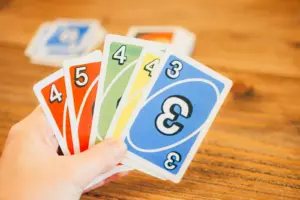
This extensive guide provides a definitive analysis of how scoring works in UNO, detailing the transition from casual play to the official points-based tournament standards used in New Zealand. We cover the specific point values assigned to number cards, action cards, and the high-stakes Wild cards, while explaining the two primary methods of calculation: the winner-takes-all approach and the cumulative "Golf" style. Furthermore, the article delves into the mathematical impact of penalties, such as the failure to call UNO, and provides strategic frameworks for managing hand value to minimize point loss. By the end of this deep-dive, players will understand how to leverage the scoring system to secure a long-term victory across multiple rounds of play.

The Fundamental Logic of UNO Points
The official UNO rules dictate that the objective of the game is not just to win a single round, but to be the first player to reach a cumulative total of 500 points. In the standard scoring method, the winner of a round earns points based on all the cards remaining in their opponents' hands. This creates a dynamic where players must not only focus on emptying their own hand but also on the specific composition of the cards held by others. High-value cards like Wilds and Actions represent a massive scoring opportunity for the winner, which fundamentally alters how these cards are played toward the end of a match. In New Zealand competitive circles, understanding this point-density is vital for determining whether to play defensively or aggressively.
- Round Goal: Be the first to play all cards to trigger point collection.
- Winning Threshold: 500 points is the standard target for an overall match victory.
- Point Source: Points are derived exclusively from the cards left in losing players' hands.
- Strategic Shift: Players often discard high-point cards early to prevent opponents from scoring heavily.
Round Goal: Be the first to play all cards to trigger point collection.
Winning Threshold: 500 points is the standard target for an overall match victory.
Point Source: Points are derived exclusively from the cards left in losing players' hands.
Strategic Shift: Players often discard high-point cards early to prevent opponents from scoring heavily.
Determining the Round Winner
The round ends the moment a player lays down their final card, provided all necessary penalties (like a final Draw Two) have been resolved. This player is the only one who receives points for that specific round.
Breakdown of Number Card Values
Number cards form the bulk of the UNO deck and represent the most straightforward element of the scoring system. Each card from 0 through 9 is worth its literal face value. For instance, a Blue 7 is worth seven points, and a Red 3 is worth three points. While these may seem insignificant compared to the 50-point Wild cards, they aggregate quickly in games with five or more players. A common mistake among novice players is ignoring the "0" card; while it is the rarest number card in the deck, it is also the least damaging to hold if an opponent wins the round, as it contributes exactly zero points to their total.
| Card Type | Face Value | Point Contribution |
| 0 Card | 0 | 0 Points |
| 5 Card | 5 | 5 Points |
| 9 Card | 9 | 9 Points |
Calculating Total Numerical Points
When tallying points at the end of a round, the designated scorekeeper should group all number cards by their digit rather than color. This streamlines the process, especially when dealing with the large hands resulting from multiple Draw Four penalties.
Scoring Value of Action Cards
Action cards—specifically Skip, Reverse, and Draw Two—carry a significantly higher weight than standard number cards. Each of these cards is valued at 20 points. The rationale behind this higher value is their utility in the game; since these cards allow players to manipulate the turn order or penalize others, they are considered "premium" assets. From a scoring perspective, being caught with a handful of Action cards can be disastrous. If you hold two Skips and a Draw Two when the round ends, you have just handed the winner 60 points, which is 12% of the way to the 500-point goal.

- Skip Card: Worth 20 points.
- Reverse Card: Worth 20 points.
- Draw Two Card: Worth 20 points.
- Tactical Advice: Discard these before number cards if you sense the round is ending.
Skip Card: Worth 20 points.
Reverse Card: Worth 20 points.
Draw Two Card: Worth 20 points.
Tactical Advice: Discard these before number cards if you sense the round is ending.
The Cost of Utility
Holding a Reverse card to use as a defensive maneuver is a common strategy, but the scoring system punishes this behavior if you are too slow. In a close game, the 20-point penalty often outweighs the benefit of potentially changing the direction of play.
The High Stakes of Wild and Wild Draw Four Cards
Wild cards are the most "expensive" cards in the UNO deck, each carrying a value of 50 points. This applies to both the standard Wild card and the Wild Draw Four card. Because these cards can be played on any color and offer total control over the game state, the scoring system ensures they come with a high risk. If a player is hoarding a Wild Draw Four to use as their final card but is caught by an opponent winning first, that 50-point addition to the winner's score can be a game-changer. In New Zealand tournaments, players are often seen playing their Wild cards mid-game simply to "dump" the points and mitigate risk.
| Wild Card Variety | Points | Strategic Risk |
| Standard Wild | 50 | High point liability |
| Wild Draw Four | 50 | Potential for challenge + 50 points |
Wild Card Point Density
In a standard 108-card deck, there are 8 Wild cards total. If a single player were to hold four of these when a round ends, they would contribute 200 points to the winner—nearly half the points required to end the entire match.
Resolving Final Card Penalties
A crucial aspect of how scoring works in UNO involves what happens when the final card played is a penalty card. If the winner plays a Draw Two or a Wild Draw Four as their last card, the next player in the turn order must still draw the required cards before the points are tallied. These newly drawn cards are included in the winner's point total for that round. This rule prevents players from "escaping" the consequences of an opponent's final move and ensures that the scoring reflects the true final state of the board. It is one of the few instances where a player's hand size increases after the winner has already been determined. Read similar articles.
- Draw Two Final: Next player draws 2 cards; these are added to the score.
- Wild Draw Four Final: Next player draws 4 cards; these are added to the score.
- Sequence: 1. Play card, 2. Draw penalty cards, 3. Calculate points.
Draw Two Final: Next player draws 2 cards; these are added to the score.
Wild Draw Four Final: Next player draws 4 cards; these are added to the score.
Sequence: 1. Play card, 2. Draw penalty cards, 3. Calculate points.
Example of Final Penalty Scoring
If Player A plays a Draw Two to finish their hand and Player B (the next player) was holding a 5-point card, Player B must first draw two more cards. If those cards are a Wild (50) and a 3 (3), Player A receives 58 points total from Player B, rather than just the initial 5.
Alternative Cumulative Scoring (The Golf Method)
While the official rules focus on the winner collecting points, many Kiwi households use the "Alternative" or "Golf" scoring method. In this version, every player tracks their own points at the end of each round based on the cards remaining in their own hand. The winner of the round receives 0 points. The game continues until one player reaches a pre-set limit (often 500), at which point the person with the lowest total score is declared the winner. This method changes the psychology of the game, making every single card left in your hand a personal liability rather than a gift to an opponent.

| Feature | Official Method | Golf Method |
| Winner’s Score | Sum of opponents’ cards | 0 |
| Loser’s Score | 0 | Sum of own cards |
| Final Victory | Highest score (500+) | Lowest score |
Managing Risk in Alternative Scoring
Under the Golf method, the "Zero Strategy" becomes much more prevalent. Players will often hold onto 0-9 cards while aggressively discarding 50-point Wilds, even if it isn't the most tactically sound move for winning the round, just to keep their cumulative score low.
The Impact of the UNO Call on Scoring
Failing to shout "UNO" when down to one card is not just a social faux pas; it is a significant scoring event. If a player is caught with one card without having announced it, they must draw two cards. From a scoring perspective, this doesn't just delay their victory; it increases the potential points they will give to an opponent if they fail to win. Furthermore, if a player is caught on their final card, they are back to three cards, significantly increasing the "point density" of their hand. This mechanic ensures that the scoring remains volatile and that the leader can be penalized for a lack of focus.
- The Penalty: Draw 2 cards immediately.
- The Window: Must be caught before the next player begins their turn.
- Scoring Consequence: Adds at least 2 extra cards to the potential point pool for the winner.
The Penalty: Draw 2 cards immediately.
The Window: Must be caught before the next player begins their turn.
Scoring Consequence: Adds at least 2 extra cards to the potential point pool for the winner.
Defensive Shouting as a Point Saver
In competitive play, players often shout "Caught you!" as a defensive scoring move. By forcing the leader to draw more cards, they are essentially protecting their own point total by extending the round and giving themselves a chance to win and collect points instead.
Scoring for Two-Player Games
In a two-player UNO match, the mechanics of certain cards change, which in turn affects the scoring frequency. A Reverse card acts exactly like a Skip card, meaning the player who plays it immediately gets another turn. This can lead to very rapid rounds where one player is overwhelmed before they can discard their high-value cards. Scoring in two-player games tends to be more swingy; one player might win three rounds in a row and reach 500 points quickly if the other player is left holding a Wild Draw Four each time.
| Card | 2-Player Function | Scoring Impact |
| Skip | Extra turn for player | High (faster rounds) |
| Reverse | Extra turn for player | High (faster rounds) |
Head-to-Head Point Strategy
In two-player mode, the goal is often to "trap" the opponent into drawing. Since there is only one other person to collect points from, maximizing the number of cards in their hand is the only way to reach 500 points efficiently.
Organizing a Scored Tournament
To run a proper UNO tournament in New Zealand, a dedicated scorekeeper is required to maintain a ledger of all round results. After each round, the winner’s name is recorded along with the total point value of the cards remaining in all other players' hands. It is helpful to have a "Quick Reference Sheet" for point values (0-9 = Face Value, Actions = 20, Wilds = 50) to speed up the transition between rounds. Consistency is key; ensuring that every player understands whether they are playing official rules or house variations prevents disputes when the scores start climbing toward the 500-point mark.
- Scorekeeper: One person designated to tally and record.
- Ledger: A clear table showing Player Names and Round Numbers.
- Equipment: Standard 108-card deck, paper, and pen.
Scorekeeper: One person designated to tally and record.
Ledger: A clear table showing Player Names and Round Numbers.
Equipment: Standard 108-card deck, paper, and pen.
The Role of the "Bust" Limit
Some tournaments implement a "Bust" limit similar to Blackjack, where if a player exceeds 500 points in the Golf method, they are eliminated. This adds an extra layer of tension to the scoring process as players approach the limit.
Advanced Mathematical Strategy in Scoring
Advanced UNO players use "expected value" calculations to decide which cards to keep. If the average card in the deck is worth roughly 12 points, and a Wild is worth 50, the math suggests that holding a Wild is more than four times as "dangerous" as holding a random card. Therefore, if you believe an opponent has a 25% chance of winning on their next turn, the "cost" of holding that Wild is effectively 12.5 points. By quantifying the risk, competitive players make more objective decisions about when to play their most powerful cards.
- Average Card Value: ~12 points.
- Wild Weighting: 4.1x the average card.
- Action Weighting: 1.6x the average card.
Average Card Value: ~12 points.
Wild Weighting: 4.1x the average card.
Action Weighting: 1.6x the average card.
Strategic Card Dumping
"Dumping" refers to playing your highest-point cards as quickly as possible, even if it isn't the most efficient way to reduce your hand count. If you have a choice between playing a 9 or a 2, playing the 9 is almost always the better scoring strategy, even though both reduce your hand by one card.
Final Thoughts
Understanding how scoring works in UNO transforms the game from a simple exercise in color matching into a complex strategic battle of risk management and probability. By moving away from "winner-takes-round" and adopting the official 500-point system, players engage in a much deeper experience where every card held at the end of a round has a direct impact on the ultimate outcome of the match. Whether you are playing in a local New Zealand club or at a kitchen table, the points provide the necessary tension that makes every "UNO" call and every Wild Draw Four feel consequential. For those interested in the global history of these rules, the UNO Wikipedia page offers extensive background on the game's evolution.
Ngā Pātai Auau (FAQ)
How many points is a Wild Draw Four worth? A Wild Draw Four is worth 50 points, the same as a standard Wild card.
Do you count points if you are playing the Golf method? Yes, but you count the points in your own hand and add them to your own total, aiming for the lowest score.
What happens to the points if no one can play and the deck is empty? The deck is typically reshuffled; however, if a stalemate is declared, no points are awarded for that round.
Are the points for a Skip card different from a Reverse card? No, both Skip and Reverse cards are valued at exactly 20 points each.
Does the winner get points for the cards they played? No, the winner only gets points from the cards remaining in their opponents' hands.
If I have a 0 card left, how many points do I give the winner? A 0 card is worth zero points, so you contribute nothing to the winner's score from that specific card.
How many points is a Draw Two card? A Draw Two card is worth 20 points.
When does the game officially end? The game ends when one player reaches a cumulative total of 500 points across all rounds.
Can you lose points in UNO? In the standard rules, points only increase; there is no mechanic to subtract points from your total.
Are points rounded up or down? Points are never rounded; you sum the exact values of all cards (e.g., a 7 and a 3 is exactly 10).