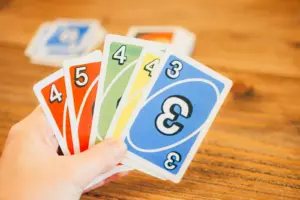
This comprehensive advanced UNO strategy guide provides a deep-dive into the high-level tactics used by professional players in New Zealand to dominate the 500-point circuit. We move beyond simple color matching to explore complex concepts such as probability-based hand management, the psychology of the "Wild Draw Four" bluff, and defensive seat positioning. This guide details how to track the deck's distribution, manage "point density" to minimize losses during scoring, and effectively utilize "color starvation" to isolate opponents. By applying these actionable insights, players can transition from casual participants to strategic masters capable of navigating the volatility of competitive UNO tournaments with precision and a clear mathematical advantage.

The leap from intermediate to advanced play requires a fundamental shift in how one perceives a hand of cards. In the New Zealand context, where games are often decided by thin point margins over multiple rounds, every card played must serve a dual purpose: reducing your own hand while strategically bloating your opponents'. Advanced players do not simply play their cards as soon as they are able; they wait for the optimal "tempo" to strike. This involves monitoring the discard pile to understand which colors are "fatigue colors" (those nearly exhausted) and using that data to trap opponents who are low on cards.
- Deck Awareness: Tracking the 108-card composition to predict remaining Wilds.
- Tempo Control: Choosing when to hold a card and draw voluntarily to mask hand strength.
- Point Mitigation: Prioritizing the removal of 50-point Wilds and 20-point Actions.
- Social Engineering: Reading physical cues during the "UNO" call to force penalties.
Deck Awareness: Tracking the 108-card composition to predict remaining Wilds.
Tempo Control: Choosing when to hold a card and draw voluntarily to mask hand strength.
Point Mitigation: Prioritizing the removal of 50-point Wilds and 20-point Actions.
Social Engineering: Reading physical cues during the "UNO" call to force penalties. Read similar articles.
Mathematical Probability and Deck Tracking
The first pillar of an advanced UNO strategy is understanding the deck's statistical makeup. A standard deck contains 108 cards, with 76 number cards and 32 action/wild cards. In a four-player game, knowing that there are only two of each number (except for 0) allows a player to calculate the likelihood of an opponent possessing a specific "escape card." If you have seen both Red 7s played, you know with 100% certainty that the only way for a player to match a 7 is through a different color or a Wild. Advanced players track these "closed numbers" to create roadblocks that force opponents to draw from the deck, increasing their point total and decreasing their chances of winning the round.
| Card Type | Quantity in Deck | Statistical Rarity |
| Number Cards (1-9) | 8 per number (2 per color) | Common |
| Zero (0) Cards | 4 (1 per color) | Rare |
| Action Cards | 24 (Skip, Reverse, Draw 2) | Uncommon |
| Wild / Wild Draw 4 | 8 (4 of each) | Very Rare |
The Power of the Rare Zero
Because there are only four "0" cards in the entire deck, playing a 0 is one of the most effective ways to "lock" a color. If you play a Green 0 and know the other three 0s have been discarded, you have significantly reduced the "numerical bridge" opponents can use to change the color without a Wild card.
Strategic Point Management and Hand Density
In New Zealand tournament play, the winner is the first to reach 500 points, meaning the points you give to an opponent are just as important as the points you score. Advanced strategy necessitates "hand dumping" high-value cards early in the round. While it may feel counterintuitive to play a Wild Draw Four when you have other moves, holding that card into the late game is a 50-point liability. If an opponent goes out while you are holding two Wilds and a Skip, you have just handed them 120 points—nearly 25% of the way to their ultimate victory. Effective players prioritize "lowering their density" by keeping 0-3 value cards while discarding 20-50 value cards at the earliest safe opportunity.
- The 50-Point Rule: Never hold a Wild card if you suspect an opponent has 3 or fewer cards.
- Action Discarding: Use Skips and Reverses mid-game to prevent being caught with 20-point penalties.
- Number Priority: Discard 9s and 8s before 1s and 2s to minimize the score you provide the winner.
The 50-Point Rule: Never hold a Wild card if you suspect an opponent has 3 or fewer cards.
Action Discarding: Use Skips and Reverses mid-game to prevent being caught with 20-point penalties.
Number Priority: Discard 9s and 8s before 1s and 2s to minimize the score you provide the winner.
Calculating Expected Point Loss
Professional players use a mental "cost-benefit" analysis. If the risk of an opponent winning in the next two turns is high, the "cost" of holding a Wild card (50 points) outweighs its "utility" (saving you from a draw). In this scenario, dumping the Wild is the mathematically superior move.
Color Starvation and Isolation Tactics
Color starvation is an advanced technique where a player (or a group of players) intentionally keeps the game on a color that a specific opponent is known to lack. If a player draws a card when the color is Blue, it is a high-probability signal that they have no Blue cards. An advanced strategist will then use every Skip, Reverse, and Wild card at their disposal to ensure the game remains Blue. This forces the "starved" player to continue drawing cards, inflating their hand and ensuring they cannot win the round. This tactic is particularly effective in New Zealand's competitive "three-on-one" scenarios where the table unites to stop a point leader.

| Tactic | Objective | Execution |
| Starvation | Prevent a win | Force a color an opponent lacks |
| Flushing | Deplete resources | Force action cards early to leave opponent defenseless |
| Cycling | Change tempo | Rapidly change colors to find a weakness |
Identifying the Weak Color
Watch for "voluntary draws." If a player draws and does not play, they are 100% dry on the current color. This is your cue to begin the starvation process. Even if it inconveniences you slightly, keeping the leader drawing is the priority.
The Art of the Wild Draw Four Bluff
The Wild Draw Four is the only card in UNO that carries a "legality" requirement: it should only be played if you have no cards matching the current color. However, advanced strategy often involves "illegal" plays to maintain momentum. If you have a matching color but believe the next player is too risk-averse to challenge, playing the Draw Four allows you to change the color to your advantage and penalize a threat. In New Zealand play, this is known as "The Bluff." Success depends on your "poker face" and your understanding of the challenger's current score; if they are close to 500, they are less likely to risk the 6-card penalty of a failed challenge.
- Risk Assessment: Only bluff if the 4-card penalty to the opponent is worth the risk of you drawing 4.
- Challenger Profile: Target "safe" players who rarely challenge.
- Board State: Bluff when the color you are switching to is your "winning color" (the one you have a run of).
Risk Assessment: Only bluff if the 4-card penalty to the opponent is worth the risk of you drawing 4.
Challenger Profile: Target "safe" players who rarely challenge.
Board State: Bluff when the color you are switching to is your "winning color" (the one you have a run of).
Managing a Successful Challenge
If you are challenged and found guilty, you must draw 4 cards. While this sounds like a failure, if those 4 cards are all low-value numbers, the "point cost" might be lower than the tactical benefit you gained by seeing the challenger's reaction.
Positional Advantage and Turn Order Manipulation
In a game of UNO, your greatest enemy is the person to your right (who feeds you cards) and your greatest ally is the person to your left (whom you can penalize). Advanced strategy involves using Reverse cards to shift this dynamic. If the player to your left is an aggressive "aggro" player who keeps skipping you, a well-timed Reverse changes the turn order so that you are now "feeding" them. This allows you to use your Skips and Draw Twos to neutralize their aggression. Positional awareness also includes tracking who is "holding" (has many cards) versus who is "running" (has few cards).
| Seat Position | Relation | Strategy |
| To your Right | Your Supplier | Monitor their discards to see what color you will receive |
| To your Left | Your Target | Use Skips/Draw 2s here to protect your lead |
| Across | Neutral | Use them as a “buffer” to Reverse the play back to a safe zone |
Reversing for Protection
If the player to your left has "UNO," playing a Reverse doesn't just change the direction; it moves the "winning turn" to the player on your right, giving the rest of the table another full rotation to find a way to stop the leader.
The Psychological "UNO" Call Trap
Forgetting to say "UNO" is a 2-card penalty that can ruin a perfect round. Advanced players use "verbal distractions" or "fast-play" to induce this error in others. By engaging an opponent in a complex question right as they are about to play their second-to-last card, you can often cause a mental lapse. Conversely, to protect yourself, you should practice "Simultaneous Play"—shouting "UNO" at the exact microsecond the card leaves your hand. In New Zealand competitive circles, catching a player is an art form; you must wait until the card touches the pile but before the next player acts to ensure the penalty sticks.

- The Window: The gap between the card landing and the next player's hand moving.
- Distraction: Using table talk to break an opponent's focus.
- Vigilance: Never looking away from the hands of players with 2 or 3 cards.
The Window: The gap between the card landing and the next player's hand moving.
Distraction: Using table talk to break an opponent's focus.
Vigilance: Never looking away from the hands of players with 2 or 3 cards.
Validating the Catch
Ensure your "Catch" is audible and immediate. If the next player has already drawn a card, the window for the penalty has closed. Advanced players keep their hand hovering over the draw pile to "close the window" for their friends or "open it" for their enemies.
Card Counting and "End-Game" Deductions
When the draw pile is reshuffled, it is not a random reset; it is a recycled history of the game. Advanced players track which colors were most common in the first discard pile. If the first half of the game was dominated by Red and Blue, the reshuffled draw pile will be "Red/Blue heavy." This deduction allows you to predict your draw chances. If you are holding Green cards and the deck is Red-heavy, you should use a Wild card immediately to switch the color before you are forced to draw from a deck that likely contains nothing you can use.
- Discard Memory: Remembering the "dominant" colors of the previous pile.
- Ratio Estimation: Guessing how many Wilds are left based on what has been played.
- End-Game Prediction: Knowing that if 6 Wilds are in the discard pile, only 2 remain in the unknown cards.
Discard Memory: Remembering the "dominant" colors of the previous pile.
Ratio Estimation: Guessing how many Wilds are left based on what has been played.
End-Game Prediction: Knowing that if 6 Wilds are in the discard pile, only 2 remain in the unknown cards.
The "Dry Deck" Strategy
If you know all the Draw Twos of a certain color have been played, you can safely sit on that color without fear of a penalty, allowing you to focus on numerical reduction rather than defensive holding.
Effective Use of the "Jump-In" Rule
While not in the basic Mattel manual, the "Jump-In" rule is a standard "Advanced" variant used in many New Zealand clubs. It allows a player to play a card out of turn if it is an identical match (same color AND same number/symbol) to the card currently played. Mastery of this rule requires extreme hand-eye coordination and constant focus. Jumping in allows you to skip several players and regain control of the game flow. Strategically, you should save identical pairs in your hand to facilitate a "double-play," where you play one card and immediately "Jump-In" on yourself to drop two cards in a single second.
| Move | Legality | Strategic Benefit |
| Double Play | Advanced Rule | Drop 2 cards instantly, changing the game state |
| Out-of-Turn Jump | Advanced Rule | Skip opponents and move closer to UNO |
| Counter-Jump | Advanced Rule | Neutralize a Skip or Reverse by jumping in with a match |
Double-Play Points
Using a Jump-In to discard two 9-point cards or two 20-point Skips is one of the fastest ways to pivot from a "high-density" hand to a "winning" hand.
Defensive Drawing: The Voluntary Draw
Advanced players occasionally draw a card even when they have a playable one. This "Voluntary Draw" (permitted by official rules) is used to hide hand strength. If you have a single Blue card left and the color is Blue, playing it puts you at "UNO," making you a target for every Skip and Draw Four. By drawing a card instead, you keep your hand size at two, remaining "invisible" to the table's defensive radar. You wait until you have a "guaranteed exit" (like a Wild) before making your move to one card.
- The Stealth Move: Staying at 2 cards to avoid being targeted.
- Baiting: Drawing to make opponents think you don't have a color, then playing that color on your next turn to surprise them.
- Resource Hoarding: Drawing a card to see if you can get an even better action card before finishing.
The Stealth Move: Staying at 2 cards to avoid being targeted.
Baiting: Drawing to make opponents think you don't have a color, then playing that color on your next turn to surprise them.
Resource Hoarding: Drawing a card to see if you can get an even better action card before finishing.
The Risk of Voluntary Drawing
The danger is drawing a 50-point Wild or a high-number card that makes your hand more "expensive" if someone else wins. Only use the voluntary draw if your current hand is already very low in points.
Mastering the Scoring System for the Long Game
In a tournament, you don't need to win every round; you just need to ensure the person who does win doesn't get too many points from you. Advanced strategy involves "collusion against the leader." If Player A has 450 points, the entire table (Players B, C, and D) should play in a way that ensures Player A never wins another round. This includes "feeding" cards to whoever is in second place to help them go out first. This "meta-game" is where true UNO masters shine, as it requires balancing your own desire to win with the necessity of stopping the point leader.

| Score State | Strategy |
| You are Leading | Play “Safe” (Low numbers, dump Wilds) |
| Opponent is Leading | Play “Aggro” (Target them with everything) |
| Close Game | Play “Balanced” (Hold actions for the final move) |
The Point Threshold
Once any player crosses 400 points, the game changes from "Individual Play" to "Alliance Play." Understanding when to switch your mindset is the hallmark of an elite strategist.
Final Thoughts
Advanced UNO is a game of calculated risks, psychological manipulation, and mathematical deduction. By moving beyond the basic rules and embracing concepts like point density, color starvation, and deck tracking, players in the New Zealand circuit can significantly improve their win rates. Remember that UNO is a marathon, not a sprint; the goal is to manage your points across multiple rounds while waiting for the perfect moment to strike. Whether you are bluffing with a Wild Draw Four or strategically skipping a leader, these advanced tactics will elevate your game to a professional standard. For a historical perspective on these competitive strategies, the Official UNO Wikipedia offers a wealth of information on the game's evolution.
Ngā Pātai Auau (FAQ)
What is the best card to hold until the end? A standard Wild card is the best "exit card" because it can be played on anything, but it is also a 50-point risk if you fail to play it.
Is it legal to draw a card if I already have a playable one? Yes, official rules allow for a voluntary draw, which is often used as a strategic bluff to hide hand strength.
How do I stop someone who keeps winning? Use the "Color Starvation" tactic. Identify a color they don't have and use Skips, Reverses, and Wilds to keep the game on that color.
What should I do if I am caught with a Wild Draw Four? If you are challenged and lose, you draw 4 cards. Use this opportunity to see if the new cards are low-value numbers to mitigate point loss.
Are 0 cards special in advanced strategy? Yes, because there is only one per color, they are excellent for "locking" a color and preventing opponents from changing the number.
Should I always challenge a Wild Draw Four? Only if the challenger has a low card count. The 6-card penalty for a failed challenge is too high to risk if the game isn't near the end.
What is the "Jump-In" rule? It is an advanced variant where you play an identical card (color and number) out of turn to skip other players.
How many points is a Skip card worth at the end? A Skip card is worth 20 points, the same as a Reverse or a Draw Two.
Is "Stacking" part of advanced UNO? Official Mattel rules and most New Zealand tournaments forbid stacking (playing a Draw 2 on a Draw 2) to maintain game balance.
What is the most important card to track? The Wild Draw Four. Since there are only 4 in the deck, knowing how many are left tells you how much "danger" is remaining.