This comprehensive guide provides an in-depth analysis of the Uno Wild Jackpot rules, detailing how the integration of the jackpot machine transforms the classic card game into a high-stakes tabletop experience. We cover everything from the initial mechanical setup and battery requirements to the specific functions of the "Jackpot" action cards and the customizable rule wheels. By understanding the strategic nuances of when to pull the jackpot lever and how to manage your hand under the pressure of randomized penalties, players in the New Zealand gaming community will gain the tactical edge needed to dominate their next match. Whether you are a veteran of the original deck or a newcomer to this motorized variant, this guide offers actionable insights, clear examples, and professional scoring tips to help you navigate the machine and secure a victory in the "Wild" arena.

Introduction to the Motorized Mechanics of Uno Wild Jackpot
Uno Wild Jackpot represents a significant mechanical evolution of the classic card game, introducing a central "Jackpot Machine" that acts as a randomized referee and rule-maker. While the core "match-by-color-or-number" logic remains the foundation of the game, the Wild Jackpot edition introduces a physical element where players must pull a lever that spins three individual rollers. In the New Zealand context, where indoor tabletop gaming is a prized social activity, this version is celebrated for its ability to inject sudden chaos into a predictable round. The primary objective is to be the first player to discard all cards in your hand, but players must now navigate the "Wild Roller" results, which can force massive card draws, hand swaps, or the activation of custom house rules.
The inclusion of the jackpot unit moves the game away from pure card management and toward a high-energy, suspenseful experience. Every time a specialized "Jackpot Card" is played, the active player interacts with the machine, creating a moment where the leaderboard can be completely reset. For Kiwi families and social clubs, this version provides a perfect blend of nostalgia and modern, tactile fun that keeps every participant engaged. Understanding the probability of the machine's rollers is just as important as knowing which colors are left in the deck, making this a deeper strategic challenge than standard Uno.
- The Jackpot Machine: A battery-operated unit featuring three spinning reels and a pull-lever.
- Customizable Wheels: Includes erasable surfaces where players can write their own "House Rules."
- Jackpot Action Cards: Specialized cards that trigger a mandatory pull of the machine's lever.
- Social Dynamics: Designed for 2 to 10 players, fostering intense interaction and high-stakes tension.
The Jackpot Machine: A battery-operated unit featuring three spinning reels and a pull-lever.
Customizable Wheels: Includes erasable surfaces where players can write their own "House Rules."
Jackpot Action Cards: Specialized cards that trigger a mandatory pull of the machine's lever.
Social Dynamics: Designed for 2 to 10 players, fostering intense interaction and high-stakes tension.
| Game Component | Quantity | Purpose |
|---|---|---|
| Uno Cards | 108 | Standard deck with specialized Jackpot symbols. |
| Jackpot Unit | 1 | Motorized machine used for randomized penalties. |
| Erasable Marker | 1 | Used for writing custom rules on the machine wheels. |
| Instruction Manual | 1 | Localized NZ guide for tournament-style play. |
Setting Up Your Wild Jackpot Match
Setting up a match of Uno Wild Jackpot requires both card preparation and mechanical calibration. To begin, place the Jackpot Machine in the center of the table where all players can easily reach the lever. Before play starts, the group should decide on their custom rules and write them on the machine's white reels using the provided erasable marker. Once the machine is "loaded" with house rules, a dealer is selected through a high-card draw; the person with the highest numerical value takes the lead. The dealer shuffles the 108-card deck and distributes seven cards face-down to each participant.
In many New Zealand households, ensuring the machine has fresh batteries is the first step to a smooth game night, as a lagging motor can lead to incomplete spins. The remaining cards form the Draw Pile, which is placed inside one of the Jackpot Machine's storage slots. The top card is flipped to start the Discard Pile. If the first card revealed is an action card, standard rules apply, but if it is a Jackpot Card, the player to the dealer's left must pull the lever before playing their first card. This immediate interaction sets a fast-paced tone for the rest of the session.
- Rule Customization: Write your own penalties on the machine's erasable reels before dealing.
- Initial Deal: 7 cards per player, dealt in a clockwise rotation.
- Unit Placement: The lever should face the current player for easy access.
- Machine Check: Ensure the reels spin freely and the sound effects are audible.
Rule Customization: Write your own penalties on the machine's erasable reels before dealing.
Initial Deal: 7 cards per player, dealt in a clockwise rotation.
Unit Placement: The lever should face the current player for easy access.
Machine Check: Ensure the reels spin freely and the sound effects are audible.
| Setup Step | Action Required | Responsible Party |
|---|---|---|
| 1. Define Rules | Write custom penalties on the machine’s reels. | All Players |
| 2. Dealer Selection | Draw high card; highest number deals the hand. | All Players |
| 3. Distribution | Deal 7 cards face-down to every participant. | Dealer |
| 4. Reveal | Flip the top card to establish the Discard Pile. | Dealer |
Mastering the Matching Logic and Jackpot Trigger
The core gameplay of Uno Wild Jackpot follows the classic matching system: you must match the top card of the Discard Pile by color, number, or symbol. However, the specialized "Jackpot" cards are the primary engine of this edition. These cards feature a lever-pull icon and come in all four standard colors. When you play a Jackpot card, you choose the next color of play (as it acts as a Wild), but the next player in the rotation must pull the lever on the machine. This "pass the risk" mechanic creates a high-pressure environment for the person following a player who holds multiple Jackpot cards.
If you find yourself without a matching card in your hand, you must draw one card from the Draw Pile. If the drawn card is playable, you may put it down immediately; otherwise, your turn ends. In a professional New Zealand tournament setting, players are not allowed to draw multiple cards in hopes of finding a better move. The speed of the match is governed by the machine's results, which can override standard turn logic by forcing a player to skip their turn or draw until they find a specific color.
- Color Matching: Playing a Red card on a Red card.
- Number Matching: Playing a 5 on a 5 of any color.
- Jackpot Play: Using a lever-icon card to force a machine spin.
- Draw Rule: Only one card is drawn per turn if no match exists.
Color Matching: Playing a Red card on a Red card.
Number Matching: Playing a 5 on a 5 of any color.
Jackpot Play: Using a lever-icon card to force a machine spin.
Draw Rule: Only one card is drawn per turn if no match exists.
| Scenario | Action | Outcome |
|---|---|---|
| Match Available | Play the card normally. | Turn ends. |
| No Match | Draw one card from the deck. | Turn ends unless drawn card matches. |
| Jackpot Card Played | Declare color + next player spins. | Roller result dictates the penalty. |
| Wild Played | Declare next color of play. | Play continues with new suit. |
Understanding the Machine Roller Symbols
The Jackpot Machine features three rollers that stop at random, creating combinations that determine the player's fate. The symbols include "Draw 2," "Draw 4," and the "House Rule" icon. If the rollers stop on three matching symbols, the penalty is amplified. For example, landing on three "Draw 4" icons would force the player to take 12 cards from the deck. The "House Rule" symbol refers to the custom text you wrote on the wheels during setup. This is where the game truly becomes "Wild," as the machine might force you to perform a task or take a penalty unique to your friend group.
In New Zealand social gaming, the "Swap Hands" symbol is often the most feared result. If the machine lands on this icon, the player must exchange their entire hand with an opponent of their choice. This mechanic ensures that no lead is ever safe; a player who just shouted "Uno" could suddenly find themselves holding ten cards if the machine dictates a swap. Reading the symbols quickly and accurately is essential for keeping the game moving and maintaining the competitive integrity of the round. .Read more in Wikipedia.
- Draw Symbols: Indicate how many cards must be added to your hand.
- House Rule Icon: Triggers the custom rule written on the machine's reel.
- Swap Symbol: Forces a total hand exchange between two players.
- Blank Symbol: A "lucky" result where no penalty is incurred.
Draw Symbols: Indicate how many cards must be added to your hand.
House Rule Icon: Triggers the custom rule written on the machine's reel.
Swap Symbol: Forces a total hand exchange between two players.
Blank Symbol: A "lucky" result where no penalty is incurred.
Detailed Breakdown of Jackpot Actions
When the machine stops, the combination of symbols is read from left to right. If a player pulls the lever and gets a "Draw 2," a "Blank," and a "House Rule," they must perform both the draw and the custom rule. If the rollers show a "Discard All" symbol (in specific versions), the player can get rid of every card in their hand that matches the current color on the Discard Pile. This high-reward result is what makes pulling the lever a gamble rather than just a punishment. It allows for sudden, dramatic comebacks that are not possible in standard Uno.
The "Draw 'til Color" result is another devastating mechanical action. The player must continue drawing from the pile until they find a card that matches the color currently active on the board. In New Zealand competitive play, this result is often the turning point of a match, as it can bulk up a hand by 10 or 15 cards in seconds. Because the machine's internal motor randomizes these outcomes, players must develop a psychological resilience to "bad luck" while keeping their strategy focused on card management.
- Multi-Symbol Results: Cumulative penalties based on all three rollers.
- Discard All: A rare opportunity to empty your hand of a specific color.
- Draw 'til Color: A high-risk draw action that targets card depletion.
- Blank Results: Provide a moment of relief in an otherwise aggressive game.
Multi-Symbol Results: Cumulative penalties based on all three rollers.
Discard All: A rare opportunity to empty your hand of a specific color.
Draw 'til Color: A high-risk draw action that targets card depletion.
Blank Results: Provide a moment of relief in an otherwise aggressive game.
| Roller Icon | Action Description | Impact on Hand |
|---|---|---|
| Draw 2/4 | Take specified cards from deck. | Increases hand size. |
| House Rule | Follow the custom written text. | Varies by rule. |
| Swap | Exchange cards with another player. | Complete reset. |
| Discard All | Play all cards of matching color. | Massive reduction. |
The Strategic Use of Action Cards
While the machine provides the chaos, the standard action cards—Skip, Reverse, and Draw Two—provide the control. In Uno Wild Jackpot, these cards are even more vital because they can be used to "bypass" a player who is about to trigger the machine or to force a player into a position where they must pull the lever. A "Reverse" card can be a lifesaver if the player before you just played a Jackpot card and you are sitting on a perfect hand that you don't want to risk on the rollers.
The "Wild Draw Four" remains the most potent card in the deck. In Wild Jackpot, playing this card not only changes the color and forces a draw, but it also allows you to control the momentum before a potential spin occurs. Because the machine can force players to draw so many cards, the point values of these action cards (20 points for Skips/Reverses, 50 for Wilds) become a significant factor in the final scoring phase of a match.
- Skip: Use to prevent a rival from pulling the lever or playing a match.
- Reverse: Defensive tool to shift the "spinner" responsibility back to the source.
- Draw Two: Offensive tool to ensure an opponent's hand remains large.
- Wild: Essential for setting up a "Discard All" color for yourself.
Skip: Use to prevent a rival from pulling the lever or playing a match.
Reverse: Defensive tool to shift the "spinner" responsibility back to the source.
Draw Two: Offensive tool to ensure an opponent's hand remains large.
Wild: Essential for setting up a "Discard All" color for yourself.
Scoring and Winning the Match
Winning a round of Uno Wild Jackpot is achieved by being the first to play your last card. However, the game is officially won by the first player to reach 500 points across multiple rounds. When a player "goes out," they receive points based on the cards remaining in their opponents' hands. Numbered cards are worth their face value, while action cards are worth 20 points. Wild cards and specialized Jackpot cards are worth 50 points each.
In New Zealand tournament settings, accurate scorekeeping is essential because machine actions often lead to players having very large hands at the end of a round. A single "Draw 'til Red" penalty can result in an opponent holding 20 cards, which provides a massive point boost to the winner. This scoring system encourages players to play their high-value cards early to avoid being the one who hands the victory to an opponent on a silver platter.
- Numbers (0-9): Points equal to the face value.
- Actions: 20 points for Skip, Reverse, and Draw Two.
- Special Cards: 50 points for Wild, Wild Draw Four, and Jackpot.
- Match Winner: The first person to reach 500 cumulative points.
Numbers (0-9): Points equal to the face value.
Actions: 20 points for Skip, Reverse, and Draw Two.
Special Cards: 50 points for Wild, Wild Draw Four, and Jackpot.
Match Winner: The first person to reach 500 cumulative points.
| Card Category | Point Value | Strategic Risk |
|---|---|---|
| Standard Numbers | 0 – 9 | Low |
| Standard Actions | 20 | Medium |
| Jackpot / Wilds | 50 | High |
The Essential Uno Shout and Machine Penalties
The most iconic rule of the franchise is strictly enforced in Uno Wild Jackpot: you must shout "Uno" when you have exactly one card left in your hand. In this version, the rule is even more critical because the machine can suddenly leave you with one card (via "Discard All" or a "Swap"). You must shout "Uno" the moment you play your second-to-last card or the moment the machine action leaves you with one card.
If an opponent catches you failing to say "Uno" before the next player begins their turn, you must draw two penalty cards. However, some Kiwi house rules dictate that the penalty for a missed "Uno" is a mandatory pull of the Jackpot lever. This adds an extra layer of danger to the endgame. Opponents must be vigilant; the "catch" must happen after the player's card touches the discard pile but before the next person draws or plays.
- Shout Requirement: Say "Uno" when only one card remains in hand.
- The Catch: Opponents must call you out before the next turn starts.
- The Penalty: Draw 2 cards (or a mandatory machine spin in some variants).
- Endgame Focus: Stay alert during machine resolutions to catch missed shouts.
Shout Requirement: Say "Uno" when only one card remains in hand.
The Catch: Opponents must call you out before the next turn starts.
The Penalty: Draw 2 cards (or a mandatory machine spin in some variants).
Endgame Focus: Stay alert during machine resolutions to catch missed shouts.
Strategic Tips for New Zealand Players
To win at Uno Wild Jackpot, you must balance card matching with "Unit Awareness." If you are holding a Jackpot card, pay close attention to the hand size of the player after you. If they have only one card, playing the Jackpot card is a great defensive move, as it forces them to risk a hand swap or a draw penalty on the machine. Conversely, if you have many cards, you might want to trigger a spin in hopes of landing on "Trade Hands" or "Discard All."
Another advanced tactic is "Color Baiting." If you have a "Discard All" color in your hand, try to use a Wild card to change the Discard Pile to that color before you are forced to spin. If the machine then lands on "Discard All," you can potentially empty your hand in a single move. In the competitive New Zealand circuit, these types of combos are what separate the casual players from the Wild Jackpot masters.
- Pass the Risk: Use Jackpot cards to force leaders to pull the lever.
- Rule Creation: Write house rules that penalize the player with the fewest cards.
- Machine Timing: Pull the lever firmly and quickly to ensure a full randomization.
- Hand Filtering: Use machine draws to find the Action cards you need.
Pass the Risk: Use Jackpot cards to force leaders to pull the lever.
Rule Creation: Write house rules that penalize the player with the fewest cards.
Machine Timing: Pull the lever firmly and quickly to ensure a full randomization.
Hand Filtering: Use machine draws to find the Action cards you need.
| Strategy Type | Action | Objective |
|---|---|---|
| Offensive | Play Jackpot card on a leader. | Force a draw or hand swap. |
| Defensive | Use Reverse to avoid a spin. | Protect a small hand from the machine. |
| Opportunistic | Set color for “Discard All.” | Win the game in one turn. |
| Psychological | Bluff your Jackpot cards. | Make opponents play more conservatively. |
Common Mistakes and How to Avoid Them
The most frequent error in Uno Wild Jackpot involves the timing of the lever pull. Many players forget that the next player spins, not the person who played the card. This often leads to the wrong person taking a penalty or a reward. Another common mistake is forgetting to resolve the machine action completely before playing a card. For example, if you land on "Draw 4," you must add those cards to your hand before you can play your matching card for the turn.
Additionally, ensure everyone is clear on the "House Rule" wheel. If the text is smudged or unreadable, the group should agree on a standard "Draw 2" penalty until the reel is cleaned. In New Zealand home games, disputes often arise during the "Swap" icon. Remember that the person who pulled the lever chooses who they swap with; it does not have to be the person who played the Jackpot card.
- Wrong Spinner: Always verify whose turn it is to pull the lever.
- Incomplete Actions: Roller penalties must be finished before the turn continues.
- Rule Clarity: Keep the erasable wheels clean and legible for all players.
- Battery Maintenance: Replace batteries if the reels begin to spin slowly.
Wrong Spinner: Always verify whose turn it is to pull the lever.
Incomplete Actions: Roller penalties must be finished before the turn continues.
Rule Clarity: Keep the erasable wheels clean and legible for all players.
Battery Maintenance: Replace batteries if the reels begin to spin slowly.
Final Thoughts on the Wild Jackpot Experience
Uno Wild Jackpot is a brilliant evolution of a classic, providing a level of unpredictability and tactile satisfaction that a standard deck of cards simply cannot match. The motorized unit acts as a randomized referee, capable of turning a certain defeat into a sudden victory. For the New Zealand gaming community, it remains a top-tier choice for parties and family gatherings where the goal is laughter and high-energy competition. By mastering the roller symbols, timing your Jackpot cards effectively, and never forgetting that final "Uno" shout, you can navigate the chaos of the machine and emerge as the ultimate champion. Whether you are writing a custom rule that forces your friends to dance or swapping a 20-card hand for a 1-card hand, Uno Wild Jackpot delivers excitement in every spin.
Quick Reference Summary Table
| Game Aspect | Detail |
|---|---|
| Total Cards | 108 specialized Jackpot cards. |
| Machine Power | Battery operated (usually 3 x AA). |
| Winning Score | 500 points across multiple rounds. |
| Unique Action | Pulling the lever to spin the penalty reels. |
| Customization | Erasable wheels for player-made house rules. |
FAQ
How many cards are in an Uno Wild Jackpot deck? The deck contains 108 cards, featuring standard numbers, action cards, and specialized Jackpot lever cards.
What happens if the machine lands on the "House Rule" symbol? The player who pulled the lever must follow the custom penalty or instruction written on the white erasable reel.
Do you have to say "Uno" in this version? Yes, the standard rule applies; you must shout "Uno" when you have exactly one card remaining.
What is the "Swap" icon on the machine? If the machine lands on the swap symbol, the player must exchange their entire hand with an opponent of their choice.
Who pulls the lever? The player immediately following the person who played a Jackpot (lever icon) card must pull the lever.
Can you play Uno Wild Jackpot without the machine? Technically yes, but you would lose the unique mechanical penalties and custom rules that define this version.
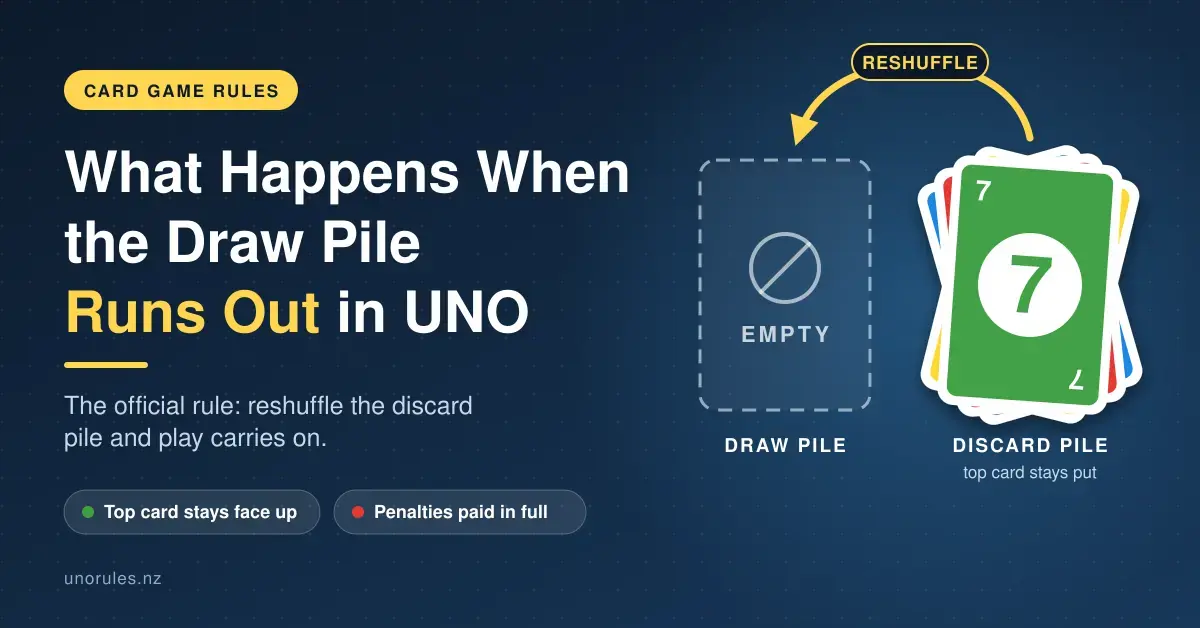
What happens if the Draw Pile runs out? The Discard Pile (except for the top card) is reshuffled and placed into the machine's storage slot to form a new Draw Pile.
Is Uno Wild Jackpot suitable for young children? The game is recommended for ages 7 and up, as it requires basic strategy and the ability to read roller symbols.
How many points is a Jackpot card worth? A Jackpot card is worth 50 points if it is caught in an opponent's hand at the end of a round.
What marker should I use on the rules wheel? Always use the provided erasable marker or a standard dry-erase marker to ensure the rules can be changed for future games.