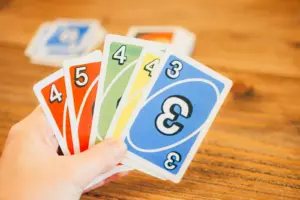
This comprehensive guide explores the innovative world of Uno Roboto, a high-tech evolution of the classic card game that introduces a living, breathing robot as the dealer and game master. We cover the full setup process, including the customization of house rules and player names, the specialized "House Rule" cards, and the unpredictable nature of the robot's randomized commands. By understanding how the interactive robot interacts with the standard deck, players in the New Zealand gaming market will learn how to navigate sudden turn swaps, speed rounds, and personalized challenges. Whether you are hosting a family night in Wellington or a competitive social club session, this article provides clear explanations, practical examples, and actionable insights to help you master the Uno Roboto rules and secure a victory against both your opponents and the machine.

Introduction to the Interactive Mechanics of Uno Roboto
Uno Roboto represents a significant technological leap in the Uno franchise, transforming the stationary card game into a dynamic, auditory experience. The game revolves around the Uno Roboto figure, a battery-operated robot that acts as the referee, timer, and chaotic element. Unlike traditional Uno, where turn order is predictable and clockwise, Uno Roboto can interrupt play at any moment to issue a "Roboto Challenge" or a specific command to a named player. In the New Zealand tabletop scene, this version is highly regarded for its ability to level the playing field between children and adults, as the robot's randomized instructions can bypass a player's strategic advantage in an instant. The primary objective remains to be the first to discard all cards, but the path to victory is governed by the robot's voice.
The deck consists of 108 cards, mirroring the standard set but with the addition of "House Rule" cards that allow for complete customization before the game begins. The robot is equipped with a microphone, allowing it to record player names and a unique "House Rule" that it will announce throughout the session. This personalized touch makes every game of Uno Roboto unique. The integration of a central electronic unit changes the pacing from a slow, calculated match to a fast-paced "interrupt-driven" game where players must stay alert for the robot's next command, which could be anything from "Swap hands" to "Perform a silly dance or draw two cards."
- Interactive Refereing: The robot manages the timer and identifies whose turn it is.
- Customizable Commands: Players record their own names and a specific House Rule at the start.
- Randomized Interruptions: The robot can change the direction, skip players, or issue challenges at any time.
- Audio-Visual Cues: Lights and sounds indicate when the robot is "thinking" or about to speak.
Interactive Refereing: The robot manages the timer and identifies whose turn it is.
Customizable Commands: Players record their own names and a specific House Rule at the start.
Randomized Interruptions: The robot can change the direction, skip players, or issue challenges at any time.
Audio-Visual Cues: Lights and sounds indicate when the robot is "thinking" or about to speak.
| Feature | Classic Uno | Uno Roboto |
|---|---|---|
| Dealer | Human Player | Uno Roboto Figure |
| Turn Order | Sequential (Clockwise) | Randomized/Interrupted by Robot |
| Special Rule | Standard Wilds | Custom Recorded House Rule |
| Interactivity | Low (Social only) | High (Electronic interaction) |
Setting Up Your Interactive Game Unit
Proper setup is the most critical phase of Uno Roboto, as the robot needs to store player information to function correctly. To begin, ensure the unit has fresh batteries (typically 3 AA) and is switched to the "ON" position. The robot will greet the players and guide them through the registration process. One by one, players press the robot's hand to record their names. It is important to speak clearly and at a moderate volume to ensure the robot can reproduce the names accurately during gameplay. In the New Zealand social context, using nicknames or humorous identifiers is a common way to add flair to the match.
After all names are recorded (2 to 6 players), the robot will ask for a "House Rule." This is a custom action that the robot will occasionally command a player to perform. Popular Kiwi house rules include "Do a Haka," "Stand on one leg," or "Call everyone 'Mate' until your next turn." Once the setup is complete, the dealer (chosen by the robot) deals seven cards to each player. The remaining cards form the Draw Pile, and the top card is flipped to start the Discard Pile. The robot then announces the first player, and the match officially begins.
- Name Registration: Each player records their name into the robot's microphone.
- House Rule Recording: A single, shared custom rule is recorded for the entire game.
- Dealing: 7 cards per player; the robot often selects the dealer or the first player.
- Volume Check: Ensure the environment isn't too noisy for the robot to hear or be heard.
Name Registration: Each player records their name into the robot's microphone.
House Rule Recording: A single, shared custom rule is recorded for the entire game.
Dealing: 7 cards per player; the robot often selects the dealer or the first player.
Volume Check: Ensure the environment isn't too noisy for the robot to hear or be heard.
| Setup Step | Action Required | Responsibility |
|---|---|---|
| 1. Power On | Switch the unit on and wait for the greeting. | Host |
| 2. Registration | Press the button and record your name clearly. | All Players |
| 3. House Rule | Decide on and record a single creative command. | The Group |
| 4. Start Game | Place the deck and wait for the robot’s first command. | All Players |
Mastering the Robot-Led Gameplay Loop
Gameplay in Uno Roboto follows the standard "match by color or number" logic, but with the robot acting as the timer. On your turn, you match the top card of the Discard Pile. If you have a match, you play it and immediately press the robot's head (or button) to signal the end of your turn. If you do not have a match, you must draw a card. If the drawn card is playable, you can put it down and press the button; if not, your turn ends and you press the button to let the robot know to move on.
The robot's primary function during play is to maintain a "hidden" timer. If you take too long to make your move, the robot will chime in, often teasing the player or forcing a draw penalty. This adds significant pressure to the decision-making process. Furthermore, the robot will randomly interrupt the sequence of play. When the robot's lights flash and it speaks, all play must stop immediately. The robot might tell "James" to "Swap hands with Sarah," or it might announce "Everyone draw one card." These interruptions are the defining characteristic of the Mod version of Uno.
- Head Pressing: You must press the robot's head to end your turn.
- Speed Play: The robot encourages fast decisions through its internal timer.
- Robot Interference: Stop play immediately whenever the robot speaks.
- Match Logic: Standard color, number, or symbol matching applies.
Head Pressing: You must press the robot's head to end your turn.
Speed Play: The robot encourages fast decisions through its internal timer.
Robot Interference: Stop play immediately whenever the robot speaks.
Match Logic: Standard color, number, or symbol matching applies.
Understanding the Specialized House Rule Cards
Uno Roboto includes standard action cards like Skip, Reverse, and Draw Two, but it also features a unique card: the "House Rule" card. When you play this card, it acts as a Wild card, allowing you to choose the next color. However, playing this card also triggers the robot to announce the custom House Rule you recorded during the setup phase. The player who played the card (or sometimes the next player, depending on the robot's mood) must perform the rule or face a draw penalty.
In the competitive New Zealand environment, the House Rule card is a strategic weapon. Since you know what the recorded rule is, you can time its play for maximum disruption. If the rule is "Switch chairs," playing it during a high-tension moment can cause your opponents to lose their focus or mix up their cards. These cards are worth 50 points if caught in an opponent's hand at the end of the round, making them high-risk, high-reward assets. .Read more in Wikipedia.
| Action Card | Function in Uno Roboto | Strategic Note |
|---|---|---|
| Skip | Bypasses the next player in the current order. | Robot may still override this immediately. |
| Reverse | Changes the direction of play. | Robot often resets the direction randomly. |
| Draw Two | Next player draws 2 cards and misses turn. | Press the robot head after the draw. |
| House Rule | Triggers the custom recorded audio command. | Can be used as a Wild color changer. |
The Robot’s Randomized Commands and Challenges
The most unpredictable element of Uno Roboto is the "Randomized Command." Without anyone playing a specific card, the robot may suddenly announce a command. One of the most common is the "Duel." The robot will name two players who must then race to be the first to press the robot's head. The winner of the duel gets a reward (like discarding a card), while the loser receives a penalty (drawing cards).
Another common command is the "Hand Swap." The robot might command two specific players to trade their entire hands of cards. This can be devastating if you were down to your final card and are forced to trade with someone who has ten. For players in the New Zealand circuit, these commands require a high degree of mental resilience. You can never get too comfortable with your hand size because the robot can—and will—take it away from you at its whim.
- The Duel: A reflex-based challenge between two named players.
- The Swap: A total exchange of cards between two participants.
- The Global Draw: A command for everyone to take cards from the pile.
- Turn Reset: The robot may randomly decide who the "new" active player is.
The Duel: A reflex-based challenge between two named players.
The Swap: A total exchange of cards between two participants.
The Global Draw: A command for everyone to take cards from the pile.
Turn Reset: The robot may randomly decide who the "new" active player is.
| Command Type | Action Required | Impact |
|---|---|---|
| Reflex Duel | Race to hit the robot’s head first. | Winner discards; Loser draws. |
| Hand Exchange | Swap all cards with the named opponent. | Complete reset of game progress. |
| Speed Round | Players must play as fast as possible. | High pressure and frequent mistakes. |
| Individual Draw | Named player must draw 1-3 cards. | Targets the current leader. |
Strategic Hand Management in Uno Roboto
Because the robot can force hand swaps or specific draws, strategy in Uno Roboto is about "Card Quality" rather than just "Card Quantity." It is often better to hold onto a few powerful action cards (like House Rule cards or Wild Draw Fours) even if it means you have more cards in your hand. If a swap occurs, you want to be the one receiving a small hand of simple numbers, while your opponent gets your "trapped" hand of complex penalties.
Another key strategy is "Button Readiness." Since the robot frequently issues reflex-based duels, keeping your hand close to the robot's head (without obstructing other players) is a vital tactical move. In New Zealand home games, the "Ready Pose" is often a point of humor, but it serves a serious purpose: preventing a 2-card draw penalty for losing a duel. Always be listening for your name; the robot's voice is the primary source of information in this game.
- Action Conservation: Keep high-power cards to survive robot interventions.
- Listen Closely: Identifying your name early gives you a half-second advantage in duels.
- Reflex Positioning: Keep your hitting-hand free and ready.
- Point Dumping: If an opponent is low on cards, play your 50-point cards early.
Action Conservation: Keep high-power cards to survive robot interventions.
Listen Closely: Identifying your name early gives you a half-second advantage in duels.
Reflex Positioning: Keep your hitting-hand free and ready.
Point Dumping: If an opponent is low on cards, play your 50-point cards early.
Scoring Systems and Winning Conditions
A round of Uno Roboto ends as soon as a player plays their last card. However, just like standard Uno, you must shout "Uno" when you have only one card left. In this version, you shout "Uno" and then press the robot's head. If you are caught by an opponent before you press the head or before the next turn begins, you must draw two cards. The robot will often announce the winner and play a celebratory sound effect.
To determine an overall champion in a New Zealand tournament format, points are calculated based on the cards remaining in opponents' hands. Standard numbers are face value, action cards are 20 points, and House Rule/Wild cards are 50 points. The first player to reach 500 points across multiple rounds is the victor. The robot does not track points, so a designated human scorekeeper is required to manage the tally on a separate sheet of paper.
- Numbers (0-9): Face Value.
- Standard Actions: 20 Points each.
- House Rule Cards: 50 Points each.
- Match Goal: Traditionally 500 points.
Numbers (0-9): Face Value.
Standard Actions: 20 Points each.
House Rule Cards: 50 Points each.
Match Goal: Traditionally 500 points.
| Card Category | Point Value | Risk Level |
|---|---|---|
| Standard Numbers | 0 – 9 | Low |
| Skips/Reverses/Draw 2s | 20 | Medium |
| House Rule / Wilds | 50 | High |
The "Uno" Shout and Robot Confirmation
The "Uno" shout in Uno Roboto is slightly more complex than in the original game. Because the robot manages the turns, the window to "catch" a player who forgot to say "Uno" is strictly governed by the robot's internal timer and the head-press. You must announce "Uno" before you press the robot's head to end your turn with one card remaining. If your hand leaves the robot's head and you haven't said it, you are fair game for a penalty.
In the fast-paced environment of a New Zealand game night, the robot's sounds can often mask a quiet "Uno" shout. It is etiquette to ensure your declaration is audible over the robot's electronic chatter. If the robot announces a command (like a swap) just as you were about to go out, you must follow the command first. If you end up with one card after a swap, you must immediately shout "Uno" again.
- Shout Timing: Before or during the final head-press of the turn.
- Catching Opponents: Must be done before the next player interacts with the robot.
- Post-Swap Uno: Shout "Uno" if a robot command leaves you with a single card.
- Verification: The robot provides the final "victory" confirmation.
Shout Timing: Before or during the final head-press of the turn.
Catching Opponents: Must be done before the next player interacts with the robot.
Post-Swap Uno: Shout "Uno" if a robot command leaves you with a single card.
Verification: The robot provides the final "victory" confirmation.
Playing Uno Roboto with Different Group Sizes
Uno Roboto scales effectively from 2 to 6 players, but the experience changes significantly. In a 2-player game, the robot's commands are extremely focused, often resulting in constant duels between the two participants. In a 6-player game, the chaos is maximized. The robot might not call your name for several minutes, only to suddenly force you into a duel with a player on the opposite side of the table.
For New Zealand families playing with younger children, a 3 or 4-player game is often the "sweet spot." It allows for enough social interaction and robot-driven chaos without the game lasting too long. Regardless of the group size, ensure everyone is seated in a circle around the robot so that everyone has equal access to the microphone and the head-button for reflex challenges.
| Group Size | Dynamic | Strategy |
|---|---|---|
| 2 Players | Intense Duel | Focus on speed and reflex. |
| 3-4 Players | Balanced Chaos | Track all colors and save action cards. |
| 5-6 Players | Maximum Unpredictability | Play high-point cards early. |
Common Mistakes and Troubleshooting
The most common mistake in Uno Roboto is forgetting to press the robot's head. Players often play their card and sit back, forgetting that the robot's timer is still ticking for their turn. This results in a "Time Out" penalty. Another issue is poor audio registration; if the robot's batteries are low, it may struggle to play back names clearly, leading to confusion during duels.
If the robot seems "stuck" or is repeating commands incorrectly, a soft reset is usually required. Most units have a small reset button on the bottom, or you can simply cycle the power switch. In New Zealand's varied climate, it's also important to store the robot in a dry place; moisture can interfere with the microphone and internal circuitry, leading to "ghost" presses or distorted audio.
- Head Pressing: Always hit the button to stop your timer!
- Clear Speech: Record names in a quiet room for better playback.
- Battery Management: Use high-quality alkalines for consistent performance.
- Reset Procedure: Use the power switch or reset button if the robot glitches.
Head Pressing: Always hit the button to stop your timer!
Clear Speech: Record names in a quiet room for better playback.
Battery Management: Use high-quality alkalines for consistent performance.
Reset Procedure: Use the power switch or reset button if the robot glitches.
Final Thoughts on the Uno Roboto Experience
Uno Roboto is a masterclass in how to modernize a classic without losing its soul. By personifying the game's rules in a quirky, unpredictable robot, Mattel has created a version of Uno that is as much about social interaction and reflexes as it is about card matching. For New Zealanders, it offers a fantastic high-energy alternative to the standard deck, perfect for breaking the ice at parties or keeping kids engaged during school holidays. By mastering the House Rule cards and staying alert for the robot's randomized commands, you can turn a game of luck into a victory of skill and speed. Just remember: when the robot speaks, the world of Uno changes, and only the fastest and most focused will shout "Uno" at the end.
Quick Reference Summary Table
| Game Aspect | Detail |
|---|---|
| Player Limit | 2 to 6 Players. |
| Main Objective | First player to discard all cards. |
| Unique Feature | Interactive Robot dealer and referee. |
| House Rules | One custom recorded rule per game. |
| Victory Condition | First to reach 500 points (human tallied). |
FAQ
What should I do if the robot doesn't recognize my name? Ensure you spoke clearly into the microphone during setup. If it's still unclear, reset the unit and re-record your name in a quieter environment.
How many cards do you deal in Uno Roboto? Each player is dealt seven cards at the beginning of the round.
What happens if I forget to press the robot's head? The robot's internal timer will continue to run, eventually triggering a "Time Out" penalty which usually requires you to draw cards.
Can I change the House Rule mid-game? No, the House Rule is recorded during the initial setup and remains the same for the duration of that session.
What is a "Roboto Challenge"? A randomized event triggered by the robot, such as a reflex duel or a requirement for all players to perform an action.
Does the robot say "Uno" for you? No, you must still shout "Uno" yourself when you have one card left before pressing the robot's head.
How long do the batteries last? With standard alkaline batteries, you can typically expect 10 to 15 hours of continuous play.
Is there a way to adjust the robot's volume? Most Uno Roboto units do not have a dedicated volume knob; the loudness is determined by the internal speaker's fixed setting.
What happens if the robot commands a Hand Swap with a player who has already finished? The robot's logic usually prevents this, but if it occurs, follow the most recent command or treat it as a "no-action" turn.
Can I play Uno Roboto like regular Uno? You can use the cards for a standard game, but the unique House Rule cards and the lack of a human dealer make the robot essential for the full experience.