This comprehensive guide explores the innovative mechanics of Uno Mod, a sleek and streamlined version of the classic card game that introduces modern aesthetics and subtle tactical refinements. We cover the full setup process, the specific functions of contemporary action cards, and advanced scoring strategies tailored for the New Zealand tabletop gaming market. By understanding how the Mod edition simplifies the traditional deck while retaining the competitive edge of "take-that" gameplay, players will learn how to master quick-fire rounds and navigate the optimized card distribution. Whether you are hosting a casual game night in Auckland or competing in a local social club, this article provides clear explanations, practical examples, and actionable insights to help you master the Uno Mod rules.

Introduction to the Modernised Uno Mod Experience
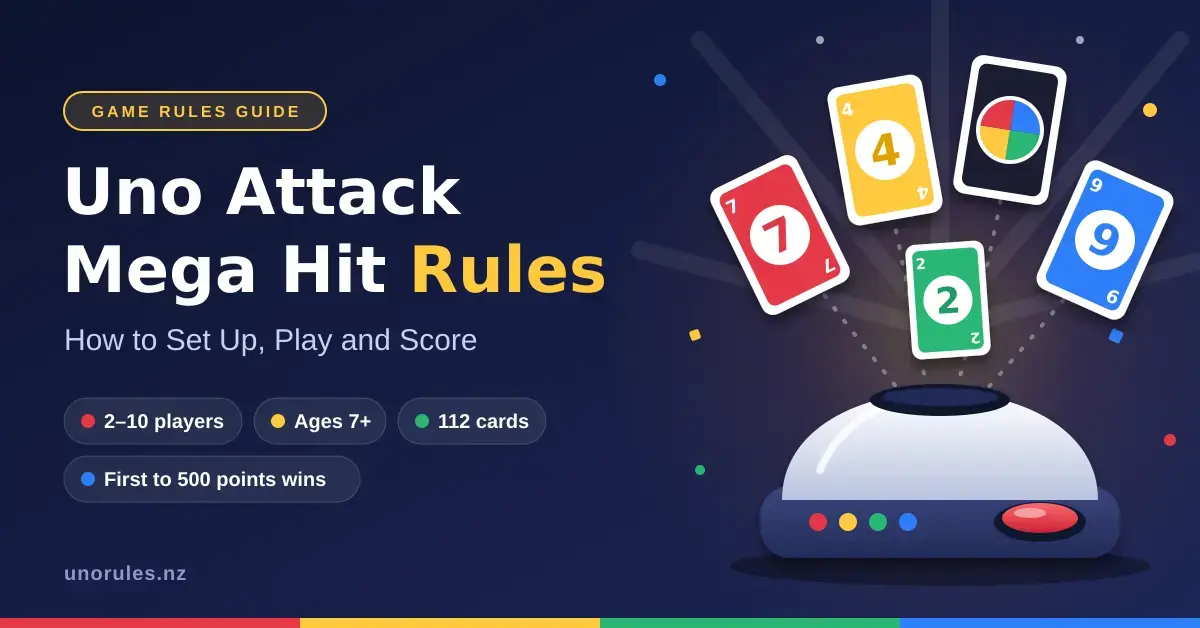
Uno Mod represents a stylistic and functional evolution of the classic Uno franchise, designed for players who appreciate a minimalist aesthetic and faster game loops. While the core "match by colour or number" logic remains the cornerstone of the experience, Uno Mod distinguishes itself with a redesigned deck that features contemporary graphic design and a slightly modified card weight. In the New Zealand context, where families and social groups often look for portable, high-quality games for weekend trips or "bach" stays, Uno Mod has emerged as a popular choice. The game is built for 2 to 10 players, and the simplified visual cues allow for even faster recognition during high-pressure turns, making it ideal for the competitive "speed Uno" culture often found in Kiwi households.
The primary goal is unchanged: be the first player to discard all cards in your hand. However, the "Mod" or modern version often emphasizes a smoother scoring transition and a more balanced distribution of the 108-card deck. Each suit—Red, Yellow, Blue, and Green—contains numbers 0 through 9, alongside the iconic Skip, Reverse, and Draw Two cards. The Wild cards in this edition are designed with high-contrast symbols to ensure there is no ambiguity during the late-game "Uno" shouts. Understanding the subtle differences in card handling and the importance of the modernized action symbols is the first step toward dominating your local circuit.
- Minimalist Design: Clean card faces for faster recognition.
- Standard Deck Size: 108 cards optimized for 2–10 players.
- Action-Heavy Play: Strategic distribution of Skip and Reverse cards.
- NZ Market Appeal: Highly portable and durable for outdoor social play.
Minimalist Design: Clean card faces for faster recognition.
Standard Deck Size: 108 cards optimized for 2–10 players.
Action-Heavy Play: Strategic distribution of Skip and Reverse cards.
NZ Market Appeal: Highly portable and durable for outdoor social play.
Setting Up Your Uno Mod Session
Preparing for a match of Uno Mod is a straightforward process that mirrors the classic setup but rewards attention to detail. To determine the dealer, each player draws a card from the shuffled deck; the person with the highest number takes the lead (Action cards count as zero for this draw). The dealer shuffles the 108 cards and distributes seven cards face-down to each player. The remaining cards are placed in the center of the table to form the Draw Pile, and the top card is flipped over to create the Discard Pile.
In New Zealand social gaming, it is essential to establish "house rules" regarding the first card flipped. Traditionally, if the first card is a "Draw Two," the player to the dealer's left must draw two cards and lose their turn immediately. If the first card is a "Wild," the player to the left of the dealer chooses the active colour. This setup phase is crucial for ensuring the game moves at the intended "Mod" pace, which is significantly faster than older, more cluttered card variants.
| Setup Step | Action Required | Responsibility |
|---|---|---|
| 1. Dealer Draw | Players pull a card; highest number deals. | All Players |
| 2. Shuffling | Thoroughly mix the 108 cards. | Dealer |
| 3. Distribution | Deal 7 cards per player. | Dealer |
| 4. Initialization | Flip the top Draw Pile card to start the Discard. | Dealer |
Mastering the Mechanics of Color and Number Matching
The fundamental gameplay of Uno Mod revolves around matching. On your turn, you must play a card that matches the top card of the Discard Pile by colour, number, or symbol. For example, if the Discard Pile shows a "Blue 5," you can play any Blue card, any color 5, or a Wild card. If you are unable to make a match, you must draw one card from the Draw Pile. If the card you draw is playable, you can put it down immediately; otherwise, your turn ends and play passes to the next person.
A common strategic nuance in Uno Mod is the "Tactical Draw." Sometimes, even if you have a match, you might choose to draw a card in hopes of finding a more powerful action card or to keep a specific colour in your hand for a later turn. However, once you draw, you can only play the card you just pulled; you cannot go back and play the card you originally had in your hand. This rule is strictly enforced in New Zealand competitive play to prevent stalling.
- Matching Logic: Color, Number, or Symbol (Skip/Reverse/Draw Two).
- The Draw Rule: If no match is available, draw one card.
- Immediate Play: Drawn cards can be played if they match the pile.
- Turn Flow: Play moves clockwise unless a Reverse card is played.
Matching Logic: Color, Number, or Symbol (Skip/Reverse/Draw Two).
The Draw Rule: If no match is available, draw one card.
Immediate Play: Drawn cards can be played if they match the pile.
Turn Flow: Play moves clockwise unless a Reverse card is played.
Matching Strategies for Advanced Play
Effective matching is about more than just getting rid of cards; it's about controlling the colour of the board. If you notice an opponent is consistently drawing when "Green" is active, you should prioritize playing Green cards to keep them at a disadvantage. Conversely, if you are stuck with many cards of a single colour, you should look for "Number Matches" to bridge your way into a more favourable colour suit without wasting a Wild card.
| Match Type | Example | Strategic Benefit |
|---|---|---|
| Color Match | Red 4 on Red 9 | Maintains the current suit. |
| Number Match | Blue 3 on Red 3 | Changes the suit without a Wild. |
| Action Match | Skip on Skip | Stacks pressure on the next player. |
| Wild Match | Wild on any card | Total control over the next colour. |
Detailed Breakdown of Modern Action Cards
Action cards are the primary weapons in Uno Mod, used to disrupt your opponents' progress and protect your lead. The Skip card forces the next player to miss their turn, which is vital for bypassing a player who has only one card left. The Reverse card changes the direction of play, a move that can be used defensively to send a penalty back to the person who just played it. The Draw Two card is the standard offensive move, forcing the next player to draw two cards and forfeit their turn.
In Uno Mod, these symbols are rendered in a clean, high-contrast style. In 1v1 play, the Reverse card functions identically to a Skip card, meaning you immediately take another turn. This "Mod" nuance makes action cards extremely powerful in head-to-head duels. Understanding the frequency of these cards in the deck—two of each action per colour—allows players to estimate the likelihood of an opponent having a counter-attack ready. .Read more in Wikipedia.
- Skip: Bypasses the next player.
- Reverse: Flips the direction of play.
- Draw Two: Next player draws 2 and misses a turn.
- Wild: Changes the colour; can be played on any card.
Skip: Bypasses the next player.
Reverse: Flips the direction of play.
Draw Two: Next player draws 2 and misses a turn.
Wild: Changes the colour; can be played on any card.
Defensive Use of Reverse Cards
The Reverse card is often misunderstood as a purely directional tool. In reality, it is a defensive shield. If you are seated between two aggressive players, the Reverse card allows you to manipulate which of them targets you. By switching the direction, you can force the pressure onto a player who has just "Uno'd," buying you several turns to reduce your own hand size.
| Action Card | Points Value | Strategy |
|---|---|---|
| Skip | 20 Points | Best used to prevent a win. |
| Reverse | 20 Points | Best used for turn manipulation. |
| Draw Two | 20 Points | Best used to bulk up an opponent. |
| Wild | 50 Points | Best used to change to your strongest suit. |
The Power of Wild and Wild Draw Four Cards
Wild cards are the ultimate strategical assets in Uno Mod. A standard Wild card allows the player to choose the next colour, providing an escape from a suit they cannot match. The Wild Draw Four is significantly more powerful, allowing the player to choose the colour and forcing the next player to draw four cards and skip their turn. However, the Mod rules specify that you may only play a Wild Draw Four if you do not have a card in your hand that matches the colour of the Discard Pile.
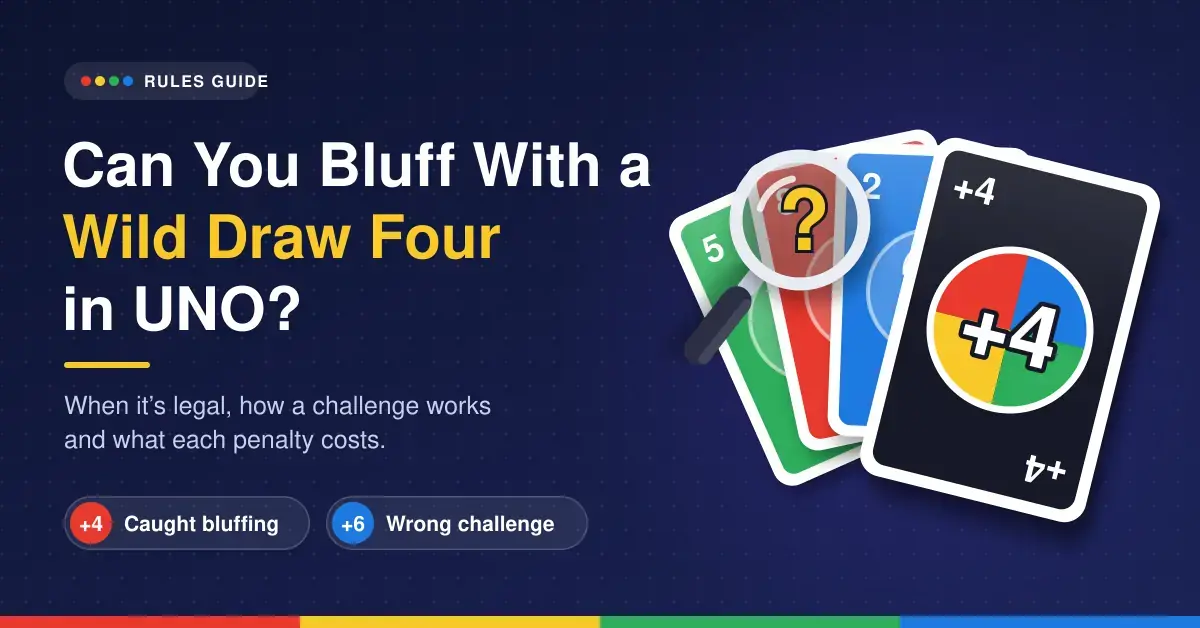
This restriction introduces the "Challenge" mechanic. If a player suspects you played a Wild Draw Four illegally (meaning you had a matching colour), they can challenge you. If you are guilty, you must draw the 4 cards. If you are innocent, the challenger must draw the 4 cards plus an additional 2 cards as a penalty. This bluffing element is a staple of New Zealand competitive play, where reading an opponent's "tell" is just as important as the cards you hold.
- Wild: Playable at any time; choose the next colour.
- Wild Draw Four: Use only when you have no matching colour.
- The Challenge: High-risk move to catch a bluffing opponent.
- Penalty: 6 cards for a failed challenge; 4 cards for a caught bluff.
Wild: Playable at any time; choose the next colour.
Wild Draw Four: Use only when you have no matching colour.
The Challenge: High-risk move to catch a bluffing opponent.
Penalty: 6 cards for a failed challenge; 4 cards for a caught bluff.
Scoring Systems and Winning the Match
Winning a round of Uno Mod occurs when a player plays their final card. However, the overall winner of the session is typically determined by points. In the standard scoring system, the player who "goes out" receives points based on the cards remaining in their opponents' hands. This encourages players to play their high-point cards (Wilds and Action cards) earlier in the round to avoid a massive point penalty if someone else wins.
In the New Zealand market, the first player to reach 500 points across multiple rounds is declared the champion. Number cards (0-9) are worth their face value, action cards (Skip, Reverse, Draw Two) are worth 20 points, and all Wild cards are worth 50 points. This mathematical layer adds depth to the game, as a player with many cards might still win the overall match by minimizing their point losses in rounds they don't win.
- Numbers (0-9): Face Value.
- Actions (Skip/Reverse/Draw 2): 20 Points each.
- Wilds (All types): 50 Points each.
- Winning Threshold: 500 Points.
Numbers (0-9): Face Value.
Actions (Skip/Reverse/Draw 2): 20 Points each.
Wilds (All types): 50 Points each.
Winning Threshold: 500 Points.
| Card Category | Point Value | Risk Level |
|---|---|---|
| Numbers | 0 – 9 | Low |
| Actions | 20 | Medium |
| Wilds | 50 | High |
The Essential Uno Shout and Penalty Rules
The most iconic rule of the franchise remains the "Uno" shout. When you have exactly one card left in your hand, you must loudly and clearly shout "Uno!" This must be done the moment your second-to-last card touches the Discard Pile. If you are caught by an opponent before the next player takes their turn, the penalty is a draw of two cards. In the fast-paced environment of Uno Mod, this is often the most frequent point of contention.
For the shout to be valid, it must be audible to all participants. In New Zealand home games, "sneaky" wins are often discouraged; the spirit of the game relies on the tension of the final card. If your final card is a Draw Two or Wild Draw Four, the next player must still resolve the draw penalty before the round is officially over and the points are calculated.
- Timing: Shout as you play your 2nd to last card.
- The Catch: Opponents must catch you before the next turn starts.
- Penalty: 2 cards from the Draw Pile.
- Final Action: All penalties must be resolved before the round ends.
Timing: Shout as you play your 2nd to last card.
The Catch: Opponents must catch you before the next turn starts.
Penalty: 2 cards from the Draw Pile.
Final Action: All penalties must be resolved before the round ends.
Advanced Strategies for Modern Play
Success in Uno Mod requires a blend of offensive and defensive tactics. One common strategy is "Color Hoarding," where you collect cards of one colour and use a Wild to switch the game to that colour when you know your opponents are likely to have none. Another strategy is "Action Buffering," where you save a Draw Two or Skip card specifically for the player who is currently leading, ensuring they can never get down to their final card.
In larger groups, "Cross-Table Observation" is key. Pay attention to which players are drawing when certain colours are played. If the player across from you draws on Blue, you should try to keep the game Blue as long as possible. In New Zealand competitive circles, tracking the number of Wilds played (usually 8 in a deck) allows you to determine when it's safe to play your final numbers without fear of a last-minute colour change.
| Strategy | Action | Result |
|---|---|---|
| Color Control | Saving Wilds for the endgame. | Guarantees a win on any colour. |
| Targeting | Using Skips on the player with 1 card. | Prevents an immediate win. |
| Baiting | Playing a Number Match to change colour. | Forces opponents to use their Wilds early. |
| Bluffing | Playing a Wild Draw Four illegally. | High risk, but can stop a winner. |
Playing Uno Mod with Two Players
Uno Mod is exceptionally tight as a two-player game. In this format, the Reverse card acts exactly like a Skip card—meaning when you play it, your opponent is skipped and it becomes your turn again. This can lead to "Combos" where a player can play three or four cards in a row if they have the right action cards. This makes hand management critical; you should never let your opponent have a large advantage in action cards.
When playing 1v1 in New Zealand, many players adjust the winning threshold to 250 points for a faster match. This allows for a "Best of Three" series of games. In this format, the game becomes less about luck and more about the "Mod" efficiency of your draws and the timing of your Skips.
- Reverse Rule: Functions as a Skip.
- Draw Two Rule: Opponent draws 2 and it remains your turn (Skip effect).
- Speed: Games are significantly shorter.
- Point Cap: Often reduced to 250 for quicker sessions.
Reverse Rule: Functions as a Skip.
Draw Two Rule: Opponent draws 2 and it remains your turn (Skip effect).
Speed: Games are significantly shorter.
Point Cap: Often reduced to 250 for quicker sessions.
Common Mistakes and Rule Clarifications
One of the most frequent errors in Uno Mod is the "Illegal Draw." Players often think they can keep drawing until they find a match. In the official rules, you only draw one card. If it doesn't match, you must pass. Another common mistake involves the "Wild Draw Four Challenge." Players often forget that the challenge only applies to the colour of the discard pile, not the number.
Additionally, ensure everyone is clear on the "Jump-In" rule. While popular in some Kiwi households, the "Jump-In" rule (playing a card out of turn if it is an exact match) is not part of the standard Uno Mod rules unless agreed upon before the start of the match. Keeping to the strict turn order preserves the modern, balanced pace of the Mod edition.
- One Card Draw: No multiple draws per turn.
- Challenge Clarity: Applies only to matching colours.
- Turn Integrity: No jumping in unless specified.
- Final Card Action: Draw penalties must be fulfilled before the round ends.
One Card Draw: No multiple draws per turn.
Challenge Clarity: Applies only to matching colours.
Turn Integrity: No jumping in unless specified.
Final Card Action: Draw penalties must be fulfilled before the round ends.
Final Thoughts on Uno Mod
Uno Mod is a testament to the enduring appeal of the franchise, successfully distilling the core experience into a modern, visually stunning format. By emphasizing fast recognition and balanced play, it offers a fresh challenge for veterans and an accessible entry point for new players. For the New Zealand gaming community, it remains a top-tier choice for social interaction, blending simple mechanics with deep psychological strategy. By mastering the action cards, understanding the scoring system, and keeping your "Uno" shout ready, you can ensure your next game night is both modern and competitive.
Quick Reference Summary Table
| Game Aspect | Detail |
|---|---|
| Deck Size | 108 Optimized Cards. |
| Starting Hand | 7 Cards. |
| Penalty (Uno) | 2 Cards. |
| Winning Score | 500 Points. |
FAQ
How is Uno Mod different from regular Uno? Uno Mod features a minimalist graphic design and high-contrast symbols for faster gameplay, but the core rules remain largely the same.
Can two people play Uno Mod? Yes, it is designed for 2 to 10 players. In 2-player games, special rules apply to the Reverse and Skip cards.
What happens if I forget to say "Uno"? If caught by another player before the next person begins their turn, you must draw two cards as a penalty.
Can I play a Wild Draw Four if I have a matching number? Yes. You are only restricted from playing it if you have a card that matches the current colour on the discard pile.
What are the point values for the action cards? Skip, Reverse, and Draw Two are worth 20 points. All Wild cards are worth 50 points.
How many cards do you draw if you can't play? According to official Uno Mod rules, you draw exactly one card. If it cannot be played, your turn ends.
Does the game end immediately when someone plays their last card? Yes, but if the final card is a Draw Two or Wild Draw Four, the next player must still draw those cards before scoring.
What age is Uno Mod suitable for? It is recommended for ages 7 and up, though younger children can play with help due to the clear visual design.
How do I win a match of Uno Mod? The first player to reach a cumulative total of 500 points across several rounds is the winner.
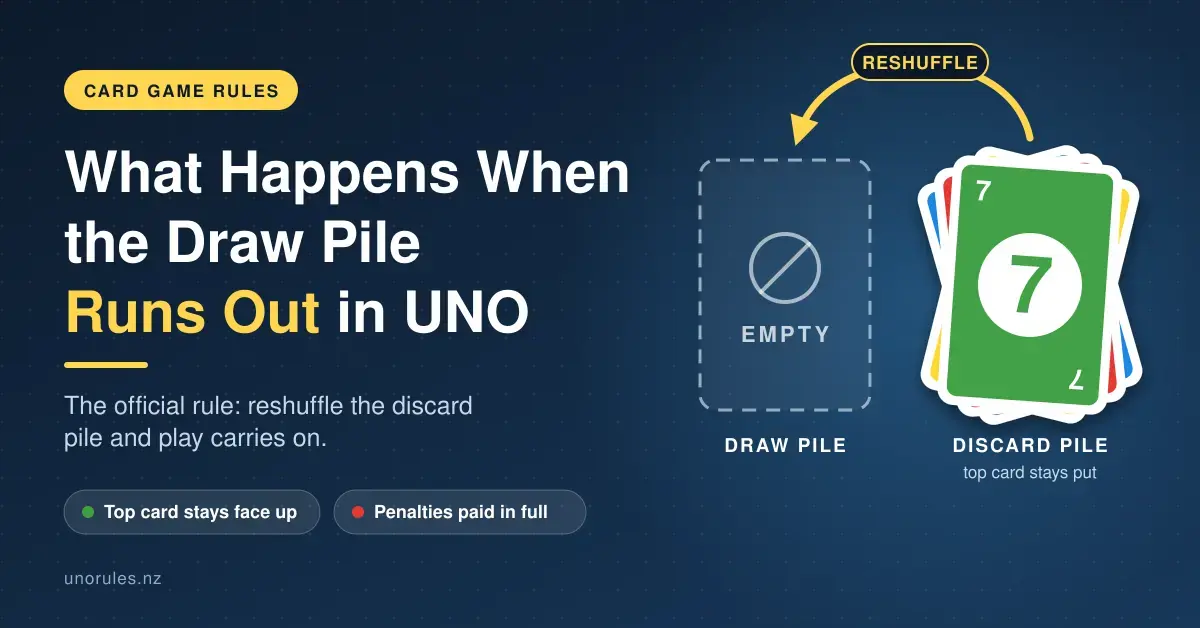
What should I do if the Draw Pile runs out? The Discard Pile (except for the top card) is reshuffled and placed face-down to form a new Draw Pile.