This comprehensive guide explores the explosive world of Uno Blast, providing an in-depth analysis of the game's mechanics, the specialized card launcher, and the strategic adjustments required for this high-action variant. We cover everything from initial setup and battery requirements to the specific functions of the Blast action cards and the essential "Uno" penalty rules. By examining the unique physical interaction of the Blast unit alongside traditional matching logic, players in the New Zealand gaming community will gain a practical understanding of how to manage their hand size effectively while navigating the sudden bursts of cards that define this edition. Whether you are a casual family player or a competitive strategist, this guide ensures you are fully prepared for the unpredictable nature of the Uno Blast launcher.

Understanding the Uno Blast Mechanics
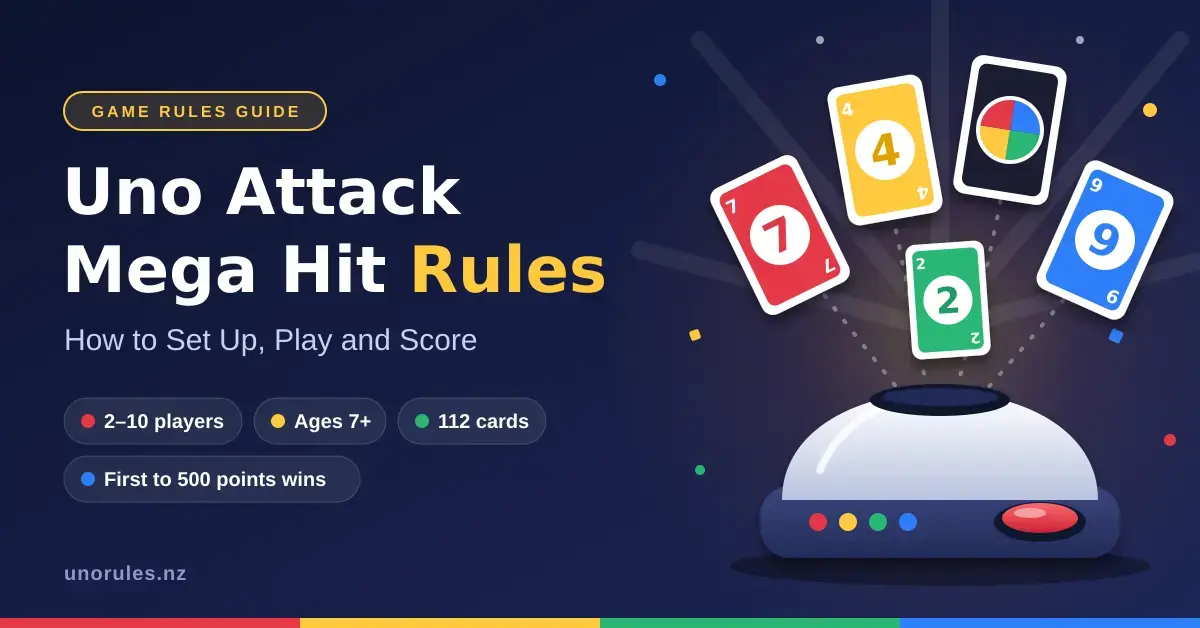
Uno Blast introduces a mechanical element that differentiates it from almost every other version of the classic card game. In this edition, the standard draw pile is replaced by a motorized launcher that contains four distinct slots. When a player cannot match the top card of the discard pile by color, number, or symbol, they must insert a card from the draw deck into one of the launcher's slots. The tension builds with every card inserted, as any single card could trigger the unit to "blast," forcing the active player to add all ejected cards to their hand. This creates a high-stakes environment where the probability of drawing multiple cards increases with every unsuccessful turn.
- The Launcher: A motorized unit with four slots that holds cards until a "blast" is triggered.
- Draw Logic: Instead of drawing directly to your hand, you draw and insert the card into the machine.
- The Penalty: If the machine blasts, you must keep all cards that are fired out.
- Player Range: Designed for 2 to 6 players, making it ideal for standard New Zealand family sizes.
The Launcher: A motorized unit with four slots that holds cards until a "blast" is triggered.
Draw Logic: Instead of drawing directly to your hand, you draw and insert the card into the machine.
The Penalty: If the machine blasts, you must keep all cards that are fired out.
Player Range: Designed for 2 to 6 players, making it ideal for standard New Zealand family sizes.
Launcher Maintenance and Battery Safety
For players in New Zealand, ensuring the Uno Blast unit functions correctly is paramount, especially given the coastal humidity that can affect card texture and friction. The unit typically requires 3 AA alkaline batteries. It is essential to keep the slots free of debris and to ensure the cards are not bent, as damaged cards can lead to frequent jams or false triggers. If the unit is stored for long periods between game nights, removing the batteries is recommended to prevent leakage and ensure the longevity of the electronic components.
Setting Up Your Uno Blast Match
Preparation is key to a smooth gaming experience, particularly when dealing with electronic components. To begin, one player is designated as the dealer after a high-card draw. The dealer shuffles the 110-card deck and deals seven cards face-down to each participant. The remaining cards are placed face-down on the table to form the Draw Pile. Unlike Uno Attack, the cards for Uno Blast are kept in a pile on the table, not inside the machine itself. The launcher should be placed in the center of the play area, easily reachable by all players.
| Setup Phase | Action | Detail |
|---|---|---|
| Step 1 | Choose Dealer | Highest card value deals. |
| Step 2 | Deal Hand | 7 cards per player. |
| Step 3 | Position Launcher | Place the Blast unit in the center. |
| Step 4 | Start Discard | Flip top card to start play. |
Highest card value deals.
7 cards per player.
Place the Blast unit in the center.
Flip top card to start play.
Initial Card Placement
The player to the left of the dealer begins the game. If the first card flipped to start the Discard Pile is an action card, the rules dictate specific outcomes. For example, if a "Wild Blast" card is flipped first, the starting player chooses the color and immediately performs the Blast action. This immediate interaction with the machine sets the tone for the rest of the game, highlighting the constant threat of the launcher.
Mastering the Standard Action Cards
While the Blast unit is the star of the show, the standard action cards remain the engine of the game's strategy. The "Skip" card allows you to bypass the next player, which is particularly useful if you suspect the launcher is primed to explode on the next card insertion. The "Reverse" card changes the direction of play, a vital tool for shifting the pressure back onto a player who has been successfully avoiding the machine. In a two-player game, these cards function similarly, essentially granting the player an extra turn.
- Skip: The next player loses their turn entirely.
- Reverse: The order of play switches (Clockwise to Counter-clockwise).
- Draw Two: The next player must draw two cards and then loses their turn.
- Wild: Allows the player to change the active color.
Skip: The next player loses their turn entirely.
Reverse: The order of play switches (Clockwise to Counter-clockwise).
Draw Two: The next player must draw two cards and then loses their turn.
Wild: Allows the player to change the active color.
Strategic Use of Skip and Reverse
In the New Zealand context, where social gaming often involves high-energy banter, the Skip and Reverse cards are often used defensively. If the machine has three cards already inserted, the fourth card is a guaranteed blast. Playing a Skip card at this moment is a powerful tactical move that forces the player after your opponent to face the risk, or forces the turn back to someone who has a larger hand. Understanding the "state" of the launcher slots is just as important as knowing the cards in your hand.
The Unique Blast Action Cards
Uno Blast features specialized cards that interact directly with the motorized launcher. The most prominent is the "Wild Blast" card. When played, the player chooses a color and then forces the next player to take a card from the Draw Pile and insert it into the machine. If the machine blasts, that player must take all ejected cards. This is a targeted attack that can quickly inflate an opponent's hand. Another variation is the "Wild Draw Six," which combines the power of a Wild card with a massive draw penalty, though this is more common in specialized versions of the Blast deck. Read more in Wikipedia.
| Blast Card | Direct Action | Result |
|---|---|---|
| Wild Blast | Choose color; next player inserts card. | Potential hand explosion. |
| Wild Draw Four | Choose color; next player draws 4. | Massive hand increase. |
| Standard Blast | Match color/number; next player inserts. | High-tension play. |
Potential hand explosion.
Massive hand increase.
High-tension play.
The "Draw and Insert" Procedure
When a player is forced to "Draw and Insert" by an action card or because they cannot match the discard pile, they must follow a specific sequence. They take the top card from the Draw Pile and choose any of the four slots on the launcher. They must push the card in until they hear a click or feel the tension. If the machine doesn't blast, the card remains in the slot, and their turn ends. If it does blast, the cards are ejected, and the player must gather them all, effectively resetting the machine for the next user.
Winning and the "Uno" Penalty
The path to victory in Uno Blast requires constant vigilance. As with traditional Uno, you must shout "Uno" the moment you have only one card left in your hand. In the excitement of a potential blast, many players forget this step. If an opponent catches you before the next player starts their turn, you are subjected to the "Uno" penalty. In the Blast edition, this penalty typically involves drawing two cards and immediately inserting them into the launcher, creating a double risk of increasing your hand size right at the finish line.
- Shouting Uno: Must be done when one card remains.
- The Challenge: Opponents must call "Uno" before the next turn begins.
- The Penalty: Draw 2 cards and insert them into the Blast unit.
- Victory: Play your last card successfully to win the round.
Shouting Uno: Must be done when one card remains.
The Challenge: Opponents must call "Uno" before the next turn begins.
The Penalty: Draw 2 cards and insert them into the Blast unit.
Victory: Play your last card successfully to win the round.
Calculating Points for the Match
A single round win is often just the beginning. To determine an overall champion, players calculate points based on the cards remaining in their opponents' hands. Number cards are worth their face value, while Skip, Reverse, and Draw Two cards are worth 20 points each. The high-value Wild and Blast cards are worth 50 points. The first player to reach 500 points (or a predetermined lower limit for quicker games) is the winner of the match. This system rewards players for playing their high-value cards early.
Advanced Tactics for the Blast Launcher
Experienced Uno Blast players do not just play their cards at random; they track the machine. Since the launcher has four slots and is designed to trigger based on specific mechanical thresholds, players can often estimate the risk. If two slots are full, the risk is moderate; if three are full, the next card is extremely likely to trigger a blast. A savvy player will hold onto a Wild card or a Skip card specifically for these high-risk moments to ensure they aren't the ones receiving the extra cards.
| Risk Level | Slots Filled | Recommended Action |
|---|---|---|
| Low | 0-1 | Play standard number cards to save power cards. |
| Medium | 2 | Consider using a Reverse to shift the turn. |
| High | 3 | Use a Skip or Wild to avoid the launcher. |
Play standard number cards to save power cards.
Consider using a Reverse to shift the turn.
Use a Skip or Wild to avoid the launcher.
Hand Management in High-Player Games
In games with 5 or 6 players, the launcher fills up very quickly. In these scenarios, "Discard All" cards (if present in your variant) or early play of Wild cards is essential. The goal is to keep your hand lean. If you are forced to insert a card and the machine blasts, do not be discouraged. Use the influx of new cards to gain more action cards (Skips/Reverses) that will allow you to control the game's tempo in the subsequent turns.
Playing Uno Blast with Two Players
Two-player Uno Blast is a fast-paced duel where the launcher becomes even more lethal. Because turns alternate so quickly, a single player might find themselves interacting with the machine multiple times in a minute. The "Reverse" card acts as a "Skip" in this mode, meaning you immediately take another turn. This allows for powerful combinations where you can play a card, then a Skip, and effectively force your opponent into a "guaranteed" blast situation if you have tracked the slots correctly.
- Reverse/Skip Rule: Both result in the current player taking another turn.
- Launcher Frequency: The machine triggers much more often per person.
- Strategic Draw: Sometimes, drawing and inserting a card is better than playing a high-value card if you know the machine won't blast.
Reverse/Skip Rule: Both result in the current player taking another turn.
Launcher Frequency: The machine triggers much more often per person.
Strategic Draw: Sometimes, drawing and inserting a card is better than playing a high-value card if you know the machine won't blast.
Duel Scoring
In a two-player format, the scoring can be adjusted to 250 points for a shorter, more intense session. This is popular in New Zealand "pub rules" or casual home matches where multiple rounds are played in quick succession. The focus in a duel is less on long-term point hoarding and more on immediate hand depletion to pressure the opponent into a mistake.
Common Mistakes and Jam Troubleshooting
The most common error in Uno Blast is failing to insert the card properly into the slot. If a card is only halfway in, the sensor may not trigger, or worse, it may cause the motorized rollers to jam. Players must push the card until the mechanism takes over. Additionally, players often forget that the "Draw" and "Insert" are two parts of the same action; you cannot keep the card you drew in your hand to avoid the machine—it must go into the launcher.
- Incomplete Insertion: Leads to jams and mechanical wear.
- Skipping the Insert: You cannot just draw a card; it must be placed in the machine.
- Dirty Rollers: Cards may slide if the internal rollers are dusty.
- Bent Cards: Never insert cards with folds or heavy creases.
Incomplete Insertion: Leads to jams and mechanical wear.
Skipping the Insert: You cannot just draw a card; it must be placed in the machine.
Dirty Rollers: Cards may slide if the internal rollers are dusty.
Bent Cards: Never insert cards with folds or heavy creases.
Dealing with a "No-Blast" Scenario
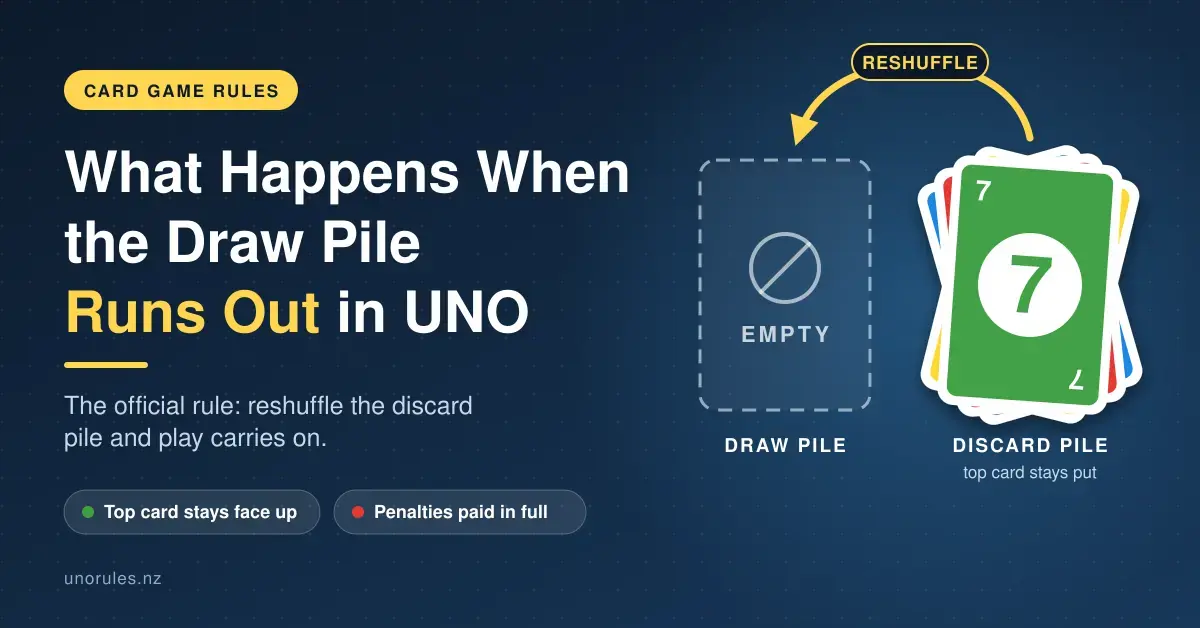
Occasionally, the Draw Pile may run out before a winner is declared. In this event, the Discard Pile is reshuffled (except for the top card) to form a new Draw Pile. If the machine contains cards but hasn't blasted when the game ends, those cards are ignored for scoring purposes; only the cards actually in players' hands are counted. This keeps the scoring focused on the players' direct performance rather than the machine's remaining contents.
Educational Benefits for Younger Players
Uno Blast is an excellent tool for developing fine motor skills and strategic thinking in children. The physical act of inserting cards into the slots requires precision and provides immediate sensory feedback. Furthermore, the game teaches children about probability and risk assessment in a way that is tangible and exciting. For parents in New Zealand looking for educational yet fun indoor activities, Uno Blast provides a bridge between simple matching games and more complex strategy games.
| Skill Developed | Description | Benefit |
|---|---|---|
| Motor Skills | Card insertion into narrow slots. | Coordination. |
| Probability | Tracking how many slots are full. | Basic Math/Logic. |
| Emotional Resilience | Dealing with a sudden “blast” of cards. | Sportsmanship. |
| Turn Taking | Following the sequence of play. | Social Skills. |
Coordination.
Basic Math/Logic.
Sportsmanship.
Social Skills.
Age-Appropriate Rules
While the box suggests ages 7+, younger children can play with minimal assistance. To make the game more accessible for the very young, you can remove the "Uno" penalty or allow them to "re-roll" a blast if it happens on their very first turn. This ensures that the primary focus remains on the fun of the machine and the social interaction rather than strict competitive pressure.
Variations and Kiwi House Rules
The New Zealand gaming scene often thrives on "house rules" that add a local flavor to international titles. One popular variation for Uno Blast is the "Mega-Insert," where if a player plays a "7" card, everyone must draw one card and insert it into the machine simultaneously (or in quick succession). This virtually guarantees a blast and creates a moment of high-intensity chaos. Another variation involves the "Zero" card; when a 0 is played, all players must pass their hands in the direction of play.
- The 7 Rule: Everyone inserts a card.
- The 0 Rule: Hand rotation (swapping all cards).
- Stacking: Allowing Draw Two cards to be stacked to create a Draw Four or Six.
- Blind Insert: Players must close their eyes when choosing which slot to use.
The 7 Rule: Everyone inserts a card.
The 0 Rule: Hand rotation (swapping all cards).
Stacking: Allowing Draw Two cards to be stacked to create a Draw Four or Six.
Blind Insert: Players must close their eyes when choosing which slot to use.
The "Sudden Death" Variant
For those who want a faster game, "Sudden Death" rules dictate that the first person to trigger a blast automatically loses the round, and points are tallied immediately. This completely changes the strategy, making the machine the primary antagonist of the game. It is a great way to handle large groups of players where you want to rotate people in and out of the game quickly during a party or social gathering.
Final Thoughts
Uno Blast stands as a testament to the enduring appeal of the Uno franchise, successfully blending digital-era suspense with classic tabletop card play. The motorized launcher adds a layer of "jump-scare" fun that keeps players engaged far more than a standard draw pile ever could. By understanding the mechanics of the machine, the nuances of the action cards, and the importance of point-based scoring, you can turn a game of luck into a showcase of tactical timing. For any New Zealand household, Uno Blast is a worthy addition to the game cupboard, offering endless rounds of feathered, explosive fun that appeals to all ages.
Quick Reference Table
| Feature | Details |
|---|---|
| Deck Size | 110 Cards. |
| Batteries | 3 x AA. |
| Main Card | Wild Blast. |
| Winning Score | 500 Points. |
110 Cards.
3 x AA.
Wild Blast.
500 Points.
Frequently Asked Questions
How many cards do you start with in Uno Blast? Each player is dealt seven cards at the beginning of the game.
What happens if the machine blasts on my turn? You must take all the cards that were ejected and add them to your hand; your turn then ends.
Do I have to say Uno in this version? Yes, you must shout "Uno" when you have exactly one card left in your hand.
Can I choose which slot to put my card in? Yes, players can choose any of the four slots on the launcher to insert their card.
What batteries does Uno Blast take? The unit typically requires 3 AA alkaline batteries to operate the motorized launcher.
How do you score the Wild Blast card? If caught in an opponent's hand at the end of a round, the Wild Blast card is worth 50 points.
What if the card doesn't fit in the slot? Ensure the card is not bent or damaged. If the slot is jammed, turn off the machine and gently remove any obstructions.
Can you play Uno Blast without the machine? Technically yes, by using a standard draw pile, but you lose the unique "Blast" mechanic that defines this version.
What age is Uno Blast for? It is officially recommended for ages 7 and up, though younger children can play with help.
Is there a limit to how many cards can be in the machine? The machine typically triggers a blast once 3 or 4 cards have been inserted, depending on the internal mechanism's state.