Uno Angry Birds is a licensed version of the classic matching card game that pairs the familiar Uno framework with artwork from the Angry Birds mobile games and adds one edition-exclusive twist: the King Pig card. If you already know how to play standard Uno, you can pick this edition up in minutes, because the numbers, colours and action cards behave exactly the same way. This guide walks through the deck, setup, the standard action cards, the often-misunderstood King Pig rule, scoring and the house rules that families commonly add. Everything below is based on the published Mattel rules so you can settle disputes quickly and keep the game moving.
What Is Uno Angry Birds?
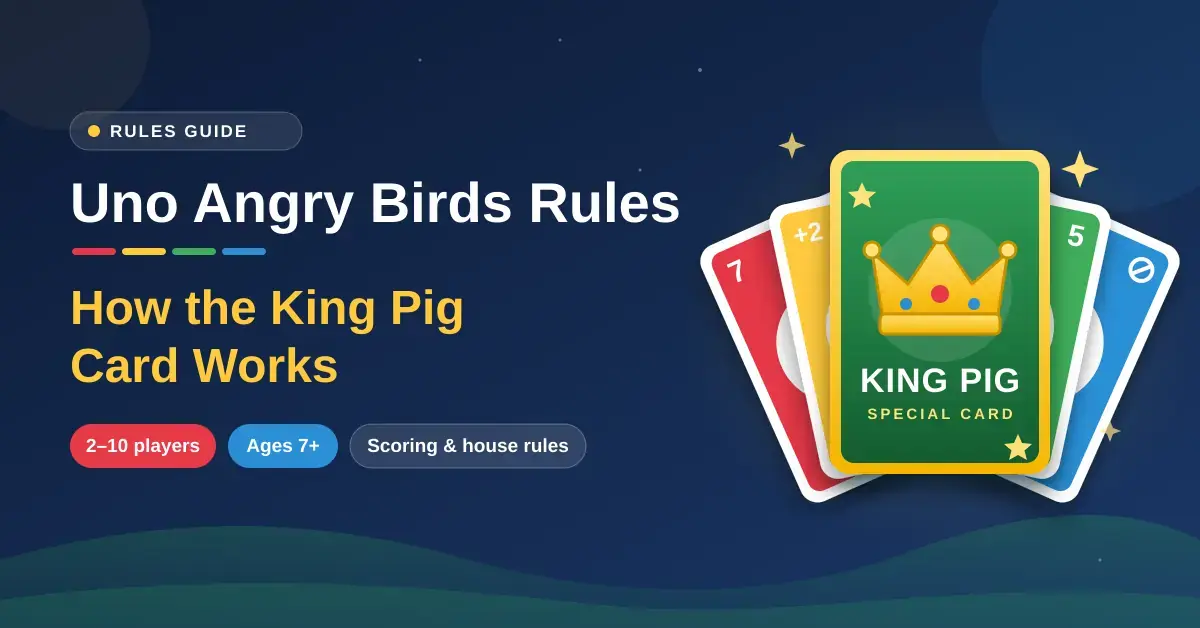
Uno Angry Birds is a themed edition of Uno released in 2012, when Mattel licensed characters from Rovio’s Angry Birds franchise. Mechanically it is standard Uno with different graphics on the cards, plus a single new special card. The set supports 2 to 10 players and is recommended for ages 7 and up. Because it was a limited licensed run rather than a permanent line, new copies are now uncommon and the game is most often found secondhand. For wider background on the source franchise, see Wikipedia. If you are brand new to the game, our beginner’s guide to Uno rules covers the fundamentals this edition builds on.
Quick Facts
| Publisher | Mattel (Angry Birds licence from Rovio) |
|---|---|
| Released | 2012 |
| Players | 2–10 |
| Recommended age | 7+ |
| Deck size | 112 cards (108 standard + 4 King Pig) |
| Edition-exclusive card | King Pig Wild |
| Match goal | First to 500 points |
The Deck at a Glance
The deck holds 112 cards: the 108 cards found in a standard Uno deck plus 4 exclusive King Pig cards. The standard portion breaks down like this, and it is worth checking a used set for missing cards before you start, since gaps in the action cards noticeably change the game’s pace.
- Number cards: 76 in total — one 0 and two each of 1–9 in every colour (Red, Yellow, Blue, Green).
- Action cards: two Skip, two Reverse and two Draw Two per colour (24 in total).
- Wild cards: four Wild and four Wild Draw Four.
- King Pig cards: four, unique to this edition.
Setting Up the Game
Choose a dealer — a common method is for each player to draw one card, with the highest value dealing. The dealer shuffles and deals seven cards face down to every player. The remaining cards form the face-down draw pile, and the top card is turned over to start the discard pile. Play begins with the player to the dealer’s left and normally proceeds clockwise until a Reverse changes it.
Dealer Duties and the Draw Pile
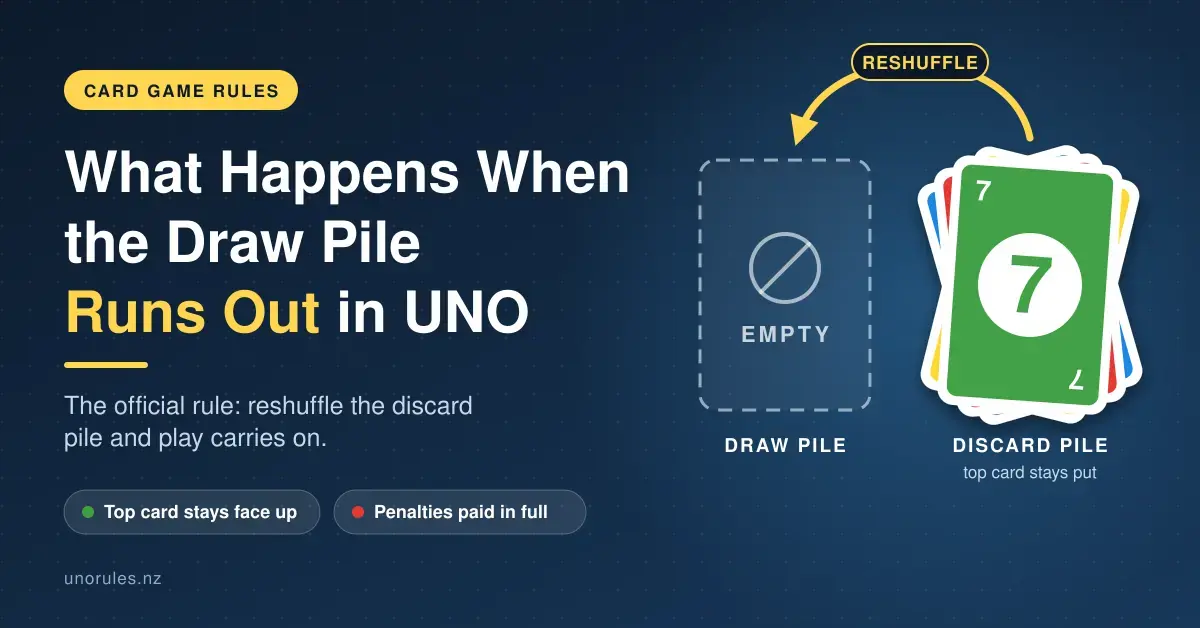
If the first turned-up card is an action or Wild card, the usual practice is to return it to the deck and turn over a new one so the opening turn is a simple number card. During play, the dealer keeps the piles tidy. When the draw pile runs out before anyone wins, take the discard pile (except the current top card), shuffle it and turn it face down to become the new draw pile. That cycle repeats for as long as the round lasts.
The Standard Action Cards
The themed graphics are the draw, but the standard action cards are still the engine of the game and work exactly as they do in regular Uno.
- Skip: the next player in turn order loses their turn.
- Reverse: switches the direction of play; in a two-player game it acts like a Skip.
- Draw Two: the next player draws two cards and misses their turn.
- Wild: the player chooses the colour that play continues in.
- Wild Draw Four: the player chooses the colour and the next player draws four cards.
Wild Draw Four and the Challenge Rule
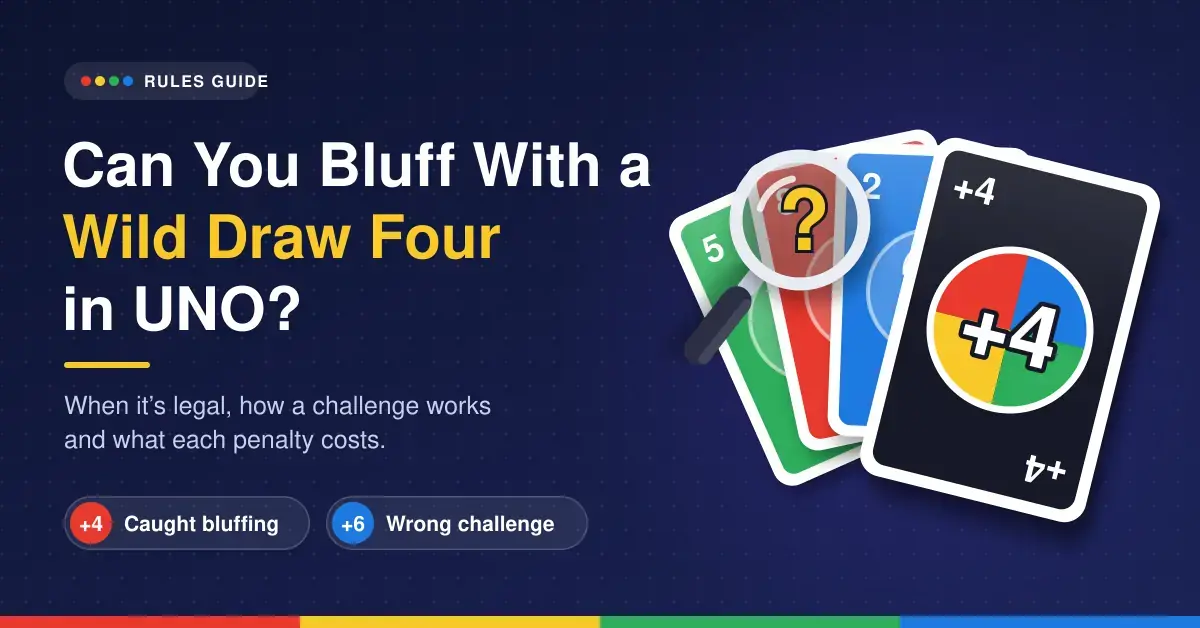
Under the official rules, you may only play a Wild Draw Four when you have no card in hand that matches the current colour on the discard pile. A suspicious opponent can challenge you: if you played it illegally, you take the four cards yourself; if you played it legally, the challenger draws the four cards plus two more, for six in total. The full detail is in our guide to the Wild Draw Four rules.
The King Pig Card Explained
The King Pig card is the one feature unique to this edition, and it is the rule players most often get wrong. When you play a King Pig card you call a colour, exactly like a normal Wild. Then, starting with the player on your left and going clockwise, you deal one card from the draw pile to each opponent in turn, continuing around the table until a player receives a card of the colour you called. That player keeps the card (or cards) dealt to them, and play then carries on in the colour you chose.
The key point: the penalty is spread around the table one card at a time, not dumped on a single player who keeps drawing until they hit the colour. If the colour appears on the first card dealt, only one opponent draws; if it takes several passes, several players pick up cards. The King Pig is worth 50 points if it is caught in a hand at the end of a round.
King Pig vs Wild Card
| Feature | Standard Wild | King Pig Wild |
|---|---|---|
| Choose the next colour | Yes | Yes |
| Draw penalty | None | Deal one card to each opponent in turn until the called colour appears |
| Who draws | No one | Opponents around the table, one card at a time, until a player gets the colour |
| Point value | 50 | 50 |
| Copies in the deck | 4 Wild (plus 4 Wild Draw Four) | 4 |
Playing the King Pig Well
Because the draw is distributed rather than concentrated, the King Pig is less of a knockout blow against one leader than many players assume, but it still reshapes several hands at once and lets you set the colour. Watching which colours opponents keep drawing for can guide your call. As with any Wild-type card, holding a high-value card too long is risky, since it counts against you if someone else empties their hand first.
Scoring and Winning
A round is won by the first player to play their last card. That player then scores the value of all the cards still held by their opponents. Play continues across multiple rounds, and the first player to reach 500 points (or any total agreed beforehand) wins the match. The point values are:
| Card type | Points |
|---|---|
| Number cards 0–9 | Face value |
| Skip, Reverse, Draw Two | 20 each |
| Wild, Wild Draw Four | 50 each |
| King Pig | 50 |
Because Wilds and King Pigs carry the heaviest penalties, many players offload them earlier in a round rather than risk being caught holding them. For a fuller walk-through of the maths, see how scoring works in Uno.
Common Mistakes and Rule Mix-Ups
A few errors come up again and again, and clearing them up keeps games friendly.
- Misreading the King Pig: assuming one player draws until the colour appears, when cards are actually dealt around the table to different opponents.
- Illegal Wild Draw Four: playing it while holding a card that matches the current colour, which is what the challenge rule exists to punish.
- Forgetting to say “Uno”: if you are caught before the next player takes their turn, you draw two cards. Our page on what happens if you forget to say Uno explains the timing.
- Miscounting points: forgetting that Wilds and King Pigs are worth 50 each rather than 20.
House Rules and Playing with Children
Groups often add optional house rules for variety, though these are not part of the official instructions and should be agreed before play. Common examples include “Jump-in” (playing an identical card out of turn), “Stacking” Draw Twos so the penalty accumulates, and the “Seven-0” swap. Whether stacking is allowed under the official rules is a frequent debate — we cover it in is stacking allowed in official Uno, and you will find more options in our list of popular Uno house rules.
The bright Angry Birds characters make this edition appealing to younger players, but a King Pig call can hand a child several cards at once. To keep it fun, some families cap how many cards a single player takes on a King Pig, or simply talk through the round afterwards. Beyond the fun, the game reinforces colour and number recognition, turn-taking and a little probability as children learn which colours are still in play.
Sources
Frequently Asked Questions (FAQ)
How many cards are in an Uno Angry Birds deck?
The deck contains 112 cards: the 108 cards from a standard Uno deck plus four exclusive King Pig cards.
What exactly does the King Pig card do?
You call a colour, then deal one card from the draw pile to each opponent in turn, starting on your left and going clockwise, until a player receives a card of the colour you called. That player keeps the cards dealt to them, and play continues in your chosen colour.
How many points is the King Pig card worth?
It is worth 50 points if it is still in a player’s hand when someone else wins the round, the same value as a Wild or Wild Draw Four.
How do you win a match of Uno Angry Birds?
Win individual rounds by playing your last card, scoring the value of cards left in opponents’ hands. The first player to reach 500 points, or any total agreed in advance, wins the overall match.
How many players can play and what age is it for?
The game is designed for 2 to 10 players and is recommended for ages 7 and up, though younger children can join in if they understand basic colour and number matching.